
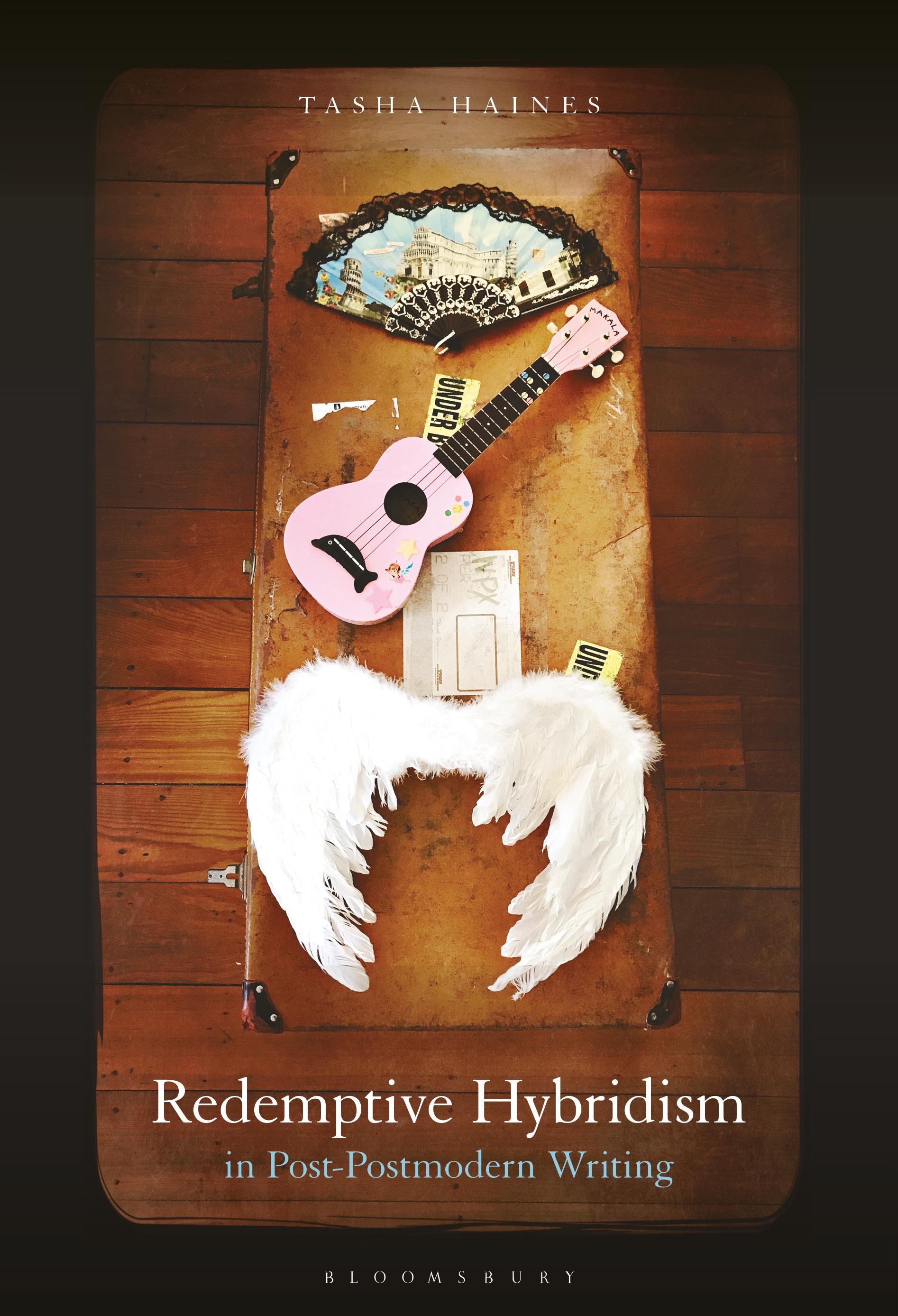
From Virginia Woolf to David Foster Wallace and beyond, 'redemptive hybridism' – a new way of reading texts full of possibility and genre blending – emerges as a key trajectory for post-postmodernity.
Tasha Haines investigates what she calls 'redemptive hybridism' a tendency in post-postmodern writing characterized by possibility. She suggests that near the 21st century, postmodern élitisme gives way to a reparative blending of high-low forms and genre collaborations for challenging and extending the relationship between writer, written material, and reader.
By combining an innovative literary investigation with creative and auto-theoretical strategies, Haines offers valuable new interpretations for texts of 'the modernisms continuum'. Her conversational survey moves among the hybridity of Virginia Woolf, the paratextuality of David Foster Wallace, with Nathalie Sarraute, Édouard Levé, Maggie Nelson and more. In reference to Deleuze and Guattari, Hassan, and others, writers are curated for their approach to form, method, and content, evoking and invoking textual hybridity.
Haines articulates a new way of viewing works via comparisons and close-ups that exemplify the possibility and genre-blending that is Redemptive Hybridism in Post-Postmodern Writing.
Tasha Haines investigates what she calls 'redemptive hybridism' a tendency in post-postmodern writing characterized by possibility. She suggests that near the 21st century, postmodern élitisme gives way to a reparative blending of high-low forms and genre collaborations for challenging and extending the relationship between writer, written material, and reader.
By combining an innovative literary investigation with creative and auto-theoretical strategies, Haines offers valuable new interpretations for texts of 'the modernisms continuum'. Her conversational survey moves among the hybridity of Virginia Woolf, the paratextuality of David Foster Wallace, with Nathalie Sarraute, Édouard Levé, Maggie Nelson and more. In reference to Deleuze and Guattari, Hassan, and others, writers are curated for their approach to form, method, and content, evoking and invoking textual hybridity.
Haines articulates a new way of viewing works via comparisons and close-ups that exemplify the possibility and genre-blending that is Redemptive Hybridism in Post-Postmodern Writing.
Pay easily by card, Klarna, Apple Pay or Google Pay. Not happy? You always have a 14-day money-back guarantee. Read more in our terms. If you have any questions, email us at hello@memmo.org.
Memmo makes studying easier – wherever you are in the world. We bring your course books and smart study tools together in one place: summaries, quizzes, podcasts and flashcards. Plus Ted, your study buddy who answers anything you wonder. Over 50,000 students already study here – built to help you learn faster and stress less.