
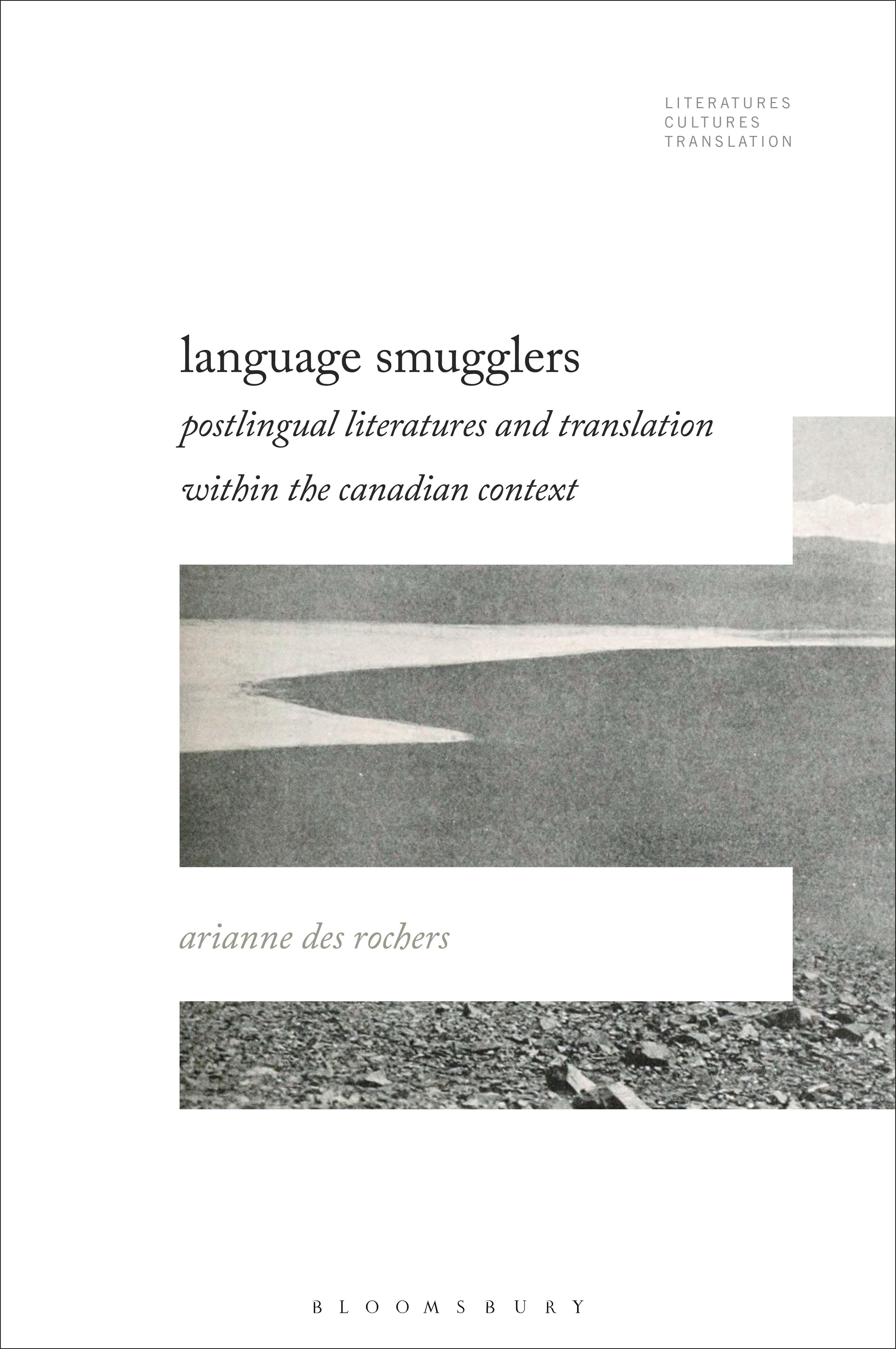
Translation is commonly understood as the rendering of a text from one language to another – a border-crossing activity, where the border is a linguistic one. But what if the text one is translating is not written in “one language;” indeed, what if no text is ever written in a single language?
In recent years, many books of fiction and poetry published in so-called Canada, especially by queer, racialized and Indigenous writers, have challenged the structural notions of linguistic autonomy and singularity that underlie not only the formation of the nation-state, but the bulk of Western translation theory and the field of comparative literature.
Language Smugglers argues that the postnational cartographies of language found in minoritized Canadian literary works force a radical redefinition of the activity of translation altogether. Canada is revealed as an especially rich site for this study, with its official bilingualism and multiculturalism policies, its robust translation industry and practitioners, and the strong challenges to its national narratives and accompanying language politics presented by Indigenous people, the province of Québec, and high levels of immigration.
In recent years, many books of fiction and poetry published in so-called Canada, especially by queer, racialized and Indigenous writers, have challenged the structural notions of linguistic autonomy and singularity that underlie not only the formation of the nation-state, but the bulk of Western translation theory and the field of comparative literature.
Language Smugglers argues that the postnational cartographies of language found in minoritized Canadian literary works force a radical redefinition of the activity of translation altogether. Canada is revealed as an especially rich site for this study, with its official bilingualism and multiculturalism policies, its robust translation industry and practitioners, and the strong challenges to its national narratives and accompanying language politics presented by Indigenous people, the province of Québec, and high levels of immigration.
Pay easily by card, Klarna, Apple Pay or Google Pay. Not happy? You always have a 14-day money-back guarantee. Read more in our terms. If you have any questions, email us at hello@memmo.org.
Memmo makes studying easier – wherever you are in the world. We bring your course books and smart study tools together in one place: summaries, quizzes, podcasts and flashcards. Plus Ted, your study buddy who answers anything you wonder. Over 50,000 students already study here – built to help you learn faster and stress less.