
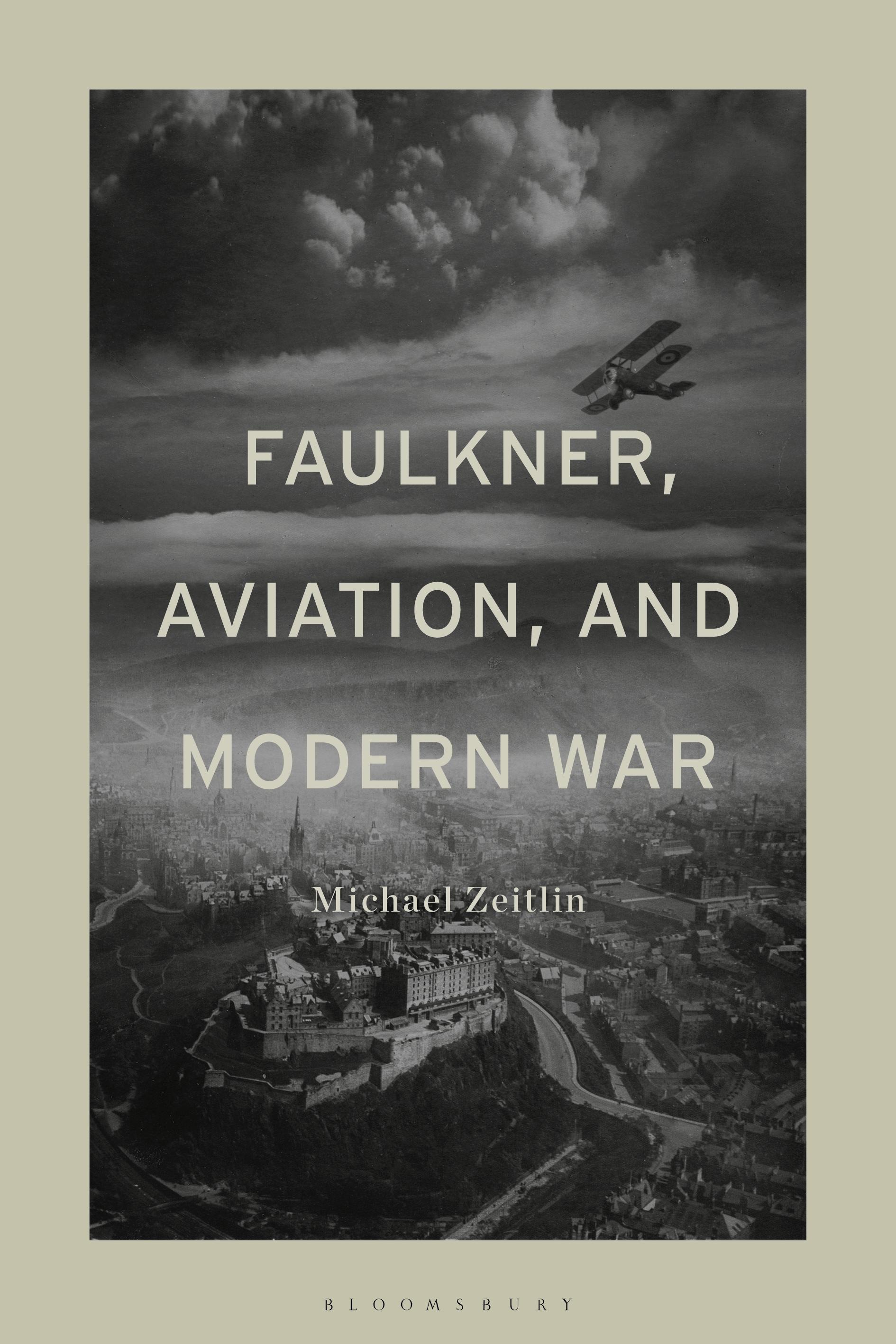
Faulkner, Aviation, and Modern War frames William Faulkner's airplane narratives against major scenes of the early 20th century: the Great War, the rise of European fascism in the 1920s and 30s, the Second World War, and the aviation arms race extending from the Wright Flyer in 1903 into the Cold War era. Placing biographical accounts of Faulkner's time in the Royal Air Force Canada against analysis of such works as Soldiers' Pay (1926), "All the Dead Pilots" (1931), Pylon (1935), and A Fable (1954), this book situates Faulkner's aviation writing within transatlantic historical contexts that have not been sufficiently appreciated in Faulkner's work.
Michael Zeitlin unpacks a broad selection of Faulkner's novels, stories, film treatments, essays, book reviews, and letters to outline Faulkner's complex and ambivalent relationship to the ideologies of masculine performance and martial heroism in an age dominated by industrialism and military technology.
Michael Zeitlin unpacks a broad selection of Faulkner's novels, stories, film treatments, essays, book reviews, and letters to outline Faulkner's complex and ambivalent relationship to the ideologies of masculine performance and martial heroism in an age dominated by industrialism and military technology.
Pay easily by card, Klarna, Apple Pay or Google Pay. Not happy? You always have a 14-day money-back guarantee. Read more in our terms. If you have any questions, email us at hello@memmo.org.
Memmo makes studying easier – wherever you are in the world. We bring your course books and smart study tools together in one place: summaries, quizzes, podcasts and flashcards. Plus Ted, your study buddy who answers anything you wonder. Over 50,000 students already study here – built to help you learn faster and stress less.