
Longlisted for the Kraszna-Krauz Foundation's Moving Image Book Award 2024
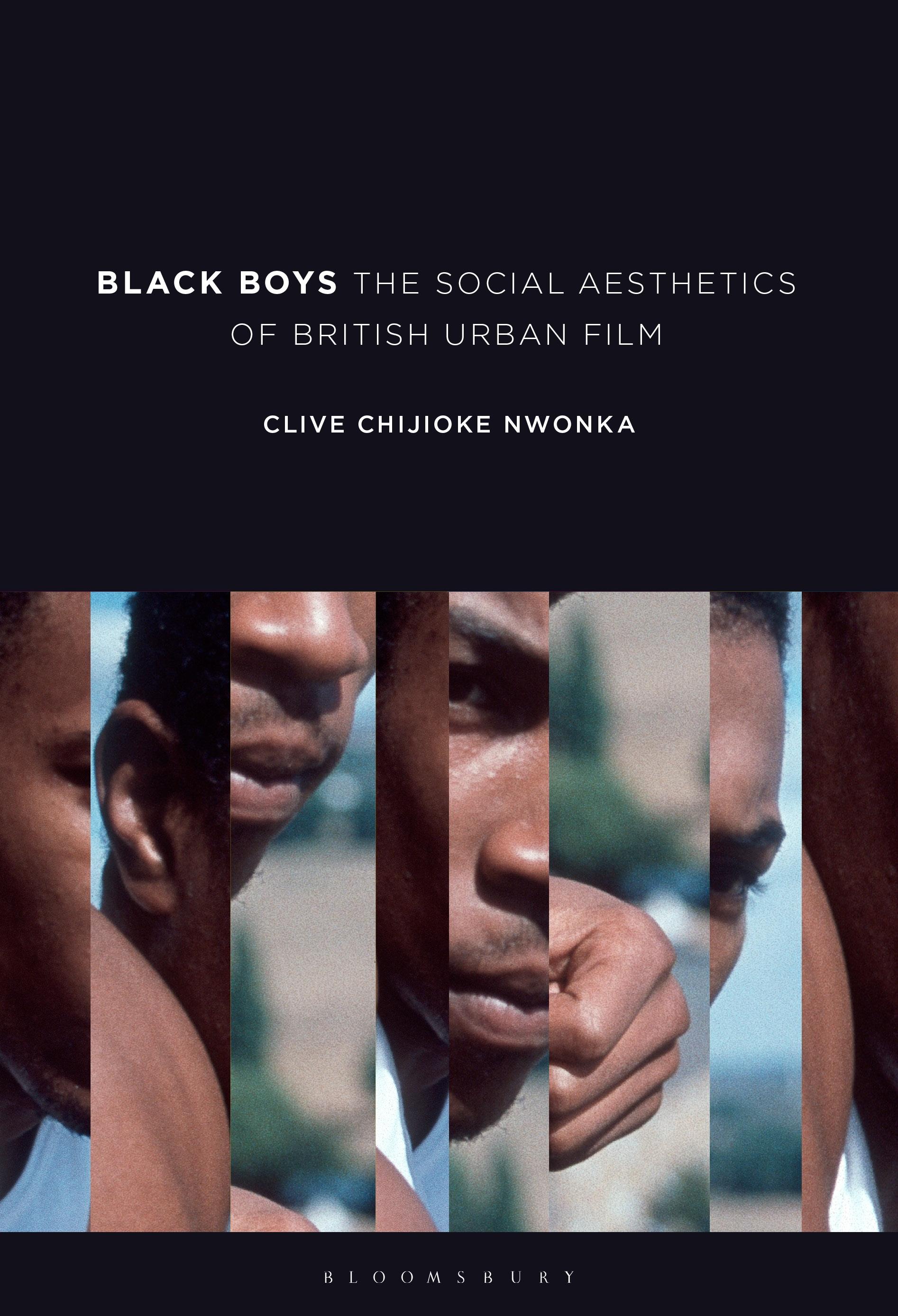
In Black Boys: The Aesthetics of British Urban Film, Nwonka offers the first dedicated analysis of Black British urban cinematic and televisual representation as a textual encounter with Blackness, masculinity and urban identity where the generic construction of images and narratives of Black urbanity is informed by the (un)knowable allure of Black urban Otherness. Foregrounding the textual Black urban identity as a historical formation, and drawing on a range of theoretical frameworks that allow for an examination of the emergence and continued social, cultural and industrial investment in the fictitious and non-fictitious images of Black urban identities and geographies, Nwonka convenes a dialogue between the disciplines of Film and Television Studies, Philosophy, Cultural Studies, Black Studies, Sociology and Criminology. Here, Nwonka ventures beyond what can be understood as the perennial and simplistic optic of racial stereotype in order to advance a more expansive reading of the Black British urban text as the outcome of a complex conjunctural interaction between social phenomena, cultural policy, political discourse and the continuously shifting politics of Black representation.
Through the analysis of a number of texts and political and socio-cultural moments, Nwonka identifies Black urban textuality as conditioned by a bidirectionality rooted in historical and contemporary questions of race, racism and anti-Blackness but equally attentive to the social dynamics that render the screen as a site of Black recognition, authorship and authenticity. Analysed in the context of realism, social and political allegory, urban multiculture, Black corporeality and racial, gender and sexual politics, in integrating such considerations into the fabrics of a thematic reading of the Black urban text and through the writings of Stuart Hall, Paul Gilroy, Judith Butler and Derrida, Black Boys presents a critical rethinking of the contextual and aesthetic factors in the visual constructions of Black urban identity.
In Black Boys: The Aesthetics of British Urban Film, Nwonka offers the first dedicated analysis of Black British urban cinematic and televisual representation as a textual encounter with Blackness, masculinity and urban identity where the generic construction of images and narratives of Black urbanity is informed by the (un)knowable allure of Black urban Otherness. Foregrounding the textual Black urban identity as a historical formation, and drawing on a range of theoretical frameworks that allow for an examination of the emergence and continued social, cultural and industrial investment in the fictitious and non-fictitious images of Black urban identities and geographies, Nwonka convenes a dialogue between the disciplines of Film and Television Studies, Philosophy, Cultural Studies, Black Studies, Sociology and Criminology. Here, Nwonka ventures beyond what can be understood as the perennial and simplistic optic of racial stereotype in order to advance a more expansive reading of the Black British urban text as the outcome of a complex conjunctural interaction between social phenomena, cultural policy, political discourse and the continuously shifting politics of Black representation.
Through the analysis of a number of texts and political and socio-cultural moments, Nwonka identifies Black urban textuality as conditioned by a bidirectionality rooted in historical and contemporary questions of race, racism and anti-Blackness but equally attentive to the social dynamics that render the screen as a site of Black recognition, authorship and authenticity. Analysed in the context of realism, social and political allegory, urban multiculture, Black corporeality and racial, gender and sexual politics, in integrating such considerations into the fabrics of a thematic reading of the Black urban text and through the writings of Stuart Hall, Paul Gilroy, Judith Butler and Derrida, Black Boys presents a critical rethinking of the contextual and aesthetic factors in the visual constructions of Black urban identity.
Pages: 336
Category: Kultur-, Genus- & Postkoloniala studier
e-ISBN: 9781501352836
Shipping weight: 1.2 kg
Ships in: 1-2 days
Pay easily by card, Klarna, Apple Pay or Google Pay. Not happy? You always have a 14-day money-back guarantee. Read more in our terms. If you have any questions, email us at hello@memmo.org.
Memmo makes studying easier – wherever you are in the world. We bring your course books and smart study tools together in one place: summaries, quizzes, podcasts and flashcards. Plus Ted, your study buddy who answers anything you wonder. Over 50,000 students already study here – built to help you learn faster and stress less.