
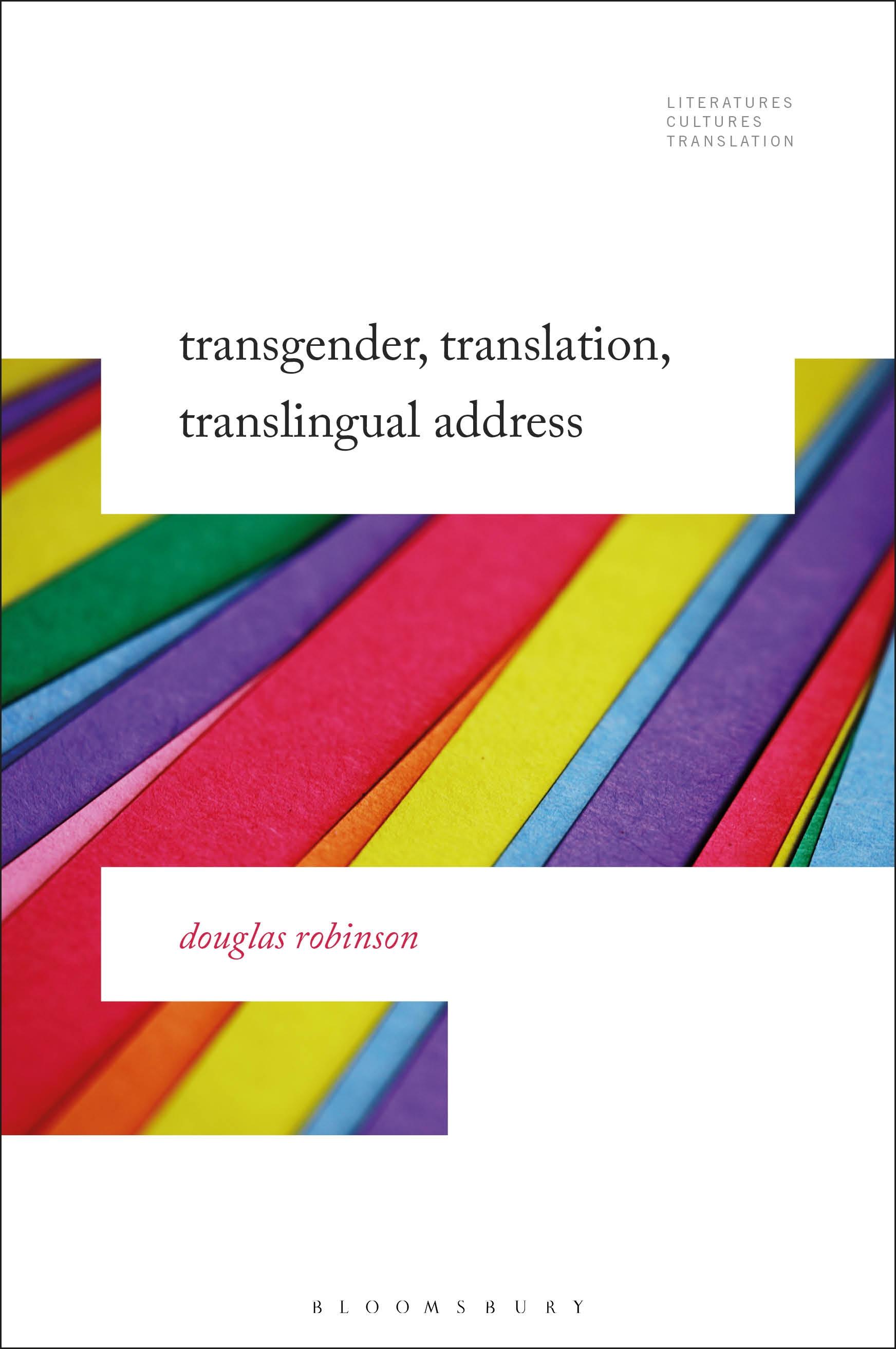
Finalist for the 2020 Prose Awards (Language and Linguistics Category)
The emergence of transgender communities into the public eye over the past few decades has brought some new understanding, but also renewed outbreaks of violent backlash. In Transgender, Translation, Translingual Address Douglas Robinson seeks to understand the “translational” or “translingual” dialogues between cisgendered and transgendered people.
Drawing on a wide range of LGBT scholars, philosophers, sociologists, sexologists, and literary voices, Robinson sets up cis-trans dialogues on such issues as “being born in the wrong body,” binary vs. anti-binary sex/gender identities, and the nature of transition and transformation. Prominent voices in the book include Kate Bornstein, C. Jacob Hale, and Sassafras Lowrey.
The theory of translation mobilized in the book is not the traditional equivalence-based one, but Callon and Latour's sociology of translation as “speaking for someone else,” which grounds the study of translation in social pressures to conform to group norms. In addition, however, Robinson translates a series of passages from Finnish trans novels into English, and explores the “translingual address” that emerges when those English translations are put into dialogue with cis and trans scholars.
The emergence of transgender communities into the public eye over the past few decades has brought some new understanding, but also renewed outbreaks of violent backlash. In Transgender, Translation, Translingual Address Douglas Robinson seeks to understand the “translational” or “translingual” dialogues between cisgendered and transgendered people.
Drawing on a wide range of LGBT scholars, philosophers, sociologists, sexologists, and literary voices, Robinson sets up cis-trans dialogues on such issues as “being born in the wrong body,” binary vs. anti-binary sex/gender identities, and the nature of transition and transformation. Prominent voices in the book include Kate Bornstein, C. Jacob Hale, and Sassafras Lowrey.
The theory of translation mobilized in the book is not the traditional equivalence-based one, but Callon and Latour's sociology of translation as “speaking for someone else,” which grounds the study of translation in social pressures to conform to group norms. In addition, however, Robinson translates a series of passages from Finnish trans novels into English, and explores the “translingual address” that emerges when those English translations are put into dialogue with cis and trans scholars.
Pay easily by card, Klarna, Apple Pay or Google Pay. Not happy? You always have a 14-day money-back guarantee. Read more in our terms. If you have any questions, email us at hello@memmo.org.
Memmo makes studying easier – wherever you are in the world. We bring your course books and smart study tools together in one place: summaries, quizzes, podcasts and flashcards. Plus Ted, your study buddy who answers anything you wonder. Over 50,000 students already study here – built to help you learn faster and stress less.