
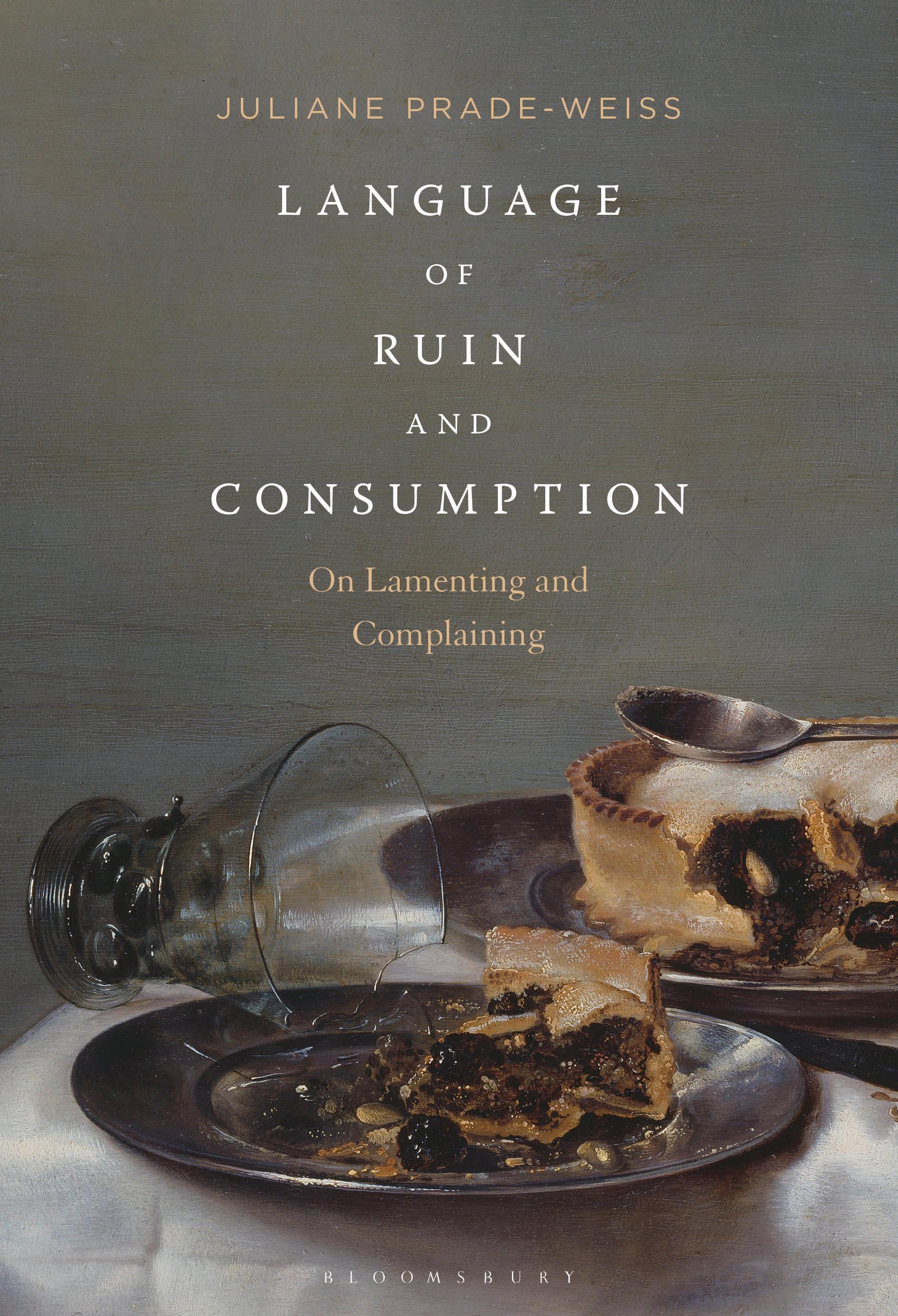
Laments and complaints are among the most ancient poetical forms and ubiquitous in everyday speech. Understanding plaintive language, however, is often prevented by the resentment and fear it evokes. Lamenting and complaining seems pointless, irreconcilable, and destructive. Language of Ruin and Consumption examines Freud's approaches to lamenting and complaining, the heart of psychoanalytic therapy and theory, and takes them as guidelines for reading key works of the modern canon. The re-negotiation of older--ritual, dramatic, and juridical--forms in Rilke, Wittgenstein, Scholem, Benjamin, and Kafka puts plaintive language in the center of modern individuality and expounds a fundamental dimension of language neglected in theory: reciprocity is at issue in plaintive language.
Language of Ruin and Consumption advocates that a fruitful reception of psychoanalysis in criticism combines the discussion of psychoanalytical concepts with an adaptation of the hermeneutical principle ignored in most philosophical approaches to language, or relegated to mere rhetoric: speech is not only by someone and on something, but also addressed to someone.
Language of Ruin and Consumption advocates that a fruitful reception of psychoanalysis in criticism combines the discussion of psychoanalytical concepts with an adaptation of the hermeneutical principle ignored in most philosophical approaches to language, or relegated to mere rhetoric: speech is not only by someone and on something, but also addressed to someone.
Pages: 296
Category: Litteraturvetenskap & Teori
e-ISBN: 9781501344206
Shipping weight: 1.2 kg
Ships in: 1-2 days
Pay easily by card, Klarna, Apple Pay or Google Pay. Not happy? You always have a 14-day money-back guarantee. Read more in our terms. If you have any questions, email us at hello@memmo.org.
Memmo makes studying easier – wherever you are in the world. We bring your course books and smart study tools together in one place: summaries, quizzes, podcasts and flashcards. Plus Ted, your study buddy who answers anything you wonder. Over 50,000 students already study here – built to help you learn faster and stress less.