
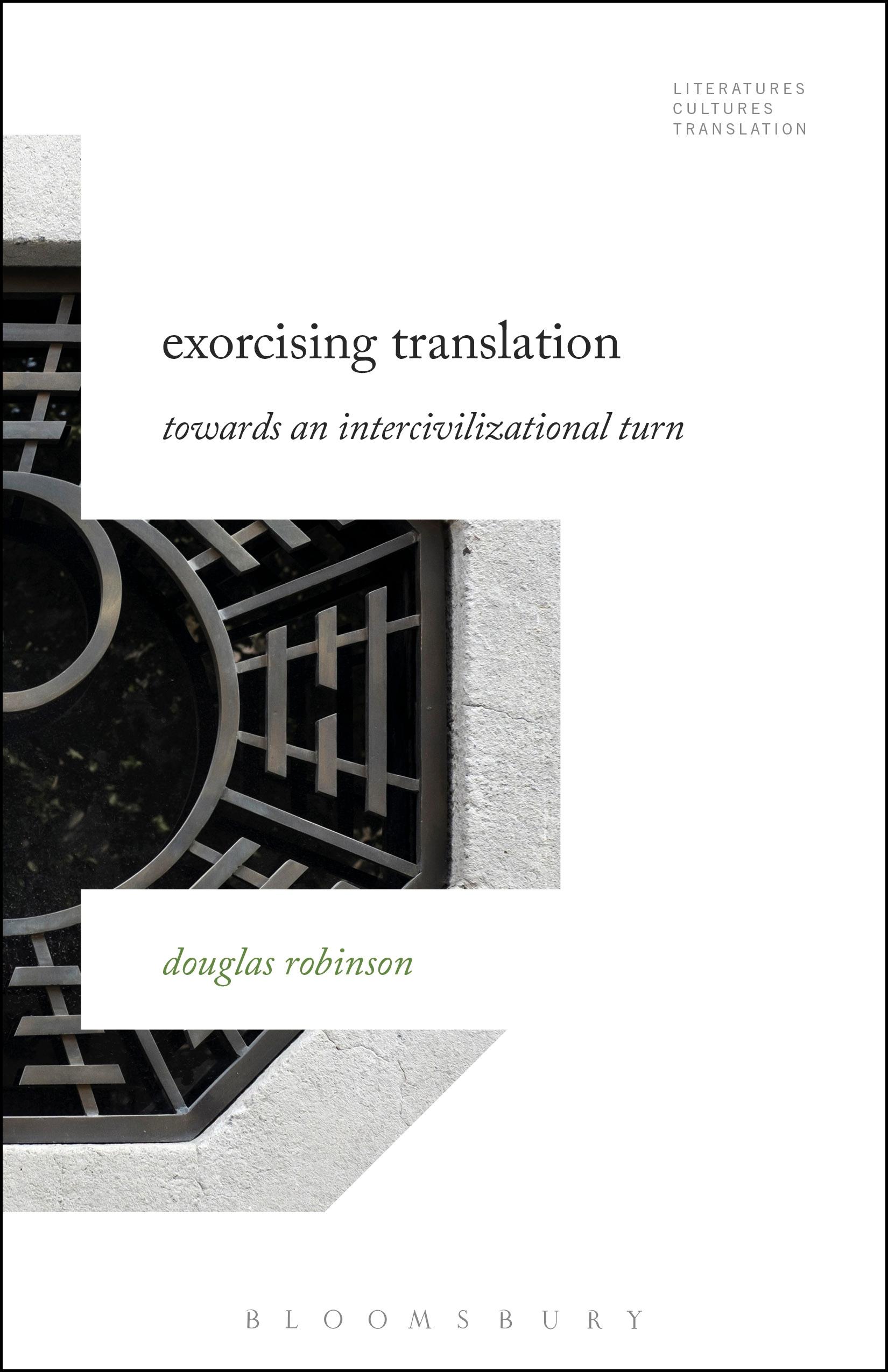
Exorcising Translation, a new volume in Bloomsbury's Literatures, Cultures, Translation series, makes critical contributions to translation as well as to comparative and postcolonial literary studies.
The hot-button issue of Eurocentrism in translation studies has roiled the discipline in the past few years, with critiques followed by defenses and defenses followed by enhanced critiques. Douglas Robinson identifies Eurocentrism in translation studies as what Sakai Naoki calls a “civilizational spell.” Exorcising Translation tracks two translation histories. In the first, moving from Friedrich Nietzsche to Harold Bloom, we find ourselves caught, trapped, cursed, haunted by the spell. In the second, focused on English translations and translators of Chinese literature, Robinson explores accusations against American translators not only for their inadequate (or even totally absent) knowledge of Chinese and Daoism, but for their Americanness, their trappedness in individualistic and secular Western thought. A closer look at that history shows that Western thought and Chinese thought are mutually shaped in fascinating ways. Exorcising Translation presents a major re-envisioning of translation studies, and indeed the literary relationship between East and West, by a pioneering scholar in the field.
The hot-button issue of Eurocentrism in translation studies has roiled the discipline in the past few years, with critiques followed by defenses and defenses followed by enhanced critiques. Douglas Robinson identifies Eurocentrism in translation studies as what Sakai Naoki calls a “civilizational spell.” Exorcising Translation tracks two translation histories. In the first, moving from Friedrich Nietzsche to Harold Bloom, we find ourselves caught, trapped, cursed, haunted by the spell. In the second, focused on English translations and translators of Chinese literature, Robinson explores accusations against American translators not only for their inadequate (or even totally absent) knowledge of Chinese and Daoism, but for their Americanness, their trappedness in individualistic and secular Western thought. A closer look at that history shows that Western thought and Chinese thought are mutually shaped in fascinating ways. Exorcising Translation presents a major re-envisioning of translation studies, and indeed the literary relationship between East and West, by a pioneering scholar in the field.
Pay easily by card, Klarna, Apple Pay or Google Pay. Not happy? You always have a 14-day money-back guarantee. Read more in our terms. If you have any questions, email us at hello@memmo.org.
Memmo makes studying easier – wherever you are in the world. We bring your course books and smart study tools together in one place: summaries, quizzes, podcasts and flashcards. Plus Ted, your study buddy who answers anything you wonder. Over 50,000 students already study here – built to help you learn faster and stress less.