
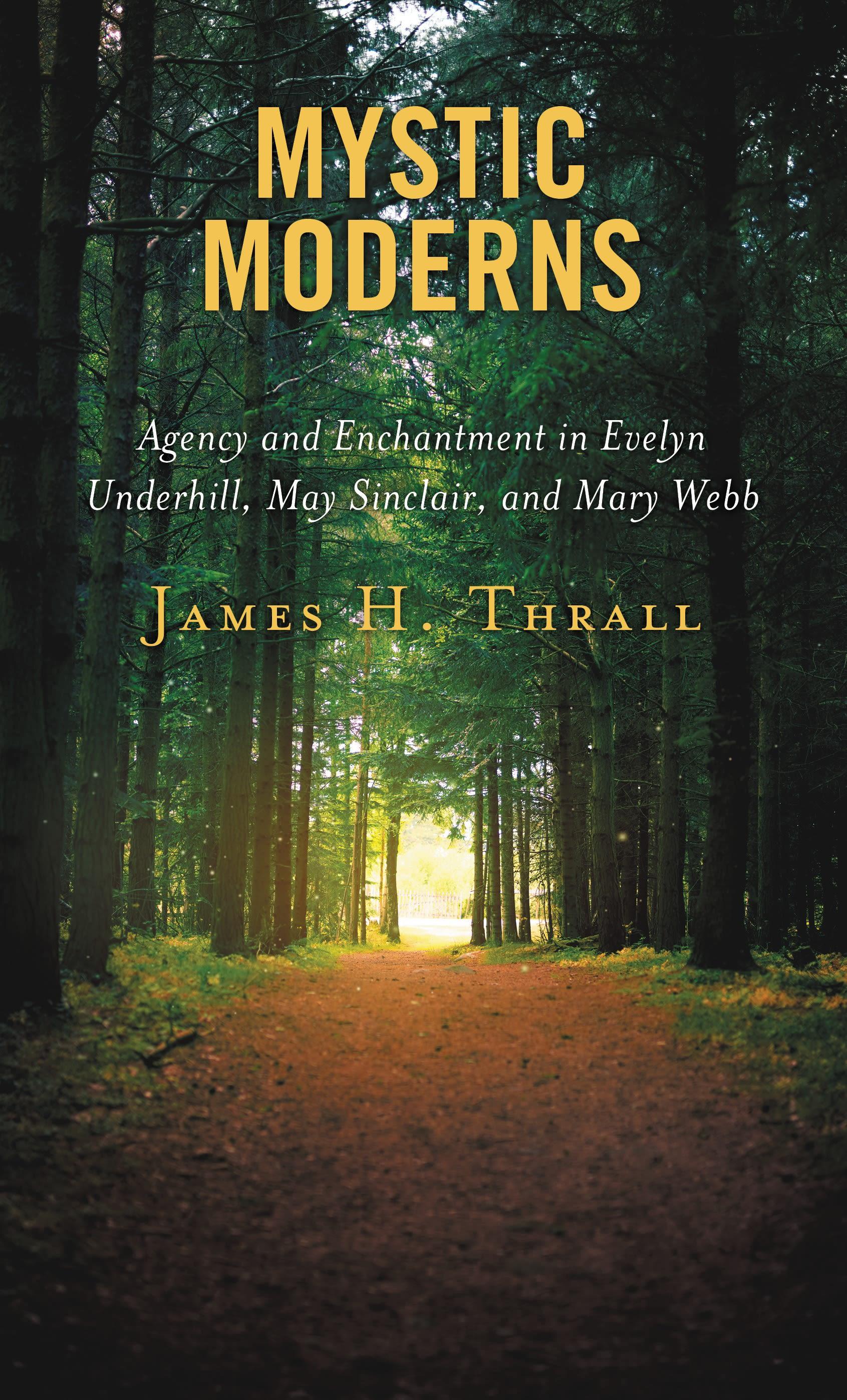
Mystic Moderns examines the responses of three British authors—Evelyn Underhill (1875–1941), May Sinclair (1863–1946), and Mary Webb (1881–1927)—to the emerging modernity of the long early twentieth-century moment encompassing the First World War. As they explored divergent but overlapping understandings of what mystical experience might be, these authors rejected claims that modernity’s celebration of the secular and rational left no place for the mystical; rather, they countered, sensitivity to a greater reality could both establish and validate personal agency, and was integral to their identities as modern women. Their preoccupations with the dynamism of human connection drew on prevailing ideas of “vital energy” or “life force” developed by Arthur Schopenhauer and Henri Bergson in ways that channeled modernity’s erotic energy of change. By using their fiction to describe new, self-authenticating forms of mysticism separate from either the prevailing orthodoxy of establishment Christianity or the extreme heterodoxy of their era’s enthusiasm for paranormal experimentation, they also contributed to the rise of a generic concept of “spirituality.” Mystic Moderns thus offers historical perspective on contemporary claims for self-constructed, non-institutional spiritual experience associated with the claim “I’m spiritual, not religious.”
Working as they did within the shadow of the First World War, Underhill, Sinclair, and Webb were, in the end, attempting to determine what might be of authentic value for a modern age marked by ubiquitous death. While not themselves utopian authors, each was touched by her era’s complicated hunger for the best of all possible worlds. Their constructions of how an individual should be and act in the midst of modernity thus simultaneously projected visions of what that modernity itself should become.
Working as they did within the shadow of the First World War, Underhill, Sinclair, and Webb were, in the end, attempting to determine what might be of authentic value for a modern age marked by ubiquitous death. While not themselves utopian authors, each was touched by her era’s complicated hunger for the best of all possible worlds. Their constructions of how an individual should be and act in the midst of modernity thus simultaneously projected visions of what that modernity itself should become.
Pages: 314
Category: Litteraturvetenskap & Teori
e-ISBN: 9781498583787
Shipping weight: 1.2 kg
Ships in: 1-2 days
Pay easily by card, Klarna, Apple Pay or Google Pay. Not happy? You always have a 14-day money-back guarantee. Read more in our terms. If you have any questions, email us at hello@memmo.org.
Memmo makes studying easier – wherever you are in the world. We bring your course books and smart study tools together in one place: summaries, quizzes, podcasts and flashcards. Plus Ted, your study buddy who answers anything you wonder. Over 50,000 students already study here – built to help you learn faster and stress less.