
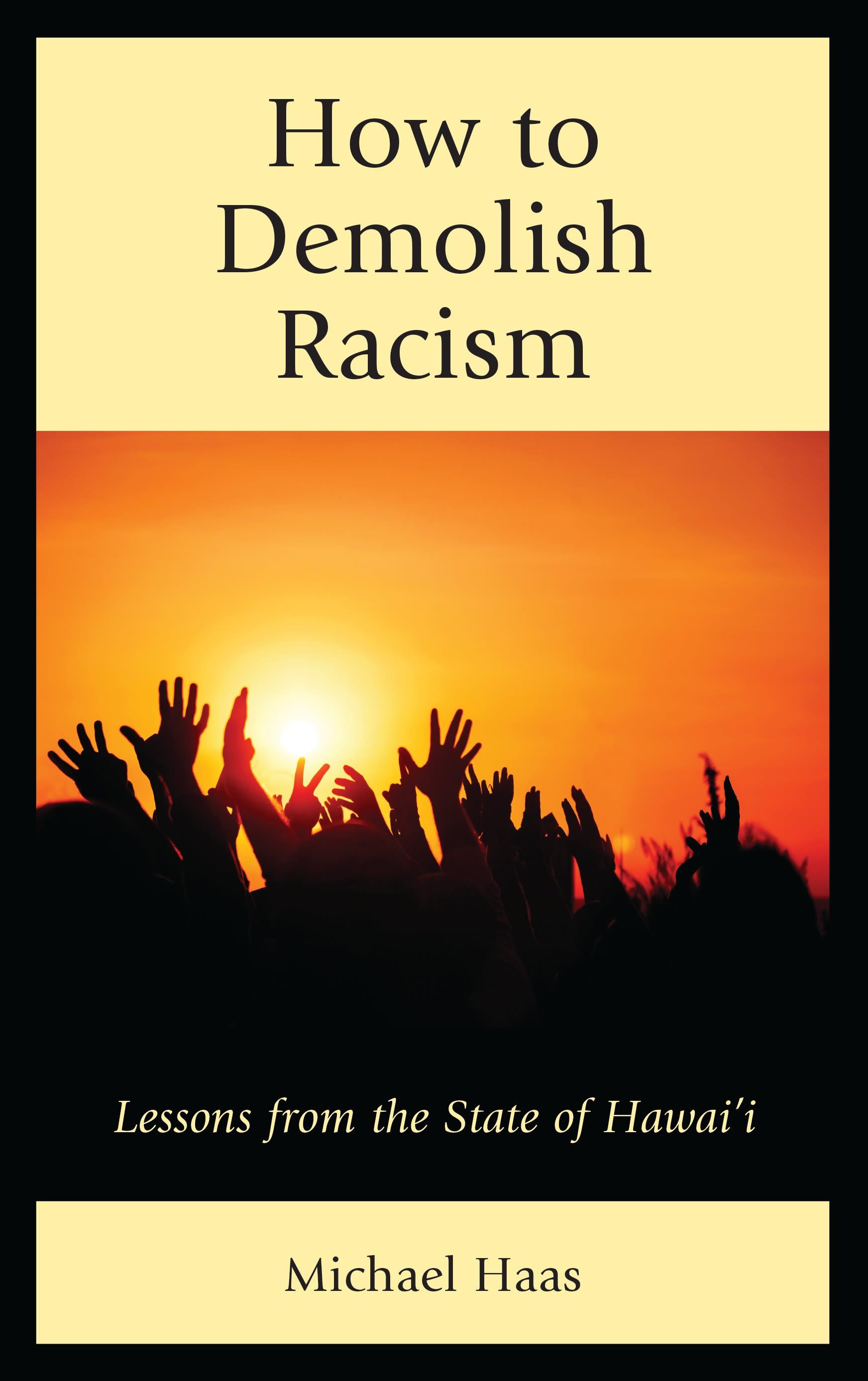
This book describes racist rule in Hawai’i during the first half of the twentieth century and how statehood made possible a fundamental transformation. Based on a multicultural ethos, top political power shifted from Whites to Japanese and later to other racial groups. Racism was eliminated in the economy, environmental policies were modified, government operations became more multicultural, and the desires of Native Hawaiians to recover what had been lost from the days of the Kingdom of Hawai?i were placed on legal and political agendas.
Even before statehood, Hawai?i’s example of school integration gave birth to the movement resulting in Brown v Board of Education. Afterward, the Aloha State was the first to adopt many reforms: unrestricted abortion, universal health care insurance, an Equal Rights Amendment, a State Ombudsman, neighborhood boards, classifying Whites as a “minority” in affirmative action, banning strip searches of females, and dozens of other innovative reforms that have been adopted elsewhere. Hawai?i remains the only state that is officially bilingual, has required mediation before foreclosures, celebrates an Islam Day, prohibits discrimination based on credit history and breastfeeding, bans smoking until the age of 21, disallows plastic bags, has declared an end to the use of fossil fuels by 2045, and has adopted many other measures that lead the world.
This book explains how developments in the Aloha State, which have provided leadership to the United States, may be copied elsewhere, primarily based on the technique of reverse cultural engineering, which is the unrecognized basis for legal systems around the world.
Even before statehood, Hawai?i’s example of school integration gave birth to the movement resulting in Brown v Board of Education. Afterward, the Aloha State was the first to adopt many reforms: unrestricted abortion, universal health care insurance, an Equal Rights Amendment, a State Ombudsman, neighborhood boards, classifying Whites as a “minority” in affirmative action, banning strip searches of females, and dozens of other innovative reforms that have been adopted elsewhere. Hawai?i remains the only state that is officially bilingual, has required mediation before foreclosures, celebrates an Islam Day, prohibits discrimination based on credit history and breastfeeding, bans smoking until the age of 21, disallows plastic bags, has declared an end to the use of fossil fuels by 2045, and has adopted many other measures that lead the world.
This book explains how developments in the Aloha State, which have provided leadership to the United States, may be copied elsewhere, primarily based on the technique of reverse cultural engineering, which is the unrecognized basis for legal systems around the world.
Pages: 408
Category: Kultur-, Genus- & Postkoloniala studier
e-ISBN: 9781498543217
Shipping weight: 1.2 kg
Ships in: 1-2 days
Pay easily by card, Klarna, Apple Pay or Google Pay. Not happy? You always have a 14-day money-back guarantee. Read more in our terms. If you have any questions, email us at hello@memmo.org.
Memmo makes studying easier – wherever you are in the world. We bring your course books and smart study tools together in one place: summaries, quizzes, podcasts and flashcards. Plus Ted, your study buddy who answers anything you wonder. Over 50,000 students already study here – built to help you learn faster and stress less.