
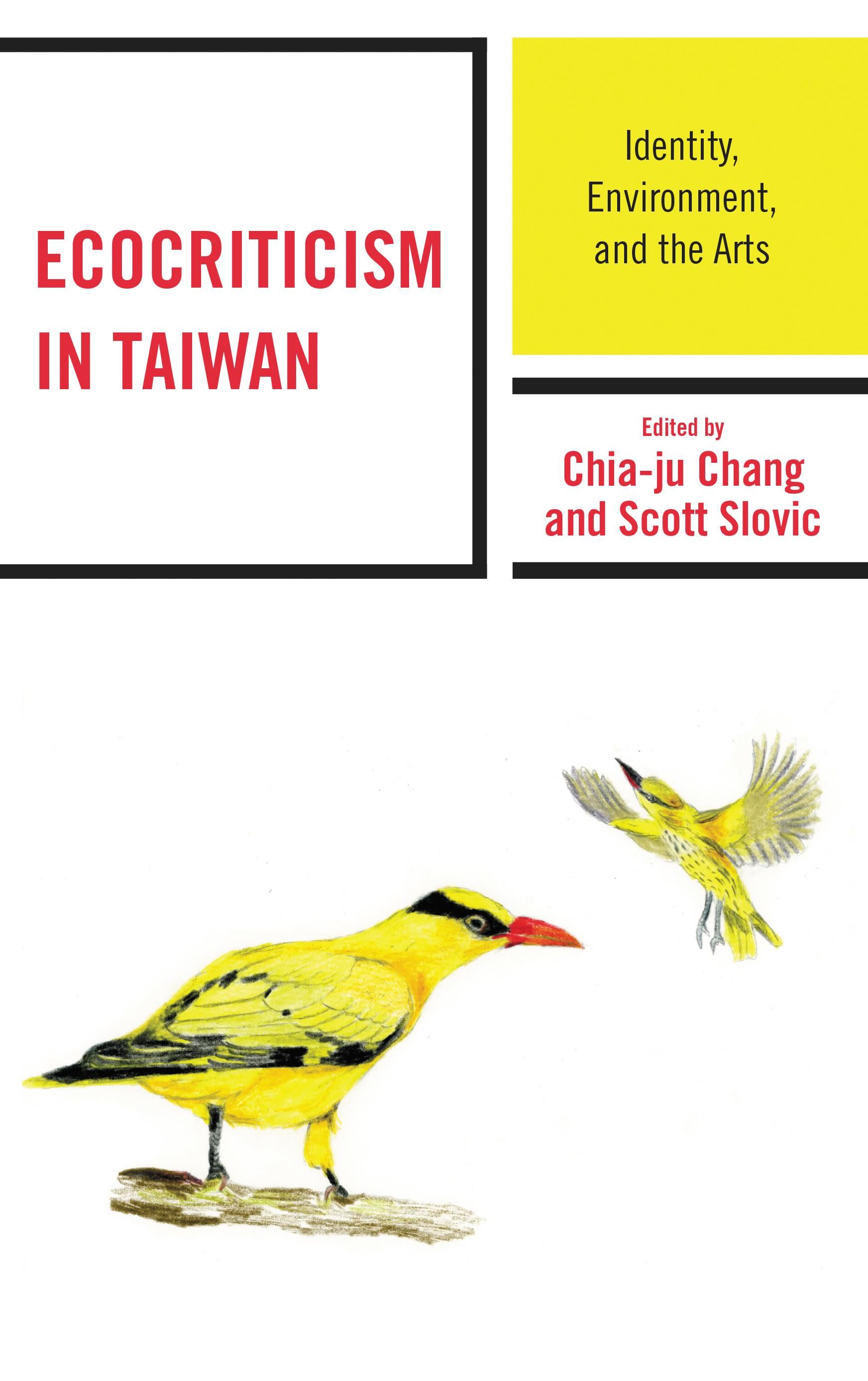
Ecocriticism in Taiwan
Author: Scott Slovic, Peter I-min Huang, Iris Ralph, Kathryn Yalan Chang, Hannes Berthaller, Dean Anthony Brink, Shiuhhuah Serena Chou, Hueichu Chu, Hsinya Huang, Rose Hsui-li Juan, Yu-lin Lee, Iping Liang, Robin Chen-hsing Tsai, Shu-fen Tsai, Ming-tu Yang, Chia-ju Chang
Publisher: Bloomsbury Publishing
Edition: 1
Published date: 2016
ISBN: 9781498538275
Ecocriticism is a mode of interdisciplinary critical inquiry into the relationship between cultural production, society, and the environment. The field advocates for the more-than-human realm as well as for underprivileged human and non-human groups and their perspectives. Taiwan is one of the earliest centers for promoting ecocriticism outside the West and has continued to play a central role in shaping ecocriticism in East Asia. This is the first English anthology dedicated to the vibrant development of ecocriticism in Taiwan. It provides a window to Taiwan’s important contributions to international ecocriticism, especially an emerging “vernacular” trend in the field emphasizing the significance of local perspectives and styles, including non-western vocabularies, aesthetics, cosmologies, and political ideologies.
Taiwan's unique history, geographic location, geology, and subtropical climate generate locale-specific, vernacular thinking about island ecology and environmental history, as well as global environmental issues such as climate change, dioxin pollution, species extinction, energy decisions, pollution, and environmental injustice. In hindsight, Taiwan's industrial modernization no longer appears as a success narrative among Asia's “Four Little Dragons,” but as a cautionary tale revealing the brute force entrepreneurial exploitation of the land and the people. In this light, this volume can be seen as a critical response to Taiwan's postcolonial, capitalist-industrial modernity, as manifested in the scholars’ readings of Taiwan's "mountain and river," ocean, animal, and aboriginal (non)fictional narratives, environmental documentaries, and art installations.
This volume is endowed with a mixture of ecocosmopolitan and indigenous sensitivities. Though dominated by the Han Chinese ethnic group and its Confucian ideology, Taiwan is a place of complicated ethnic identities and affiliations. The succession of changing colonial and political regimes, made even more complex by the island’s sixteen aboriginal groups and several diasporic subcultures (South Asian immigrants, Western expatriates, and diverse immigrants from the Chinese mainland), has led to an ongoing quest for political and cultural identity. This complexity urges Taiwan-based ecoscholars to pay attention to the diasporic, comparative, and intercultural dimensions of local specificity, either based on their own diasporic experience or the cosmopolitan features of the Taiwanese texts they scrutinize. This cosmopolitan-vernacular dynamic is a key contribution Taiwan has to offer current ecocritical scholarship.
Taiwan's unique history, geographic location, geology, and subtropical climate generate locale-specific, vernacular thinking about island ecology and environmental history, as well as global environmental issues such as climate change, dioxin pollution, species extinction, energy decisions, pollution, and environmental injustice. In hindsight, Taiwan's industrial modernization no longer appears as a success narrative among Asia's “Four Little Dragons,” but as a cautionary tale revealing the brute force entrepreneurial exploitation of the land and the people. In this light, this volume can be seen as a critical response to Taiwan's postcolonial, capitalist-industrial modernity, as manifested in the scholars’ readings of Taiwan's "mountain and river," ocean, animal, and aboriginal (non)fictional narratives, environmental documentaries, and art installations.
This volume is endowed with a mixture of ecocosmopolitan and indigenous sensitivities. Though dominated by the Han Chinese ethnic group and its Confucian ideology, Taiwan is a place of complicated ethnic identities and affiliations. The succession of changing colonial and political regimes, made even more complex by the island’s sixteen aboriginal groups and several diasporic subcultures (South Asian immigrants, Western expatriates, and diverse immigrants from the Chinese mainland), has led to an ongoing quest for political and cultural identity. This complexity urges Taiwan-based ecoscholars to pay attention to the diasporic, comparative, and intercultural dimensions of local specificity, either based on their own diasporic experience or the cosmopolitan features of the Taiwanese texts they scrutinize. This cosmopolitan-vernacular dynamic is a key contribution Taiwan has to offer current ecocritical scholarship.
Pages: 238
Category: Litteraturvetenskap & Teori
e-ISBN: 9781498538282
Shipping weight: 1.2 kg
Ships in: 1-2 days
Pay easily by card, Klarna, Apple Pay or Google Pay. Not happy? You always have a 14-day money-back guarantee. Read more in our terms. If you have any questions, email us at hello@memmo.org.
Memmo makes studying easier – wherever you are in the world. We bring your course books and smart study tools together in one place: summaries, quizzes, podcasts and flashcards. Plus Ted, your study buddy who answers anything you wonder. Over 50,000 students already study here – built to help you learn faster and stress less.