
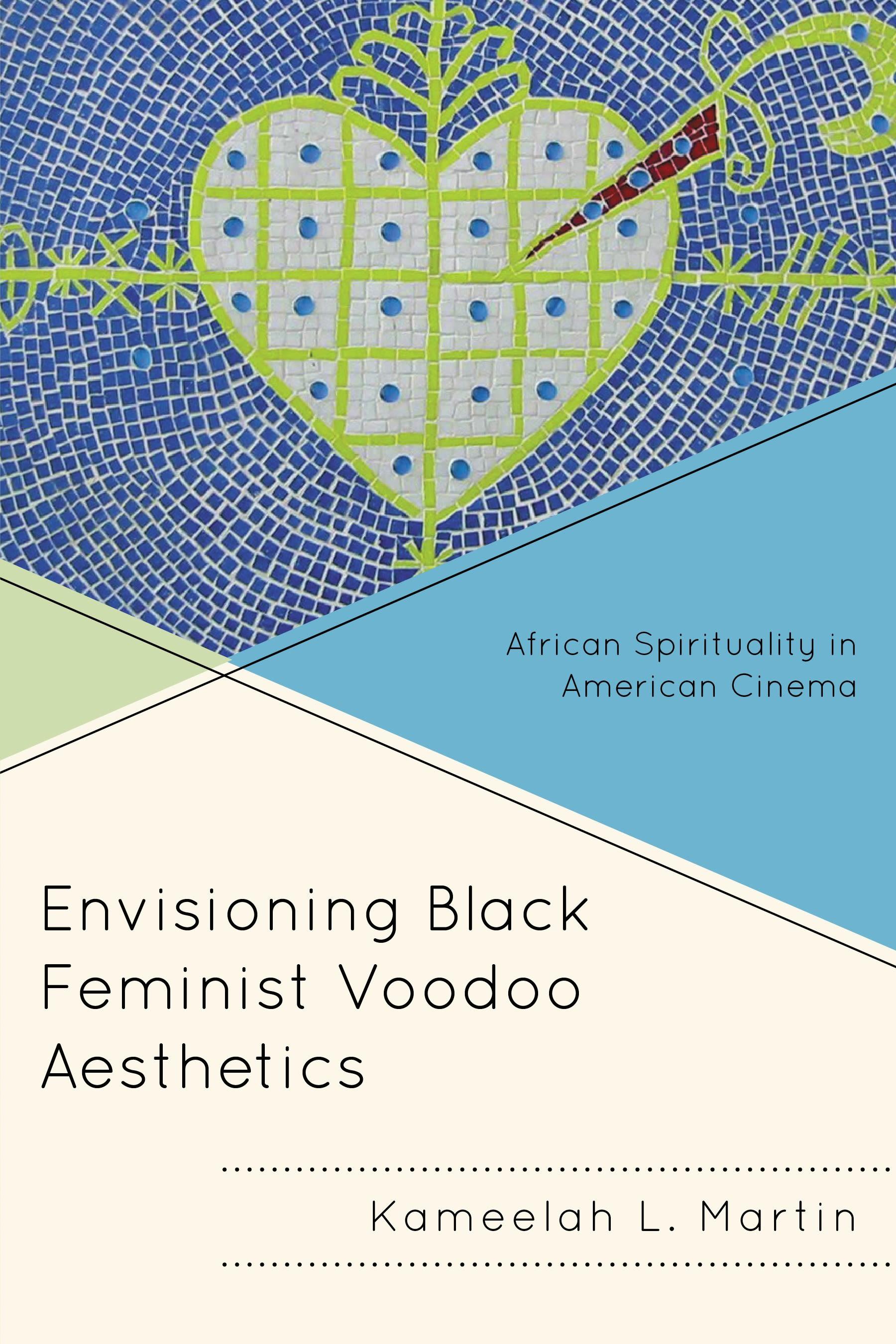
In the twenty-first century, American popular culture increasingly makes visible the performance of African spirituality by black women. Disney’s Princess and the Frog and Pirates of the Caribbean franchise are two notable examples. The reliance on the black priestess of African-derived religion as an archetype, however, has a much longer history steeped in the colonial othering of Haitian Vodou and American imperialist fantasies about so-called ‘black magic’.
Within this cinematic study, Martin unravels how religious autonomy impacts the identity, function, and perception of Africana women in the American popular imagination. Martin interrogates seventy-five years of American film representations of black women engaged in conjure, hoodoo, obeah, or Voodoo to discern what happens when race, gender, and African spirituality collide. She develops the framework of Voodoo aesthetics, or the inscription of African cosmologies on the black female body, as the theoretical lens through which to scrutinize black female religious performance in film. Martin places the genre of film in conversation with black feminist/womanist criticism, offering an interdisciplinary approach to film analysis.
Positioning the black priestess as another iteration of Patricia Hill Collins’ notion of controlling images, Martin theorizes whether film functions as a safe space for a racial and gendered embodiment in the performance of African diasporic religion. Approaching the close reading of eight signature films from a black female spectatorship, Martin works chronologically to express the trajectory of the black priestess as cinematic motif over the last century of filmmaking. Conceptually, Martin recalibrates the scholarship on black women and representation by distinctly centering black women as ritual specialists and Black Atlantic spirituality on the silver screen.
Within this cinematic study, Martin unravels how religious autonomy impacts the identity, function, and perception of Africana women in the American popular imagination. Martin interrogates seventy-five years of American film representations of black women engaged in conjure, hoodoo, obeah, or Voodoo to discern what happens when race, gender, and African spirituality collide. She develops the framework of Voodoo aesthetics, or the inscription of African cosmologies on the black female body, as the theoretical lens through which to scrutinize black female religious performance in film. Martin places the genre of film in conversation with black feminist/womanist criticism, offering an interdisciplinary approach to film analysis.
Positioning the black priestess as another iteration of Patricia Hill Collins’ notion of controlling images, Martin theorizes whether film functions as a safe space for a racial and gendered embodiment in the performance of African diasporic religion. Approaching the close reading of eight signature films from a black female spectatorship, Martin works chronologically to express the trajectory of the black priestess as cinematic motif over the last century of filmmaking. Conceptually, Martin recalibrates the scholarship on black women and representation by distinctly centering black women as ritual specialists and Black Atlantic spirituality on the silver screen.
Pages: 256
Category: Kultur-, Genus- & Postkoloniala studier
e-ISBN: 9781498523295
Shipping weight: 1.2 kg
Ships in: 1-2 days
Pay easily by card, Klarna, Apple Pay or Google Pay. Not happy? You always have a 14-day money-back guarantee. Read more in our terms. If you have any questions, email us at hello@memmo.org.
Memmo makes studying easier – wherever you are in the world. We bring your course books and smart study tools together in one place: summaries, quizzes, podcasts and flashcards. Plus Ted, your study buddy who answers anything you wonder. Over 50,000 students already study here – built to help you learn faster and stress less.