
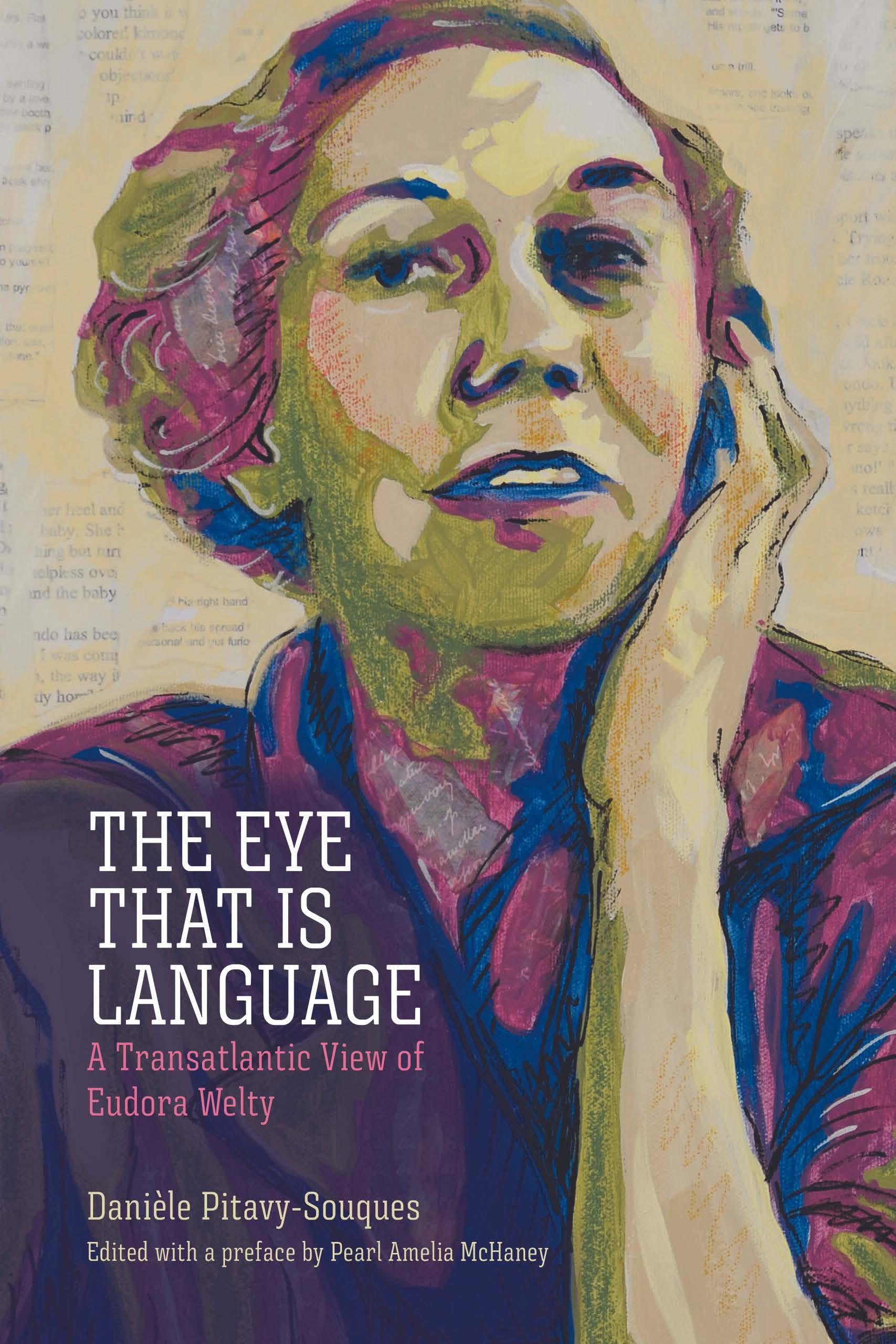
Danièle Pitavy-Souques (1937–2019) was a European powerhouse of Welty studies. In this collection of essays, Pitavy-Souques pours new light on Welty’s view of the world and her international literary import, challenging previous readings of Welty’s fiction, memoir, and photographs in illuminating ways. The nine essays collected here offer scholars, critics, and avid readers a new understanding and enjoyment of Welty’s work. The volume explores beloved stories in Welty’s masterpiece The Golden Apples, as well as “A Curtain of Green,” “Flowers for Marjorie,” “Old Mr. Marblehall,” “A Still Moment,” “Livvie,” “Circe,” “Kin,” and The Optimist’s Daughter, One Writer’s Beginnings, and One Time, One Place. Essays include “Technique as Myth: The Structure of The Golden Apples” (1979), “A Blazing Butterfly: The Modernity of Eudora Welty” (1987), and others written between 2000 and 2018. Together, they reveal and explain Welty’s brilliance for employing the particular to discover the universal.
Pitavy-Souques, who briefly lived in and often revisited the South, met with Welty several times in her Jackson, Mississippi, home. Her readings draw on the visual arts, European theorists, and styles of modernism, postmodernism, surrealism, as well as the baroque and the gothic. The included essays reflect Pitavy-Souques’s European education, her sophisticated understanding of intellectual theories and artistic movements abroad, and her passion for the literary achievement of women of genius. The Eye That Is Language: A Transatlantic View of Eudora Welty reveals the way in which Welty’s narrative techniques broaden her work beyond southern myths and mysteries into a global perspective of humanity.
Pitavy-Souques, who briefly lived in and often revisited the South, met with Welty several times in her Jackson, Mississippi, home. Her readings draw on the visual arts, European theorists, and styles of modernism, postmodernism, surrealism, as well as the baroque and the gothic. The included essays reflect Pitavy-Souques’s European education, her sophisticated understanding of intellectual theories and artistic movements abroad, and her passion for the literary achievement of women of genius. The Eye That Is Language: A Transatlantic View of Eudora Welty reveals the way in which Welty’s narrative techniques broaden her work beyond southern myths and mysteries into a global perspective of humanity.
Pay easily by card, Klarna, Apple Pay or Google Pay. Not happy? You always have a 14-day money-back guarantee. Read more in our terms. If you have any questions, email us at hello@memmo.org.
Memmo makes studying easier – wherever you are in the world. We bring your course books and smart study tools together in one place: summaries, quizzes, podcasts and flashcards. Plus Ted, your study buddy who answers anything you wonder. Over 50,000 students already study here – built to help you learn faster and stress less.
You might also like
Buy the book0