
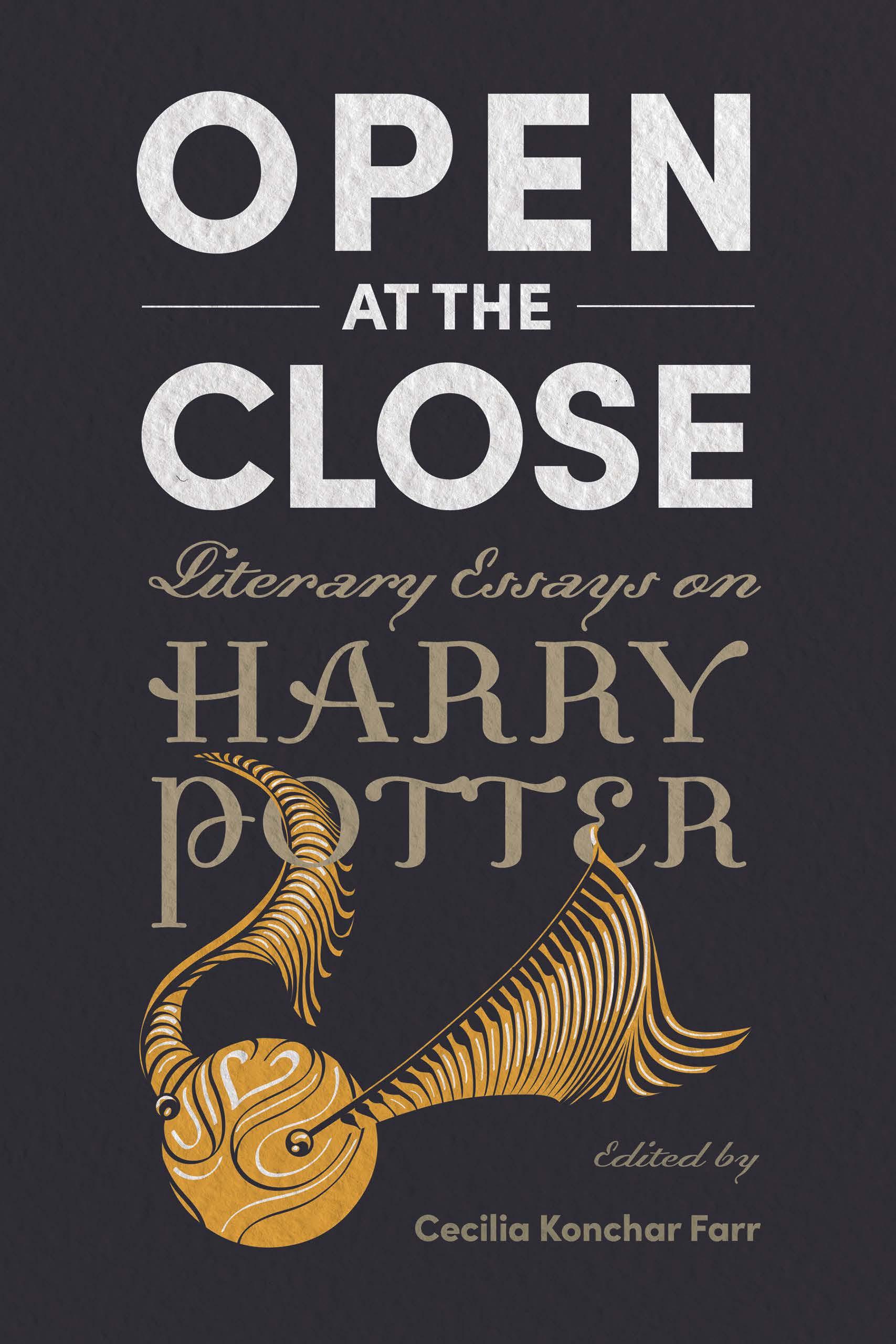
Contributions by Lauren R. Carmacci, Keridiana Chez, Kate Glassman, John Granger, Marie Schilling Grogan, Beatrice Groves, Tolonda Henderson, Nusaiba Imady, Cecilia Konchar Farr, Juliana Valadão Lopes, Amy Mars, Christina Phillips-Mattson, Patrick McCauley, Jennifer M. Reeher, Jonathan A. Rose, and Emily Strand
Despite their decades-long, phenomenal success, the Harry Potter novels have attracted relatively little attention from literary critics and scholars. While popular books, articles, blogs, and fan sites for general readers proliferate, and while philosophers, historians, theologians, sociologists, psychologists, and even business professors have taken on book-length studies and edited essay collections about Harry Potter, literature scholars, outside of the children’s books community, have paid few serious visits to the Potterverse. Could it be that scholars are still reluctant to recognize popular novels, especially those with genre labels “children’s literature” or “fantasy,” as worthy subjects for academic study?
This book challenges that oversight, assembling and foregrounding some of the best literary critical work by scholars trying to move the needle on these novels to reflect their importance to twenty-first-century literary culture. In Open at the Close, contributors consciously address Harry Potter primarily as a literary phenomenon rather than a cultural one. They interrogate the novels on many levels, from multiple perspectives, and with various conclusions, but they come together around the overarching question: What is it about these books? At their heart, what is it that makes the Harry Potter novels so exceptionally compelling, so irresistible to their readers, and so relevant in our time?
Despite their decades-long, phenomenal success, the Harry Potter novels have attracted relatively little attention from literary critics and scholars. While popular books, articles, blogs, and fan sites for general readers proliferate, and while philosophers, historians, theologians, sociologists, psychologists, and even business professors have taken on book-length studies and edited essay collections about Harry Potter, literature scholars, outside of the children’s books community, have paid few serious visits to the Potterverse. Could it be that scholars are still reluctant to recognize popular novels, especially those with genre labels “children’s literature” or “fantasy,” as worthy subjects for academic study?
This book challenges that oversight, assembling and foregrounding some of the best literary critical work by scholars trying to move the needle on these novels to reflect their importance to twenty-first-century literary culture. In Open at the Close, contributors consciously address Harry Potter primarily as a literary phenomenon rather than a cultural one. They interrogate the novels on many levels, from multiple perspectives, and with various conclusions, but they come together around the overarching question: What is it about these books? At their heart, what is it that makes the Harry Potter novels so exceptionally compelling, so irresistible to their readers, and so relevant in our time?
Pay easily by card, Klarna, Apple Pay or Google Pay. Not happy? You always have a 14-day money-back guarantee. Read more in our terms. If you have any questions, email us at hello@memmo.org.
Memmo makes studying easier – wherever you are in the world. We bring your course books and smart study tools together in one place: summaries, quizzes, podcasts and flashcards. Plus Ted, your study buddy who answers anything you wonder. Over 50,000 students already study here – built to help you learn faster and stress less.
You might also like
Buy the book0