
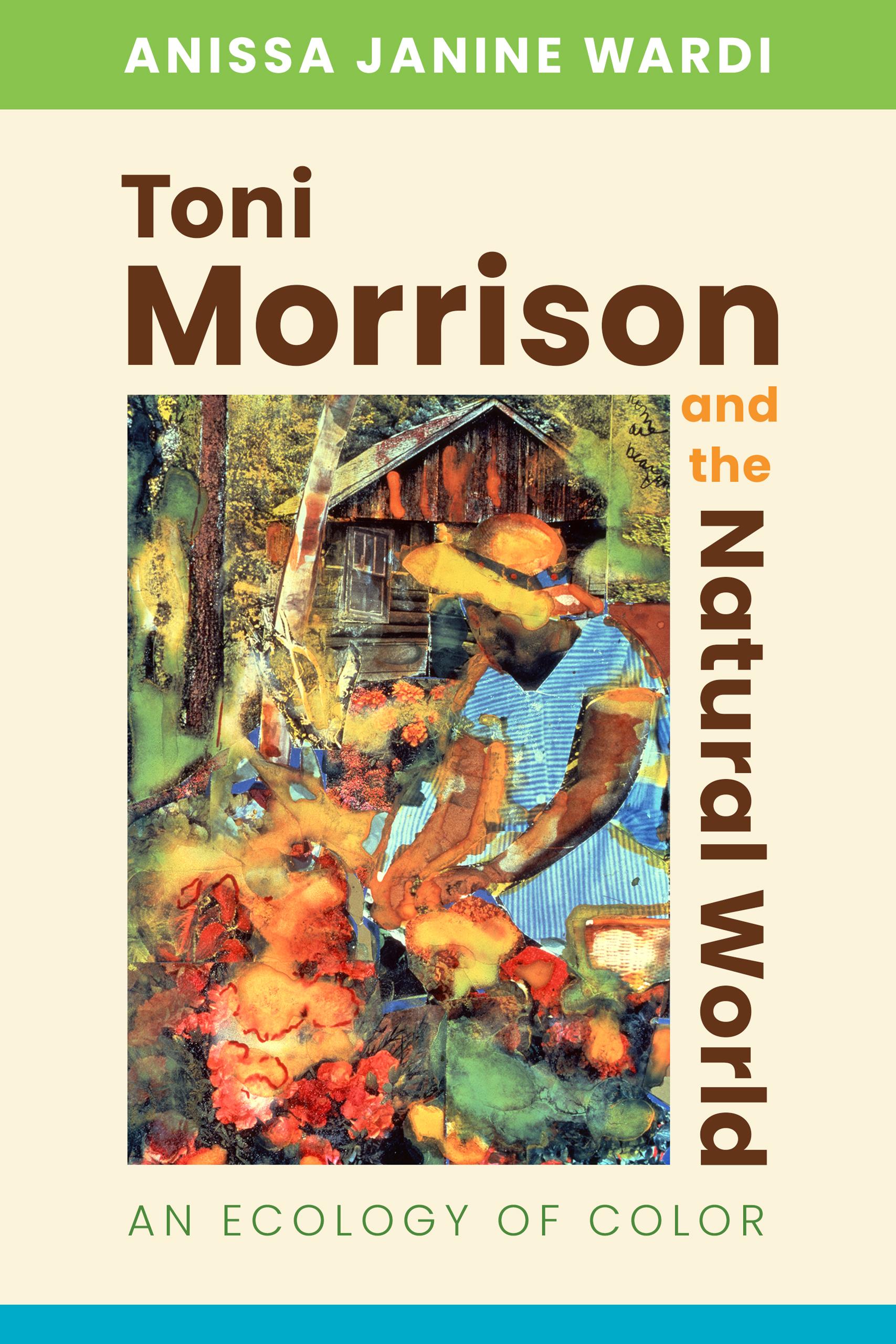
Winner of the Toni Morrison Society Book Prize for Best Single-Authored Book, 2019-2022
Critics have routinely excluded African American literature from ecocritical inquiry despite the fact that the literary tradition has, from its inception, proved to be steeped in environmental concerns that address elements of the natural world and relate nature to the transatlantic slave trade, plantation labor, and nationhood. Toni Morrison’s work is no exception. Toni Morrison and the Natural World: An Ecology of Color is the first full-length ecocritical investigation of the Nobel Laureate’s novels and brings to the fore an unequaled engagement between race and nature.
Morrison’s ecological consciousness holds that human geographies are enmeshed with nonhuman nature. It follows, then, that ecology, the branch of biology that studies how people relate to each other and their environment, is an apt framework for this book. The interrelationships and interactions between individuals and community, and between organisms and the biosphere, are central to this analysis. They highlight that the human and nonhuman are part of a larger ecosystem of interfacings and transformations. Toni Morrison and the Natural World is organized by color, examining soil (brown) in The Bluest Eye and Paradise; plant life (green) in Song of Solomon, Beloved, and Home; bodies of water (blue) in Tar Baby and Love; and fire (orange) in Sula and God Help the Child.
By providing a racially inflected reading of nature, Toni Morrison and the Natural World makes an important contribution to the field of environmental studies and provides a landmark for Morrison scholarship.
Critics have routinely excluded African American literature from ecocritical inquiry despite the fact that the literary tradition has, from its inception, proved to be steeped in environmental concerns that address elements of the natural world and relate nature to the transatlantic slave trade, plantation labor, and nationhood. Toni Morrison’s work is no exception. Toni Morrison and the Natural World: An Ecology of Color is the first full-length ecocritical investigation of the Nobel Laureate’s novels and brings to the fore an unequaled engagement between race and nature.
Morrison’s ecological consciousness holds that human geographies are enmeshed with nonhuman nature. It follows, then, that ecology, the branch of biology that studies how people relate to each other and their environment, is an apt framework for this book. The interrelationships and interactions between individuals and community, and between organisms and the biosphere, are central to this analysis. They highlight that the human and nonhuman are part of a larger ecosystem of interfacings and transformations. Toni Morrison and the Natural World is organized by color, examining soil (brown) in The Bluest Eye and Paradise; plant life (green) in Song of Solomon, Beloved, and Home; bodies of water (blue) in Tar Baby and Love; and fire (orange) in Sula and God Help the Child.
By providing a racially inflected reading of nature, Toni Morrison and the Natural World makes an important contribution to the field of environmental studies and provides a landmark for Morrison scholarship.
Pay easily by card, Klarna, Apple Pay or Google Pay. Not happy? You always have a 14-day money-back guarantee. Read more in our terms. If you have any questions, email us at hello@memmo.org.
Memmo makes studying easier – wherever you are in the world. We bring your course books and smart study tools together in one place: summaries, quizzes, podcasts and flashcards. Plus Ted, your study buddy who answers anything you wonder. Over 50,000 students already study here – built to help you learn faster and stress less.
You might also like
Buy the book0