
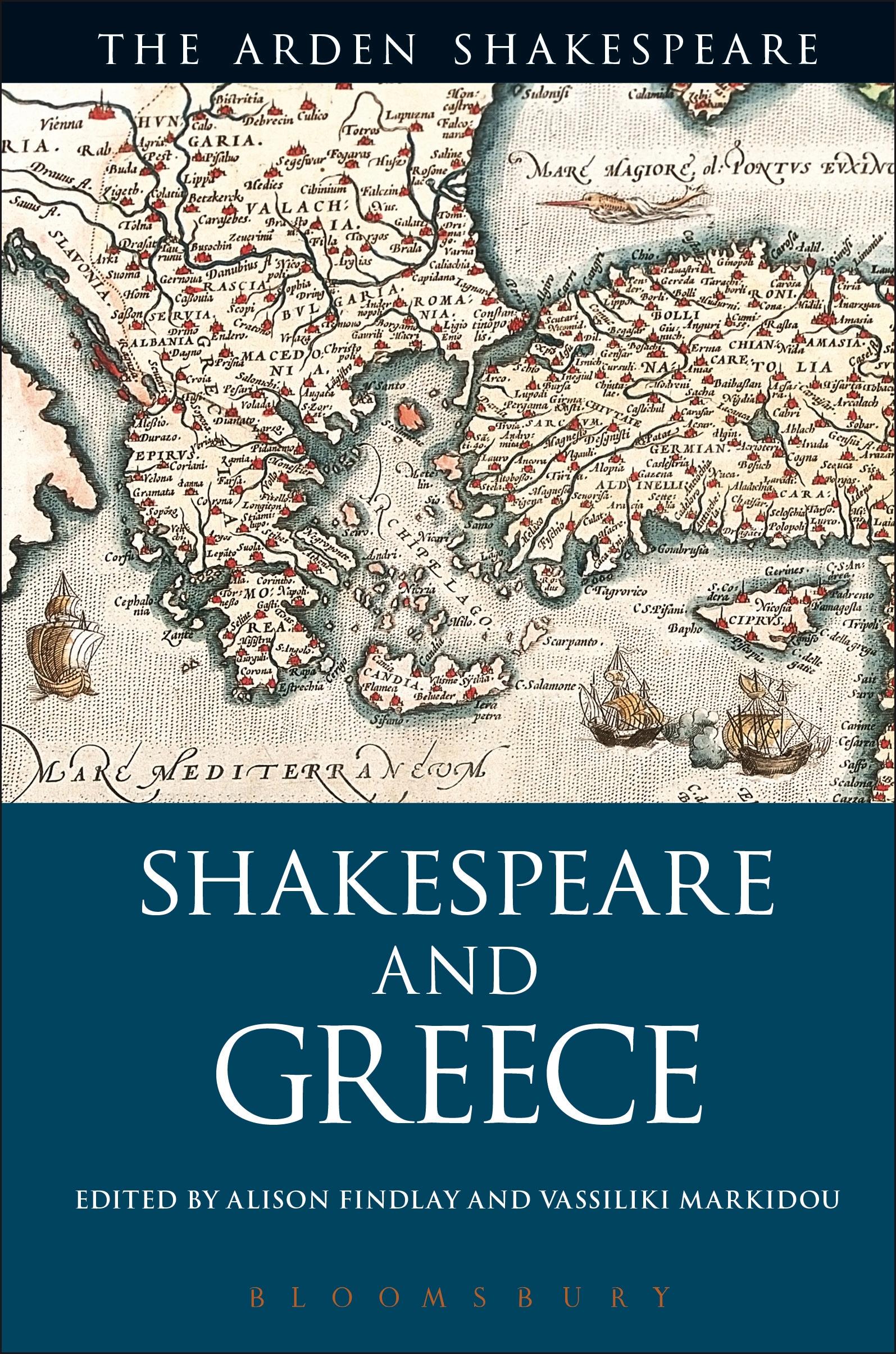
This book seeks to invert Ben Jonson's claim that Shakespeare had 'small Latin and less Greek' and to prove that, in fact, there is more Greek and less Latin in a significant group of Shakespeare's texts: a group whose generic hybridity (tragic-comical-historical-romance) exemplifies the hybridity of Greece in the early modern imagination. To early modern England, Greece was an enigma. It was the origin and idealised pinnacle of Western philosophy, tragedy, democracy, heroic human endeavour and, at the same time, an example of decadence: a fallen state, currently under Ottoman control, and therefore an exotic, dangerous, 'Other' in the most disturbing senses of the word. Indeed, while Britain was struggling to establish itself as a nation state and an imperial authority by emulating classical Greek models, this ambition was radically unsettled by early modern Greece's subjection to the Ottoman Empire, which rendered Europe's eastern borders dramatically vulnerable. Focusing, for the first time, on Shakespeare's 'Greek' texts (Venus and Adonis, The Comedy of Errors, A Midsummer Night's Dream, Love's Labour's Lost, Troilus and Cressida, Timon of Athens, King Lear, Pericles and The Two Noble Kinsmen), the volume considers how Shakespeare's use of antiquity and Greek myth intersects with early modern perceptions of the country and its empire.
Pages: 304
Category: Litteraturvetenskap & Teori
e-ISBN: 9781474244268
Shipping weight: 1.2 kg
Ships in: 1-2 days
Pay easily by card, Klarna, Apple Pay or Google Pay. Not happy? You always have a 14-day money-back guarantee. Read more in our terms. If you have any questions, email us at hello@memmo.org.
Memmo makes studying easier – wherever you are in the world. We bring your course books and smart study tools together in one place: summaries, quizzes, podcasts and flashcards. Plus Ted, your study buddy who answers anything you wonder. Over 50,000 students already study here – built to help you learn faster and stress less.