
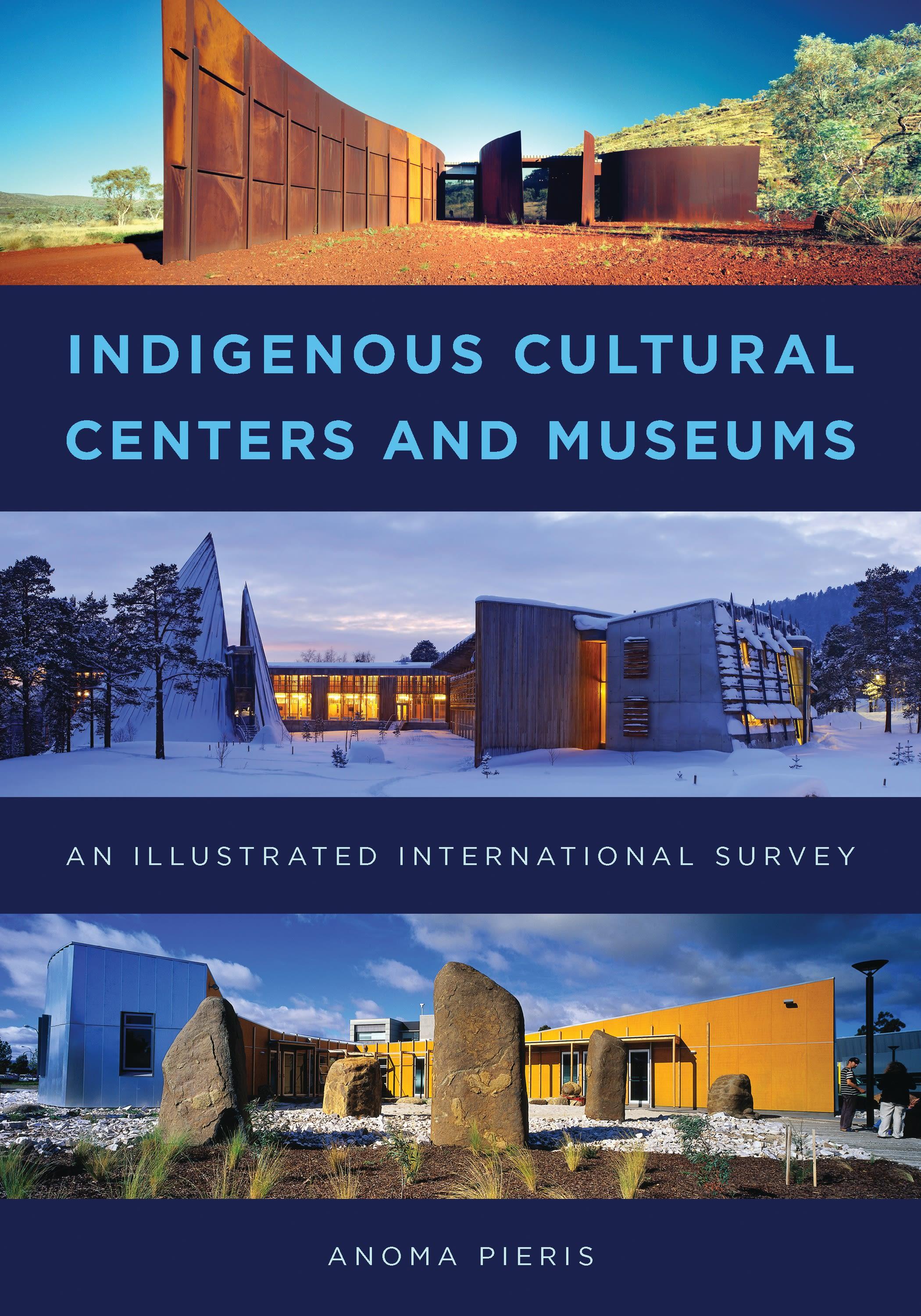
Here is a lavishly illustrated descriptive survey of 48 leading indigenous cultural centers around the world (35 are from Australia and 13 from North America, Japan, Europe, and Asia). The book shows how each is a potentially transformative, politically compelling addition to the field of cultural production, illustrating how the facilities --- all built in the last three decades --- have challenged assumptions about nature, culture, and built form. Using the spatial-temporal practice of place-making as the starting point, the facilities highlighted here are described in terms of collaborations between a number of stake-holders and professional consultants.
The book adopts the format of a descriptive survey with separate chapters devoted to individual case studies. A broad introductory chapter which presents the arguments and overview precedes richly illustrated short individual essays on selected projects. Each chapter commences with the details of the project including, location, area, cost and consultants, followed by a project description, and discussion of background, design development and reception of the projects. Each project is approached as an architectural commission, detailing the critical criteria, consultants, and processes. The format is adopted from architectural review essays typically used in awards or journal publications within the profession which are accessible and relevant for both academics and practitioners. Considerable attention is given to the process, and to the evaluation of the project as a cultural response. Each case study has been written with consultation of architects or administrators of the facilities for accuracy.
Indigenous Cultural Centers and Museums: An Illustrated International Survey documents a rich legacy of collaboration across the spatial disciplines combining creative art practice, architecture, construction, landscape design and urban design in the production of unique and culturally significant social institutions. This book provides material on hitherto unknown bodies of work of talented architectural practices, working collaboratively with culturally different client groups and developing consultative processes that test models for inter-cultural engagement.
The book adopts the format of a descriptive survey with separate chapters devoted to individual case studies. A broad introductory chapter which presents the arguments and overview precedes richly illustrated short individual essays on selected projects. Each chapter commences with the details of the project including, location, area, cost and consultants, followed by a project description, and discussion of background, design development and reception of the projects. Each project is approached as an architectural commission, detailing the critical criteria, consultants, and processes. The format is adopted from architectural review essays typically used in awards or journal publications within the profession which are accessible and relevant for both academics and practitioners. Considerable attention is given to the process, and to the evaluation of the project as a cultural response. Each case study has been written with consultation of architects or administrators of the facilities for accuracy.
Indigenous Cultural Centers and Museums: An Illustrated International Survey documents a rich legacy of collaboration across the spatial disciplines combining creative art practice, architecture, construction, landscape design and urban design in the production of unique and culturally significant social institutions. This book provides material on hitherto unknown bodies of work of talented architectural practices, working collaboratively with culturally different client groups and developing consultative processes that test models for inter-cultural engagement.
Pages: 387
Category: Kultur-, Genus- & Postkoloniala studier
e-ISBN: 9781442264076
Shipping weight: 1.2 kg
Ships in: 1-2 days
Pay easily by card, Klarna, Apple Pay or Google Pay. Not happy? You always have a 14-day money-back guarantee. Read more in our terms. If you have any questions, email us at hello@memmo.org.
Memmo makes studying easier – wherever you are in the world. We bring your course books and smart study tools together in one place: summaries, quizzes, podcasts and flashcards. Plus Ted, your study buddy who answers anything you wonder. Over 50,000 students already study here – built to help you learn faster and stress less.