
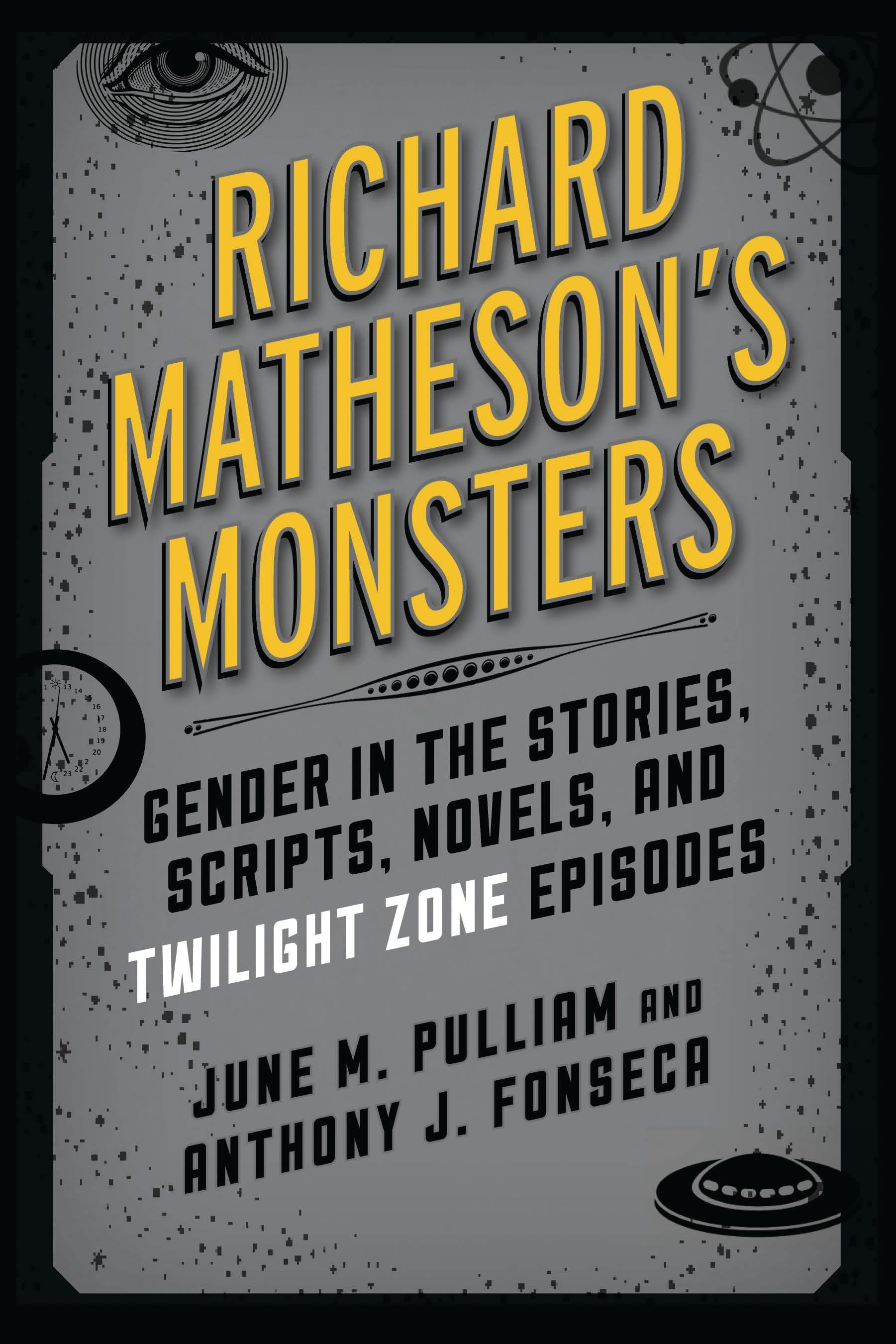
Richard Matheson was one of the leading writers of science fiction, fantasy, and horror in the twentieth century. Matheson’s most famous early works, the novels I Am Legend (1954) and The Shrinking Man (1956), both depict traditionally masculine figures thrust into extraordinary situations. Other thought-provoking novels, including Hell House (1971), Bid Time Return (1975), and What Dreams May Come (1978)—as well as short stories and screenplays—convey the ambiguous status of masculinity: how men should behave vis-à-vis women and what role they should occupy in the family dynamic and in society at large.
In Richard Matheson’s Monsters: Gender in the Stories, Scripts, Novels and Twilight Zone Episodes, June M. Pulliam and Anthony J. Fonseca examine how this groundbreaking author’s writings shed light on society’s ever-shifting attitudes on masculinity and domesticity. In this first full-length critical study of Matheson’s entire literary output, the authors discuss how I Am Legend, The Shrinking Man, and other works question traditional male roles. The authors examine how Matheson’s scripts for The Twilight Zone represented changing expectations in male behavior with the onset of the sexual and feminist revolutions, industrialization and globalization, and other issues.
In a society where gender roles are questioned every day, Matheson’s work is more relevant than ever. Richard Matheson’s Monsters will be of interest to scholars of literature, film, and television, as well those interested in gender and masculinity studies.
In Richard Matheson’s Monsters: Gender in the Stories, Scripts, Novels and Twilight Zone Episodes, June M. Pulliam and Anthony J. Fonseca examine how this groundbreaking author’s writings shed light on society’s ever-shifting attitudes on masculinity and domesticity. In this first full-length critical study of Matheson’s entire literary output, the authors discuss how I Am Legend, The Shrinking Man, and other works question traditional male roles. The authors examine how Matheson’s scripts for The Twilight Zone represented changing expectations in male behavior with the onset of the sexual and feminist revolutions, industrialization and globalization, and other issues.
In a society where gender roles are questioned every day, Matheson’s work is more relevant than ever. Richard Matheson’s Monsters will be of interest to scholars of literature, film, and television, as well those interested in gender and masculinity studies.
Pay easily by card, Klarna, Apple Pay or Google Pay. Not happy? You always have a 14-day money-back guarantee. Read more in our terms. If you have any questions, email us at hello@memmo.org.
Memmo makes studying easier – wherever you are in the world. We bring your course books and smart study tools together in one place: summaries, quizzes, podcasts and flashcards. Plus Ted, your study buddy who answers anything you wonder. Over 50,000 students already study here – built to help you learn faster and stress less.