
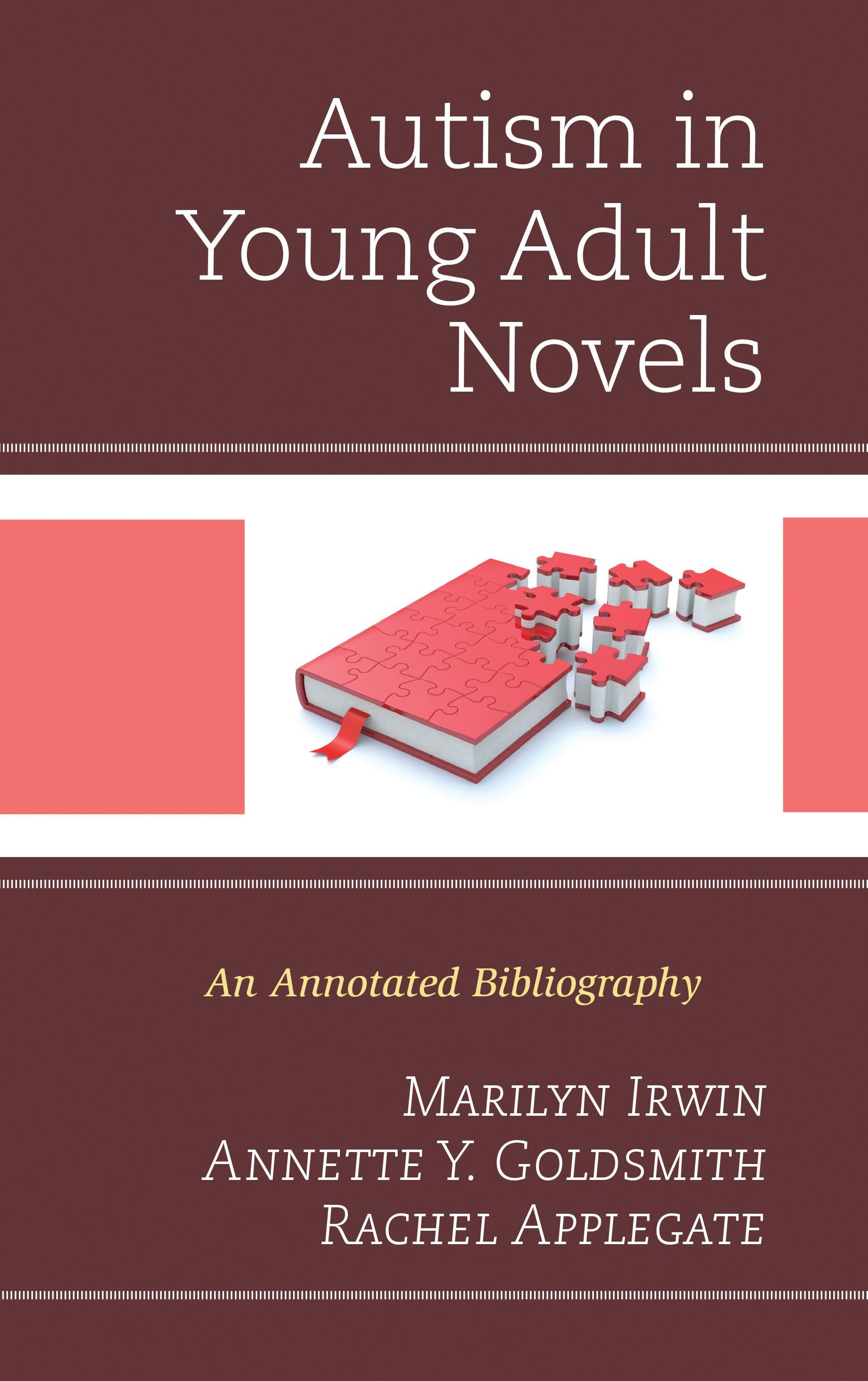
An estimated 1 in 110 children in the United States has autism spectrum disorder (ASD). Although the public awareness of autism has grown significantly, teens are not as educated about this subject as they should be. When accurately and positively presented, literature has been shown to help the classmates of those with ASD better understand the disorder. Increased familiarity with the subject will, in turn, help foster acceptance.
In Autism in Young Adult Novels: An Annotated Bibliography, Marilyn Irwin, Annette Y. Goldsmith, and Rachel Applegate identify and assess teen fiction with autism content. In the first section, the authors analyze how characters with ASD are presented. Where do they live and go to school? Do they have friends? Do they have good relationships with their family? How are they treated by others? The authors also consider whether autism is accurately presented. This discussion is followed by a comprehensive bibliography of books that feature a character identified as being on the autism spectrum.
The novels reviewed in this volume date as far back as the late 1960s and include works published in the last few years. As more and more authors of young adult fiction become sensitive to ASD, they are featuring such characters in their novels, creating more realistic works for their readers. This study will help librarians and others collect, choose, evaluate, and use these works to educate young adults.
In Autism in Young Adult Novels: An Annotated Bibliography, Marilyn Irwin, Annette Y. Goldsmith, and Rachel Applegate identify and assess teen fiction with autism content. In the first section, the authors analyze how characters with ASD are presented. Where do they live and go to school? Do they have friends? Do they have good relationships with their family? How are they treated by others? The authors also consider whether autism is accurately presented. This discussion is followed by a comprehensive bibliography of books that feature a character identified as being on the autism spectrum.
The novels reviewed in this volume date as far back as the late 1960s and include works published in the last few years. As more and more authors of young adult fiction become sensitive to ASD, they are featuring such characters in their novels, creating more realistic works for their readers. This study will help librarians and others collect, choose, evaluate, and use these works to educate young adults.
Pages: 166
Category: Litteraturvetenskap & Teori
e-ISBN: 9781442251847
Shipping weight: 1.2 kg
Ships in: 1-2 days
Pay easily by card, Klarna, Apple Pay or Google Pay. Not happy? You always have a 14-day money-back guarantee. Read more in our terms. If you have any questions, email us at hello@memmo.org.
Memmo makes studying easier – wherever you are in the world. We bring your course books and smart study tools together in one place: summaries, quizzes, podcasts and flashcards. Plus Ted, your study buddy who answers anything you wonder. Over 50,000 students already study here – built to help you learn faster and stress less.