
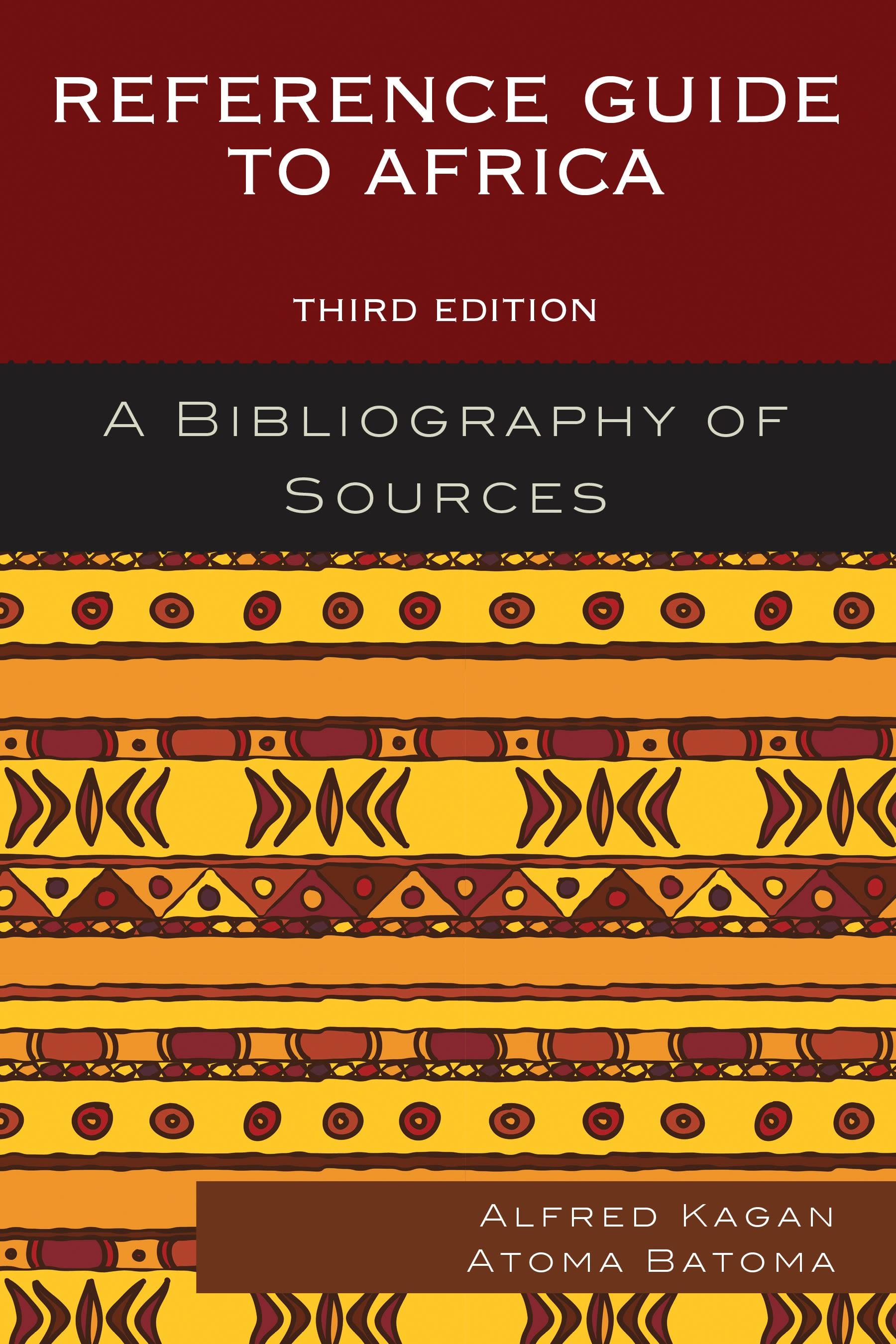
This third edition of the Reference Guide to Africa explains the most important resources for the study of the continent of Africa. It contains a general sources section and a larger disciplinary oriented section. All sources are annotated. A new edition is sorely needed since the last edition was published nine years ago. The previous editions have been successfully used in research libraries worldwide since 1999, and it has been used to teach several African studies research courses.
The book provides an orientation for researching almost any topic in the arts, humanities and social sciences concerning the continent of Africa, and all of its countries and ethnic groups. The first part explains and lists portals, databases, bibliographies, indexes, guides, encyclopedias, country sources, biography, primary sources, government publications, and statistics. The second part presents 16 subject-oriented chapters, mostly in the arts, humanities and social sciences, from agriculture and food security to women studies. It covers sources that broadly cover the continent, or in some cases only North Africa (and the Middle East). It generally excludes sources limited to one country or region of Africa, except for North Africa because of the nature of the literature.
One-third of the sources in this edition are new, and nearly half of them are available in electronic format. There are author/title and subject indexes.
This unique work is intended for students, teachers, librarians, and researchers. It likely will be used most by reference librarians and teachers for students in high school through graduate studies. It will also be used independently by undergraduate and graduate students. It can be used to answer simple reference questions, provide the resources for an undergraduate paper, or for comprehensive work by advanced students and researchers.
The book provides an orientation for researching almost any topic in the arts, humanities and social sciences concerning the continent of Africa, and all of its countries and ethnic groups. The first part explains and lists portals, databases, bibliographies, indexes, guides, encyclopedias, country sources, biography, primary sources, government publications, and statistics. The second part presents 16 subject-oriented chapters, mostly in the arts, humanities and social sciences, from agriculture and food security to women studies. It covers sources that broadly cover the continent, or in some cases only North Africa (and the Middle East). It generally excludes sources limited to one country or region of Africa, except for North Africa because of the nature of the literature.
One-third of the sources in this edition are new, and nearly half of them are available in electronic format. There are author/title and subject indexes.
This unique work is intended for students, teachers, librarians, and researchers. It likely will be used most by reference librarians and teachers for students in high school through graduate studies. It will also be used independently by undergraduate and graduate students. It can be used to answer simple reference questions, provide the resources for an undergraduate paper, or for comprehensive work by advanced students and researchers.
Pages: 240
Category: Kultur-, Genus- & Postkoloniala studier
e-ISBN: 9781442242616
Shipping weight: 1.2 kg
Ships in: 1-2 days
Pay easily by card, Klarna, Apple Pay or Google Pay. Not happy? You always have a 14-day money-back guarantee. Read more in our terms. If you have any questions, email us at hello@memmo.org.
Memmo makes studying easier – wherever you are in the world. We bring your course books and smart study tools together in one place: summaries, quizzes, podcasts and flashcards. Plus Ted, your study buddy who answers anything you wonder. Over 50,000 students already study here – built to help you learn faster and stress less.