
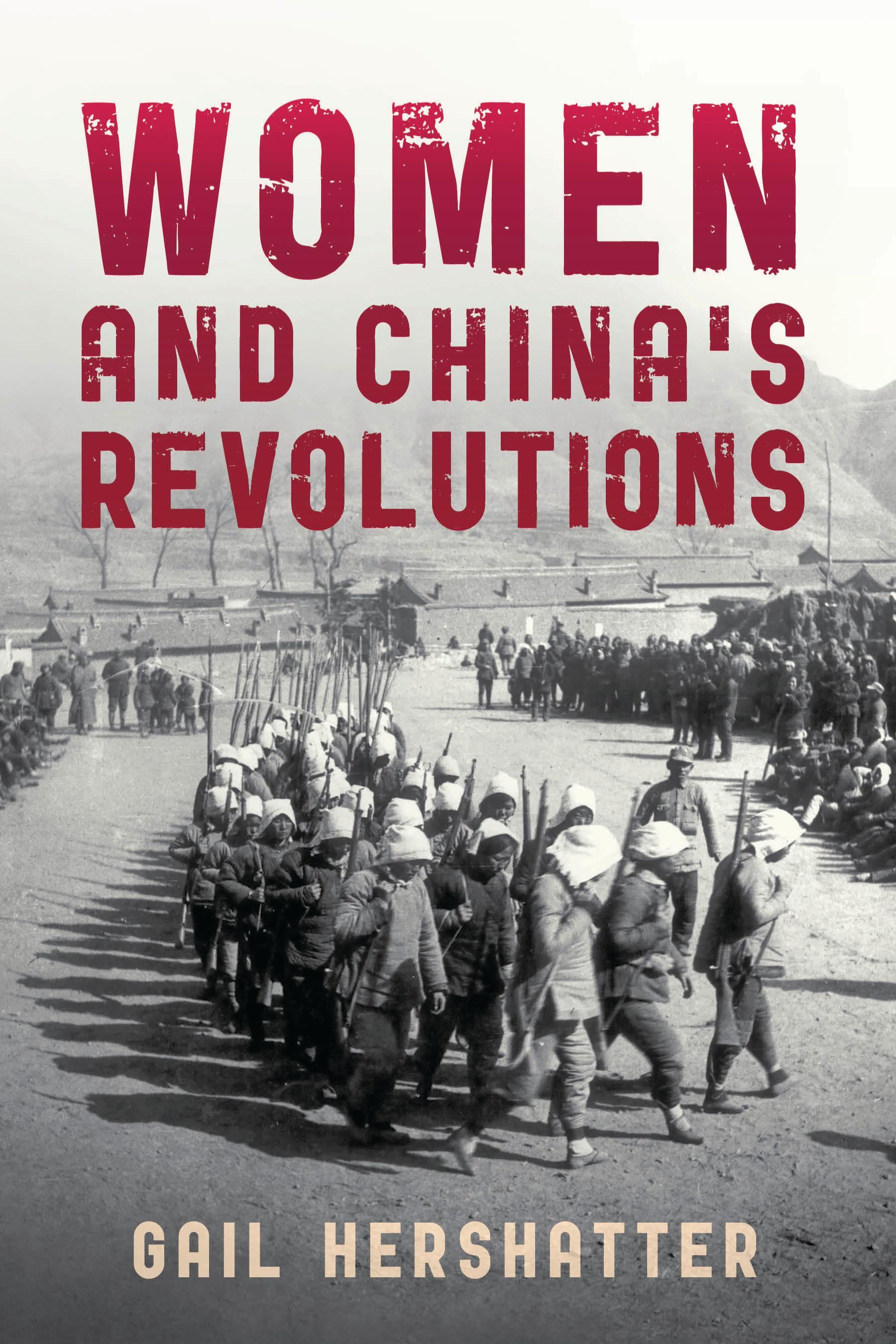
If we place women at the center of our account of China’s last two centuries, how does this change our understanding of what happened? This deeply knowledgeable book illuminates the places where the Big History of recognizable events intersects with the daily lives of ordinary people, using gender as its analytic lens. Leading scholar Gail Hershatter asks how these events affected women in particular, and how women affected the course of these events. For instance, did women have a 1911 revolution? A socialist revolution? If so, what did those revolutions look like? Which women had them?
Hershatter uses two key themes to frame her analysis. The first is the importance of women’s visible and invisible labor. The labor of women in domestic and public spaces shaped China’s move from empire to republic to socialist nation to rising capitalist power. The second is the symbolic work performed by gender itself. What women should do and be was a constant topic of debate during China’s transformation from empire to weak state to partially occupied territory to nascent socialist republic to reform-era powerhouse. What sorts of concerns did people express through the language of gender? How did that language work, and why was it so powerful?
Drawing on decades of Hershatter’s groundbreaking scholarship and mastery of a range of literatures, this beautifully written book will be essential reading for all students of China’s modern history.
Hershatter uses two key themes to frame her analysis. The first is the importance of women’s visible and invisible labor. The labor of women in domestic and public spaces shaped China’s move from empire to republic to socialist nation to rising capitalist power. The second is the symbolic work performed by gender itself. What women should do and be was a constant topic of debate during China’s transformation from empire to weak state to partially occupied territory to nascent socialist republic to reform-era powerhouse. What sorts of concerns did people express through the language of gender? How did that language work, and why was it so powerful?
Drawing on decades of Hershatter’s groundbreaking scholarship and mastery of a range of literatures, this beautifully written book will be essential reading for all students of China’s modern history.
Pages: 424
Category: Kultur-, Genus- & Postkoloniala studier
e-ISBN: 9781442215702
Shipping weight: 1.2 kg
Ships in: 1-2 days
Pay easily by card, Klarna, Apple Pay or Google Pay. Not happy? You always have a 14-day money-back guarantee. Read more in our terms. If you have any questions, email us at hello@memmo.org.
Memmo makes studying easier – wherever you are in the world. We bring your course books and smart study tools together in one place: summaries, quizzes, podcasts and flashcards. Plus Ted, your study buddy who answers anything you wonder. Over 50,000 students already study here – built to help you learn faster and stress less.