
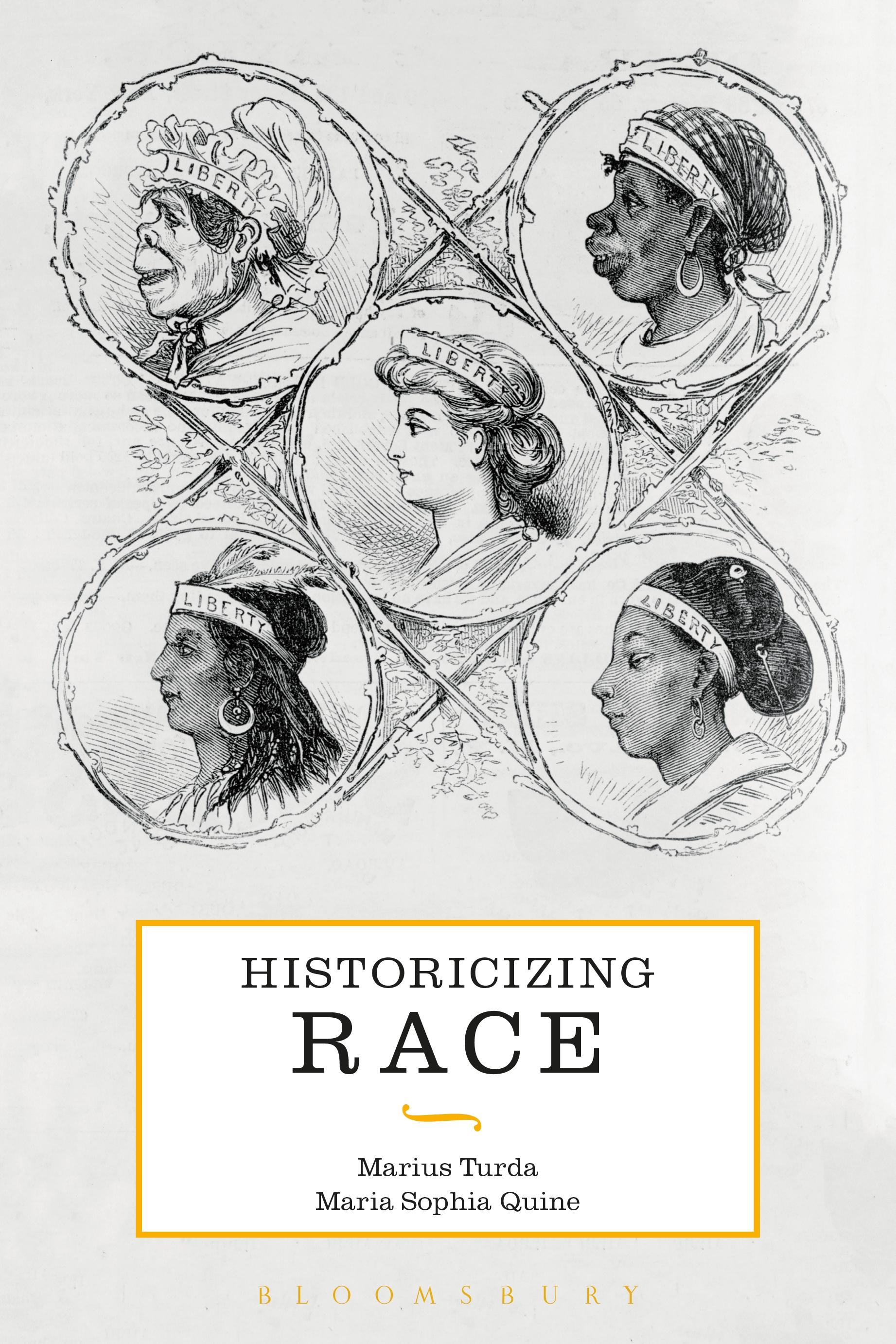
The idea of race may be outdated, as many commentators and scholars, working in a broad range of different fields in the sciences and humanities, have argued over many years. Nevertheless, it remains one of the most persistent forms of human classification. Theories of race primitivism (the idea that there is a 'natural' racial hierarchy and ranking order of 'inferior' and 'superior' races), race biologism (the belief that people can be classified by genetic features which are shared by members of racial groups), and race essentialism (the notion that races can be defined by scientifically identifiable and verifiable cultural and physical characteristics) are deeply embedded in modern history, culture and politics.
Historicizing Race offers a new understanding of this reality by exploring the interconnectedness of scientific, cultural and political strands of racial thought in Europe and elsewhere. It re-conceptualises the idea of race by unearthing various historical traditions that continue to inform not only current debates about individual and collective identities, but also national and international politics. In a concise format, accessible to students and scholars alike, the authors draw out some of the reasons why race-centred thinking has, in recent years, re-emerged in such shocking and explicit form in current populist, xenophobic, and anti-immigration movements.
Historicizing Race offers a new understanding of this reality by exploring the interconnectedness of scientific, cultural and political strands of racial thought in Europe and elsewhere. It re-conceptualises the idea of race by unearthing various historical traditions that continue to inform not only current debates about individual and collective identities, but also national and international politics. In a concise format, accessible to students and scholars alike, the authors draw out some of the reasons why race-centred thinking has, in recent years, re-emerged in such shocking and explicit form in current populist, xenophobic, and anti-immigration movements.
Pages: 208
Category: Kultur-, Genus- & Postkoloniala studier
e-ISBN: 9781441158246
Shipping weight: 1.2 kg
Ships in: 1-2 days
Pay easily by card, Klarna, Apple Pay or Google Pay. Not happy? You always have a 14-day money-back guarantee. Read more in our terms. If you have any questions, email us at hello@memmo.org.
Memmo makes studying easier – wherever you are in the world. We bring your course books and smart study tools together in one place: summaries, quizzes, podcasts and flashcards. Plus Ted, your study buddy who answers anything you wonder. Over 50,000 students already study here – built to help you learn faster and stress less.