
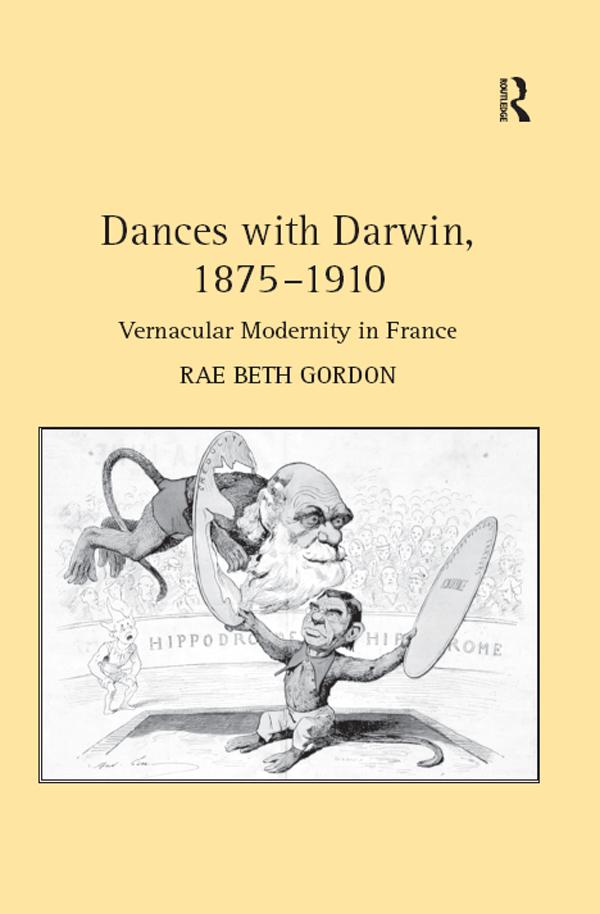
Examining the extraordinary influence of Darwin's theory of evolution on French thought from 1875 to 1910, Rae Beth Gordon argues for a reconsideration of modernism both in time and in place that situates its beginnings in the French café-concert aesthetic. Gordon weaves the history of medical science, ethnology, and popular culture into a groundbreaking exploration of the cultural implications of gesture in dance performances at late-nineteenth-century Parisian café-concerts and music halls. While art historians have studied the ties between primitivism and modernism, their convergence in fin-de-siècle popular entertainment has been largely overlooked. Gordon argues that while the impact of Darwinism was unprecedented in science, it was no less present in popular culture through the popular press and popular entertainment, where it constituted a kind of "evolutionist aesthetic" on display in the café-concert, circus, and music-hall as well as in the spectator's reception of the representations on the stage. Modernity in these sites, Gordon contends, was composed by the convergence of contemporary medical theory with representations of the primitive, staged in entertainments that ranged from the can-can, Missing Links, and epileptic singers to the Cake-Walk. Her anthropology of gesture uncovers in these dislocations of the human form an aesthetic of disorder a half century before the eruptions of Dada and Surrealism.
Pay easily by card, Klarna, Apple Pay or Google Pay. Not happy? You always have a 14-day money-back guarantee. Read more in our terms. If you have any questions, email us at hello@memmo.org.
Memmo makes studying easier – wherever you are in the world. We bring your course books and smart study tools together in one place: summaries, quizzes, podcasts and flashcards. Plus Ted, your study buddy who answers anything you wonder. Over 50,000 students already study here – built to help you learn faster and stress less.
You might also like
Buy the book0