
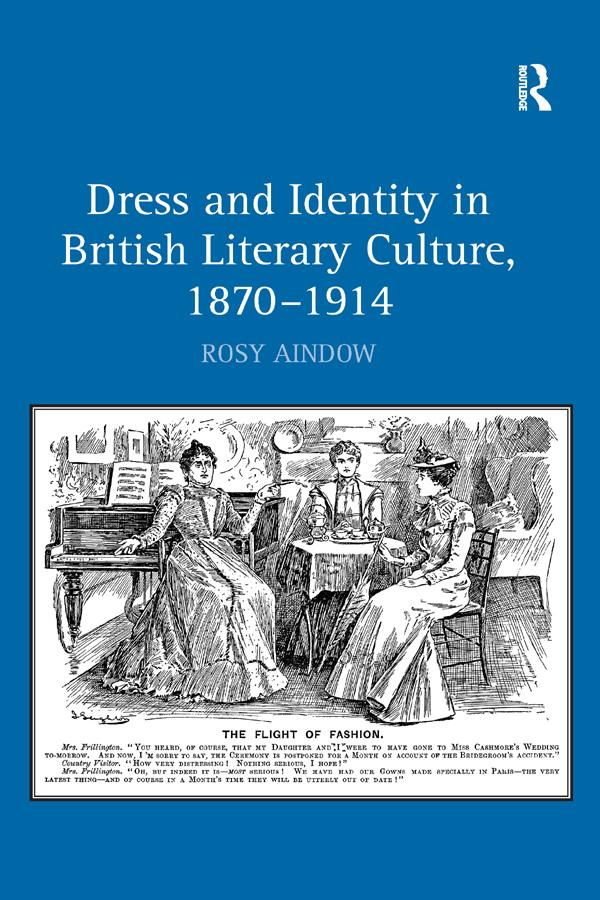
Rosy Aindow examines the way fiction registered and responded to the emergence of a modern fashion industry during the period 1870-1914. She traces the role played by dress in the formation of literary identities, with specific attention to the way that an engagement with fashionable clothing was understood to be a means of class emulation. The expansion of the fashion industry in the second half of the nineteenth century is generally considered to have had a significant impact on the way in which lower income groups, in particular, encountered clothing: many were able to participate in fashionable consumption for the first time. Remaining alert to the historical specificity of these events, this study argues that the cultural perception of the expansion of the industry - namely a predominantly bourgeois fear that it would result in a democratisation in dress - had a profound effect on the way in which fashion was approached by contemporary writers. Drawing on existing cultural analogies that associated fashion with women and artifice, it concludes that women were particularly implicated in fictional accounts of class mobility. This transgression applied not only to women who wore fashionable clothing, but to those working in the fashion industry itself. An allusion to fashion has a socio-specific meaning, one which gained a new potency in late nineteenth- and early twentieth-century narratives as a vehicle for the expression of class anxieties.
Pay easily by card, Klarna, Apple Pay or Google Pay. Not happy? You always have a 14-day money-back guarantee. Read more in our terms. If you have any questions, email us at hello@memmo.org.
Memmo makes studying easier – wherever you are in the world. We bring your course books and smart study tools together in one place: summaries, quizzes, podcasts and flashcards. Plus Ted, your study buddy who answers anything you wonder. Over 50,000 students already study here – built to help you learn faster and stress less.
You might also like
Buy the book0