
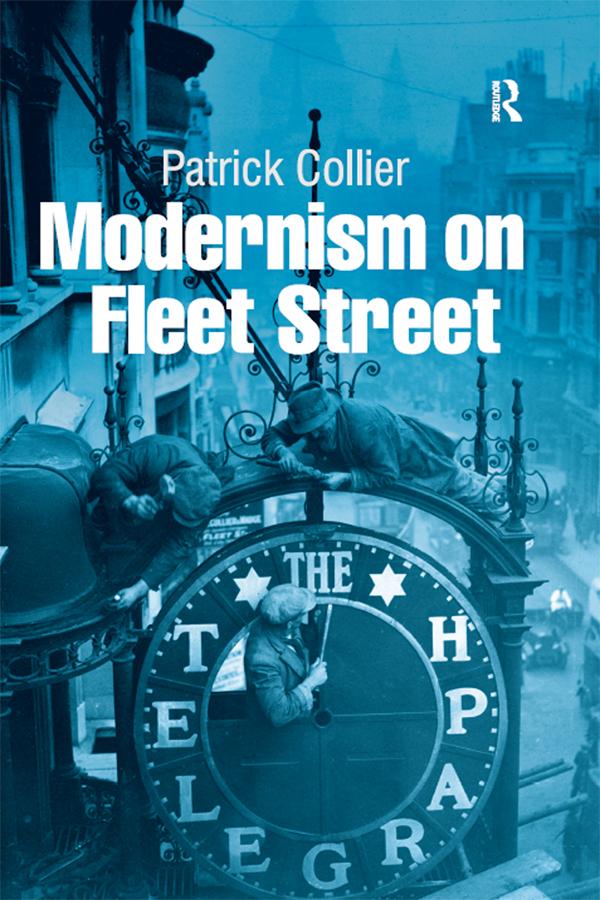
British modernism came of age at a time of great cultural anxiety about the state of journalism. The new newspapers, with their brief, flashy articles, striking visuals, hyperbolic headlines, and sensational news, stood at the center of debates about reading in the period, seeming to threaten the viability of representative democracy, the health and vitality of the language, and the very future of literature itself. Patrick Collier's study brings an impressive array of archival research to his exploration of modernism's relationship to the newspaper press. People who sought to make their way as writers could neither remain neutral on this issue nor abandon journalism, which offered an irreplaceable source of income and self-advertisement. Collier discusses five modern writers-T. S. Eliot, James Joyce, Virginia Woolf, Rebecca West, and Rose Macaulay-showing how their work takes part in contemporary debates about journalism and examining the role journalism played in establishing their careers. In doing so, he uncovers tensions and contradictions inherent in the identity of the 'serious artist' who relied on the ephemeral forms of journalism for money and reputation.
Pages: 265
Category: Litteraturvetenskap & Teori
e-ISBN: 9781351916936
Shipping weight: 1.2 kg
Ships in: 1-2 days
Pay easily by card, Klarna, Apple Pay or Google Pay. Not happy? You always have a 14-day money-back guarantee. Read more in our terms. If you have any questions, email us at hello@memmo.org.
Memmo makes studying easier – wherever you are in the world. We bring your course books and smart study tools together in one place: summaries, quizzes, podcasts and flashcards. Plus Ted, your study buddy who answers anything you wonder. Over 50,000 students already study here – built to help you learn faster and stress less.
You might also like
Buy the book0