
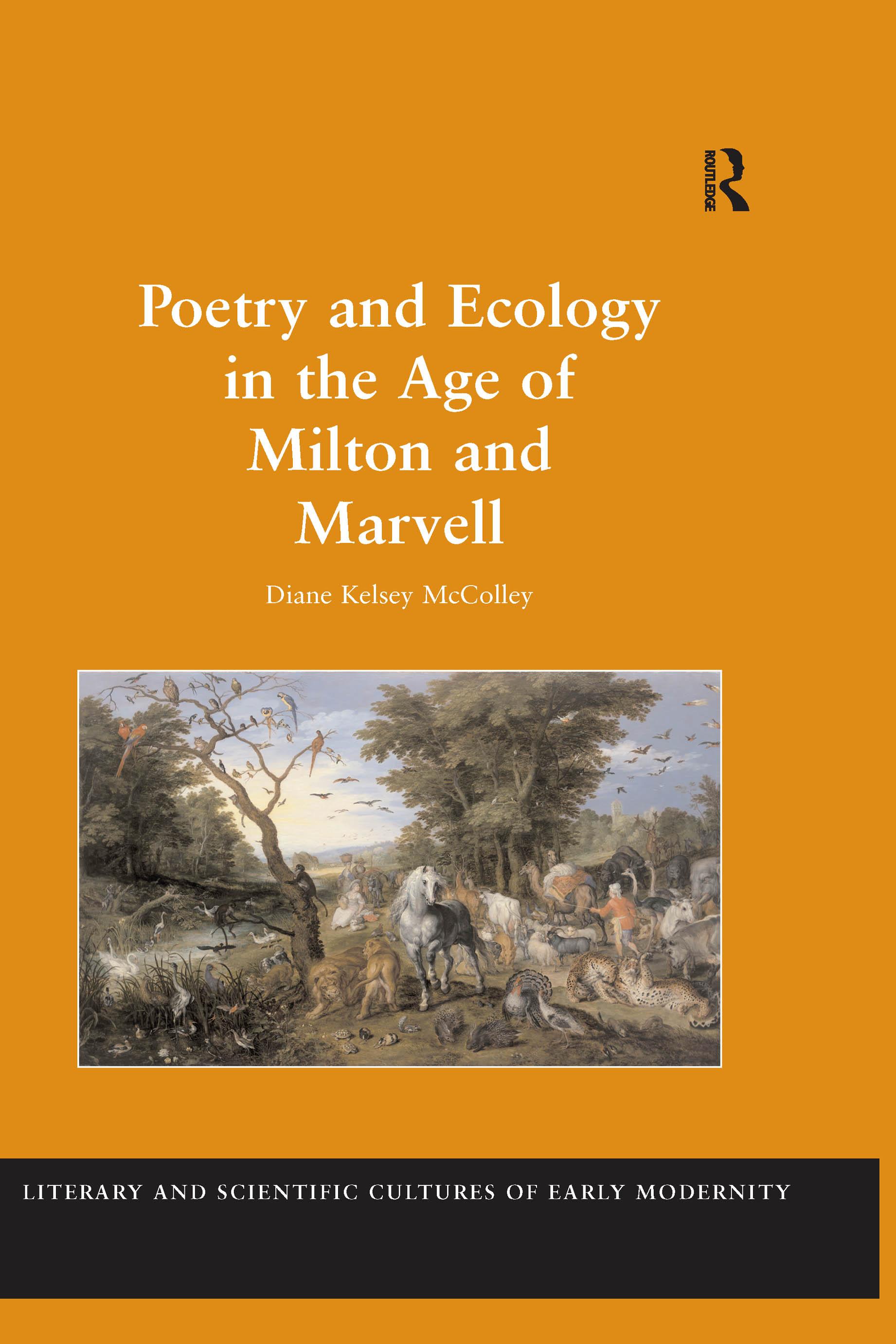
The focus of this study is the perception of nature in the language of poetry and the languages of natural philosophy, technology, theology, and global exploration, primarily in seventeenth-century England. Its premise is that language and the perception of nature vitally affect each other and that seventeenth-century poets, primarily John Milton, Andrew Marvell, and Henry Vaughan, but also Margaret Cavendish, Thomas Traherne, Anne Finch, and others, responded to experimental proto-science and new technology in ways that we now call 'ecological' - concerned with watersheds and habitats and the lives of all creatures. It provides close readings of works by these poets in the contexts of natural history, philosophy, and theology as well as technology and land use, showing how they responded to what are currently considered ecological issues: deforestation, mining, air pollution, drainage of wetlands, destruction of habitats, the sentience and intelligence of animals, overbuilding, global commerce, the politics of land use, and relations between social justice and justice towards the other-than-human world. In this important book, Diane McColley demonstrates the language of poetry, the language of responsible science, and the language of moral and political philosophy all to be necessary parts of public discourse.
Pay easily by card, Klarna, Apple Pay or Google Pay. Not happy? You always have a 14-day money-back guarantee. Read more in our terms. If you have any questions, email us at hello@memmo.org.
Memmo makes studying easier – wherever you are in the world. We bring your course books and smart study tools together in one place: summaries, quizzes, podcasts and flashcards. Plus Ted, your study buddy who answers anything you wonder. Over 50,000 students already study here – built to help you learn faster and stress less.
You might also like
Buy the book0