
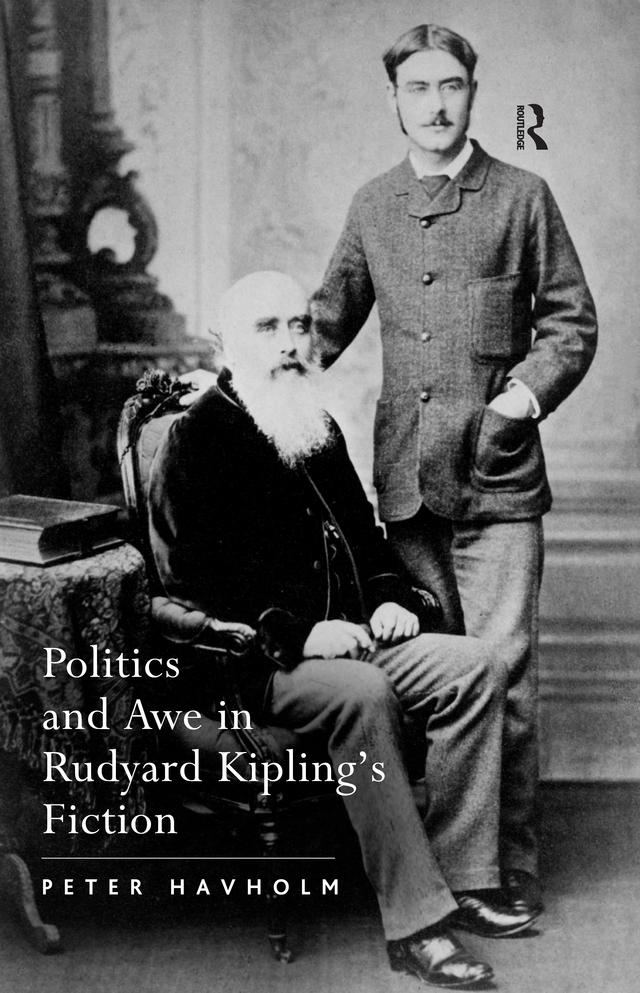
There has been a resurgence of interest in Kipling among critics who struggle to reconcile the multiple pleasures offered by his fiction with the controversial political ideas that inform it. Peter Havholm takes up the challenge, piecing together Kipling's understanding of empire and humanity from evidence in Anglo-Indian and Indian newspapers of the 1870s and 1880s and offering a new explanation for Kipling's post-1891 turn to fantasy and stories written to be enjoyed by children. By dovetailing detailed contextual knowledge of British India with informed and sensitive close readings of well-known works like 'The Man Who Would Be King',' Kim', 'The Light That Failed', and 'They', Havholm offers a fresh reading of Kipling's early and late stories that acknowledges Kipling's achievement as a writer and illuminates the seductive allure of the imperialist fantasy.
Pay easily by card, Klarna, Apple Pay or Google Pay. Not happy? You always have a 14-day money-back guarantee. Read more in our terms. If you have any questions, email us at hello@memmo.org.
Memmo makes studying easier – wherever you are in the world. We bring your course books and smart study tools together in one place: summaries, quizzes, podcasts and flashcards. Plus Ted, your study buddy who answers anything you wonder. Over 50,000 students already study here – built to help you learn faster and stress less.
You might also like
Buy the book0