
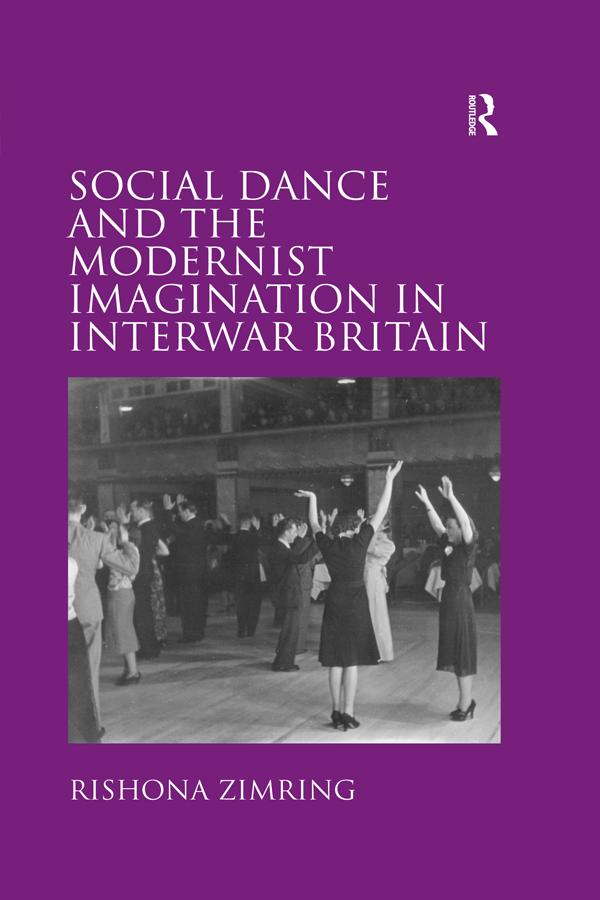
Social dance was ubiquitous in interwar Britain. The social mingling and expression made possible through non-theatrical participatory dancing in couples and groups inspired heated commentary, both vociferous and subtle. By drawing attention to the ways social dance accrued meaning in interwar Britain, Rishona Zimring redefines and brings needed attention to a phenomenon that has been overshadowed by other developments in the history of dance. Social dance, Zimring argues, haunted the interwar imagination, as illustrated in trends such as folk revivalism and the rise of therapeutic dance education. She brings to light the powerful figurative importance of popular music and dance both in the aftermath of war, and during Britain’s entrance into cosmopolitan modernity and the modernization of gender relations. Analyzing paintings, films, memoirs, a ballet production, and archival documents, in addition to writings by Virginia Woolf, D.H. Lawrence, Katherine Mansfield, Vivienne Eliot, and T.S. Eliot, to name just a few, Zimring provides crucial insights into the experience, observation, and representation of social dance during a time of cultural transition and recuperation. Social dance was pivotal in the construction of modern British society as well as the aesthetics of some of the period’s most prominent intellectuals.
Pay easily by card, Klarna, Apple Pay or Google Pay. Not happy? You always have a 14-day money-back guarantee. Read more in our terms. If you have any questions, email us at hello@memmo.org.
Memmo makes studying easier – wherever you are in the world. We bring your course books and smart study tools together in one place: summaries, quizzes, podcasts and flashcards. Plus Ted, your study buddy who answers anything you wonder. Over 50,000 students already study here – built to help you learn faster and stress less.
You might also like
Buy the book0