
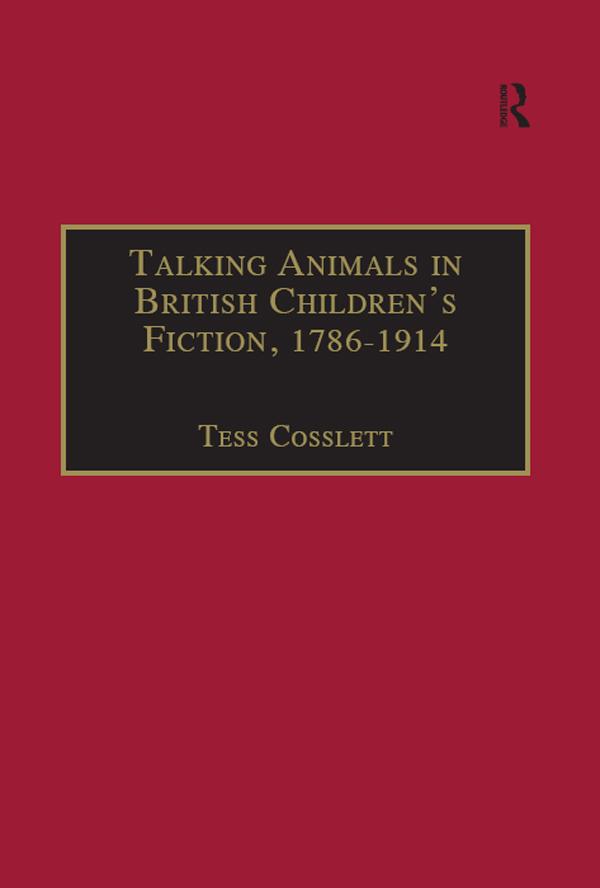
In her reappraisal of canonical works such as Black Beauty, Beautiful Joe, Wind in the Willows, and Peter Rabbit, Tess Cosslett traces how nineteenth-century debates about the human and animal intersected with, or left their mark on, the venerable genre of the animal story written for children. Effortlessly applying a range of critical approaches, from Bakhtinian ideas of the carnivalesque to feminist, postcolonial, and ecocritical theory, she raises important questions about the construction of the child reader, the qualifications of the implied author, and the possibilities of children's literature compared with literature written for adults. Perhaps most crucially, Cosslett examines how the issues of animal speech and animal subjectivity were managed, at a time when the possession of language and consciousness had become a vital sign of the difference between humans and animals. Topics of great contemporary concern, such as the relation of the human and the natural, masculine and feminine, child and adult, are investigated within their nineteenth-century contexts, making this an important book for nineteenth-century scholars, children's literature specialists, and historians of science and childhood.
Pay easily by card, Klarna, Apple Pay or Google Pay. Not happy? You always have a 14-day money-back guarantee. Read more in our terms. If you have any questions, email us at hello@memmo.org.
Memmo makes studying easier – wherever you are in the world. We bring your course books and smart study tools together in one place: summaries, quizzes, podcasts and flashcards. Plus Ted, your study buddy who answers anything you wonder. Over 50,000 students already study here – built to help you learn faster and stress less.
You might also like
Buy the book0