
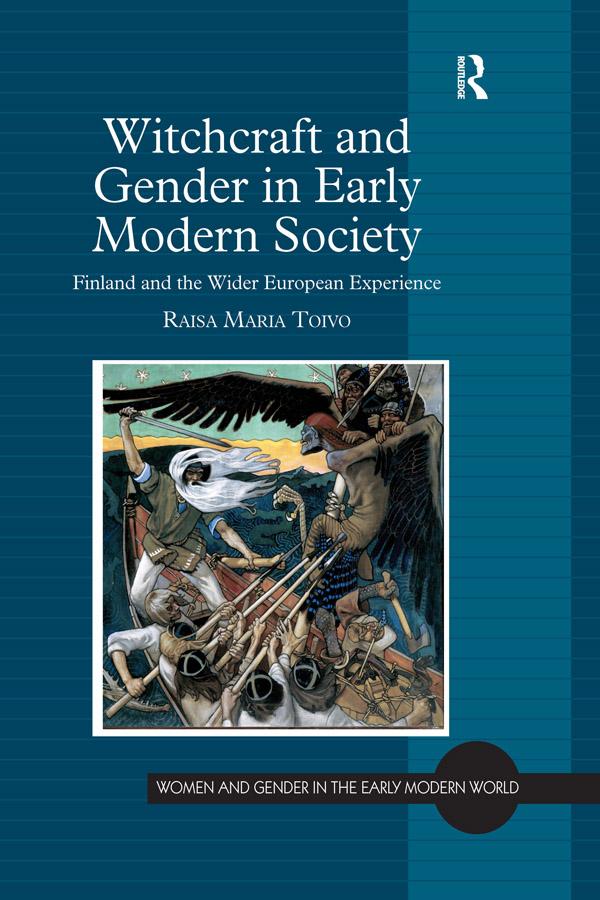
How could a woman be three times accused of witchcraft and go on running a successful farmstead? Why would men use a frying pan for cattle magic? Why did witches keep talking about the children? What kind of a relation did Finnish witches have with authority and power? These are among the questions Raisa Maria Toivo addresses in this study, as she explores the gender implications of the complex system of household management and public representation in which seventeenth-century Finnish women and men negotiated their positions. From specific case studies, Toivo broadens her narrative to include historiographical discussion on the history of witchcraft, on women's and gender history and on early modern social history, shedding new light on each theme. Toivo contributes to the on-going discussion in the European historiography about whether the early modern period witnessed an improvement, decline, or simply alteration in the conditions of oppression of women within patriarchal households by using a multidimensional set of roles that could be adopted by women. Finally, she demonstrates convincingly that members of the solid peasant class were not only subject of the newly forming states, but also avid users of the court system, which they manipulated and put to work in the interests of their own individual, household, and collective affairs.
Pages: 242
Category: Kultur-, Genus- & Postkoloniala studier
e-ISBN: 9781351872621
Shipping weight: 1.2 kg
Ships in: 1-2 days
Pay easily by card, Klarna, Apple Pay or Google Pay. Not happy? You always have a 14-day money-back guarantee. Read more in our terms. If you have any questions, email us at hello@memmo.org.
Memmo makes studying easier – wherever you are in the world. We bring your course books and smart study tools together in one place: summaries, quizzes, podcasts and flashcards. Plus Ted, your study buddy who answers anything you wonder. Over 50,000 students already study here – built to help you learn faster and stress less.
You might also like
Buy the book0