
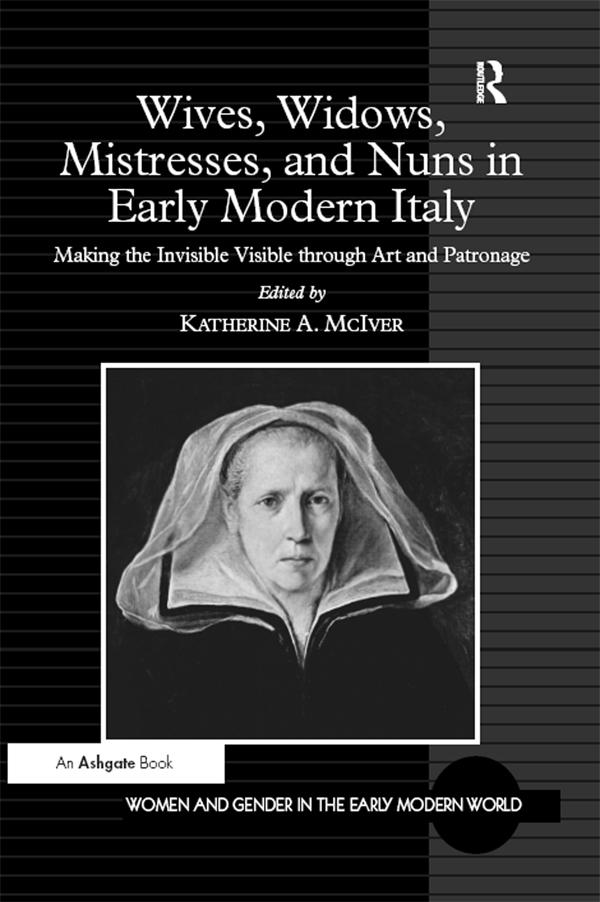
Through a visually oriented investigation of historical (in)visibility in early modern Italy, the essays in this volume recover those women - wives, widows, mistresses, the illegitimate - who have been erased from history in modern literature, rendered invisible or obscured by history or scholarship, as well as those who were overshadowed by male relatives, political accident, or spatial location. A multi-faceted invisibility of the individual and of the object is the thread that unites the chapters in this volume. Though some women chose to be invisible, for example the cloistered nun, these essays show that in fact, their voices are heard or seen through their commissions and their patronage of the arts, which afforded them some visibility. Invisibility is also examined in terms of commissions which are no longer extant or are inaccessible. What is revealed throughout the essays is a new way of looking at works of art, a new way to visualize the past by addressing representational invisibility, the marginalized or absent subject or object and historical (in)visibility to discover who does the 'looking,' and how this shapes how something or someone is visible or invisible. The result is a more nuanced understanding of the place of women and gender in early modern Italy.
Pay easily by card, Klarna, Apple Pay or Google Pay. Not happy? You always have a 14-day money-back guarantee. Read more in our terms. If you have any questions, email us at hello@memmo.org.
Memmo makes studying easier – wherever you are in the world. We bring your course books and smart study tools together in one place: summaries, quizzes, podcasts and flashcards. Plus Ted, your study buddy who answers anything you wonder. Over 50,000 students already study here – built to help you learn faster and stress less.
You might also like
Buy the book0