
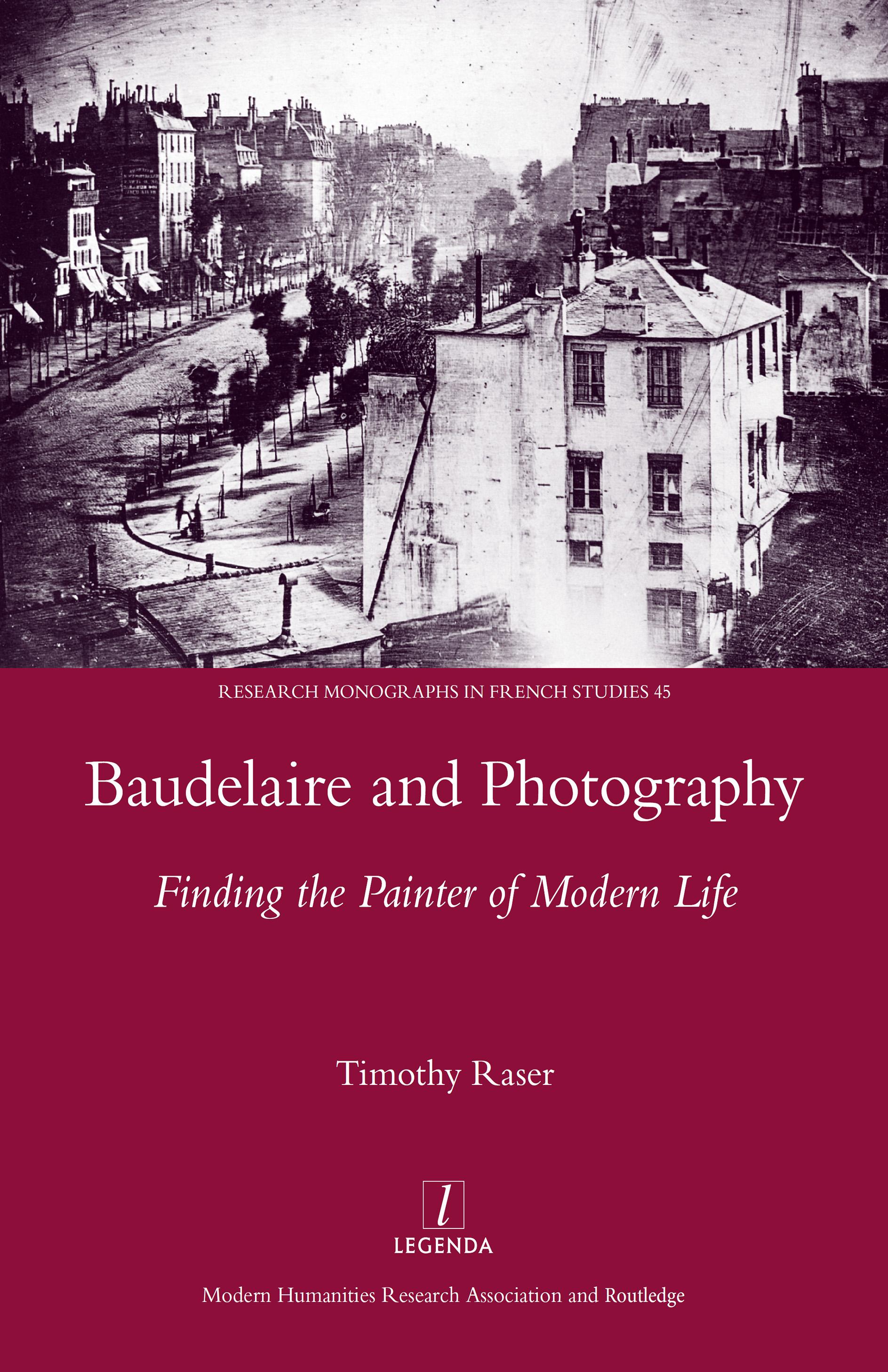
While Baudelaire's 'Le Peintre de la vie moderne' is often cited as the first expression of our theory of modernism, his choice of Constantin Guys as that painter has caused consternation from the moment of the essay's publication in 1863. Worse still, in his 'Salon de 1859', Baudelaire had also chosen to condemn photography in terms that echo to this day. Why did the excellent critic choose a mere reporter and illustrator as the painter of modern life? How could he have overlooked photography as the painting of modern life? In this study of modernity and photography in Baudelaire's writing, Timothy Raser, who has written on the art criticism of Baudelaire, Proust, Claudel and Sartre, shows how these two aberrations of critical judgment are related, and how they underlie current discussions of both photography and modernism. Timothy Raser is Professor of French at the University of Georgia (USA).
Pay easily by card, Klarna, Apple Pay or Google Pay. Not happy? You always have a 14-day money-back guarantee. Read more in our terms. If you have any questions, email us at hello@memmo.org.
Memmo makes studying easier – wherever you are in the world. We bring your course books and smart study tools together in one place: summaries, quizzes, podcasts and flashcards. Plus Ted, your study buddy who answers anything you wonder. Over 50,000 students already study here – built to help you learn faster and stress less.
You might also like
Buy the book0