
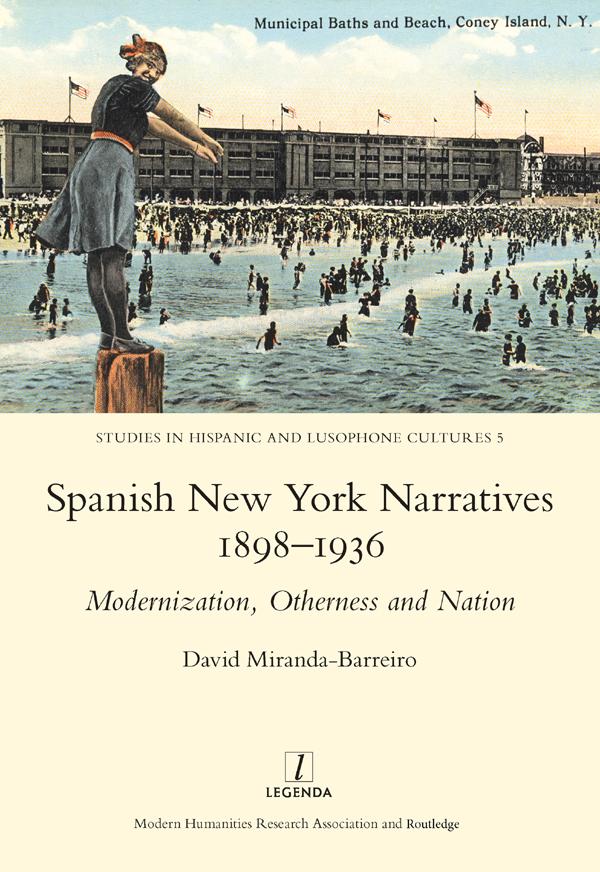
In the early decades of the twentieth century, New York caught the attention of Spanish writers. Many of them visited the city and returned to tell their experience in the form of a literary text. That is the case of Pruebas de Nueva York (1927) by Jose Moreno Villa (1887-1955), El crisol de las razas (1929) by Teresa de Escoriaza (1891-1968), Anticipolis (1931) by Luis de Oteyza (1883-1961) and La ciudad automatica (1932) by Julio Camba (1882-1962). In tune with similar representations in other European works, the image of New York given in these texts reflects the tensions and anxieties generated by the modernisation embodied by the United States. These authors project onto New York their concerns and expectations about issues of class, gender and ethnicity that were debated at the time, in the context of the crisis of Spanish national identity triggered by the end of the empire in 1898.
Pay easily by card, Klarna, Apple Pay or Google Pay. Not happy? You always have a 14-day money-back guarantee. Read more in our terms. If you have any questions, email us at hello@memmo.org.
Memmo makes studying easier – wherever you are in the world. We bring your course books and smart study tools together in one place: summaries, quizzes, podcasts and flashcards. Plus Ted, your study buddy who answers anything you wonder. Over 50,000 students already study here – built to help you learn faster and stress less.
You might also like
Buy the book0