
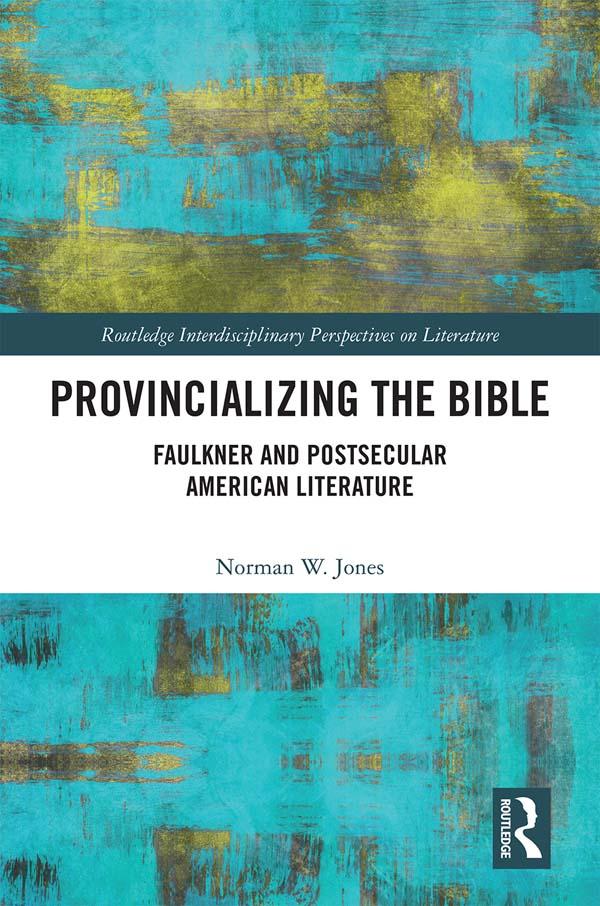
Why, in our supposedly secular age, does the Bible feature prominently in so many influential and innovative works of contemporary U.S. literature? More pointedly, why would a book indelibly allied with a long history of institutionalized oppressions play a supporting role—and not simply as an object of critique—in a wide variety of landmark literary representations of marginalized subjectivities? The answers to these questions go beyond mere playful re-appropriations or subversive resignifications of biblical themes, figures, and forms. This book shows how certain contemporary authors invoke the Bible in ways that undermine clear distinctions between "subversive" and "traditional"—indeed, that undermine clear distinctions between "secular" and "sacred." By tracing a key source of such complex literary invocations of the Bible back to William Faulkner’s major novels, Provincializing the Bible argues that these literary works, which might be termed postsecular, ironically provincialize the Bible as a means of reevaluating and revalorizing its significance in contemporary American culture.
Pay easily by card, Klarna, Apple Pay or Google Pay. Not happy? You always have a 14-day money-back guarantee. Read more in our terms. If you have any questions, email us at hello@memmo.org.
Memmo makes studying easier – wherever you are in the world. We bring your course books and smart study tools together in one place: summaries, quizzes, podcasts and flashcards. Plus Ted, your study buddy who answers anything you wonder. Over 50,000 students already study here – built to help you learn faster and stress less.