
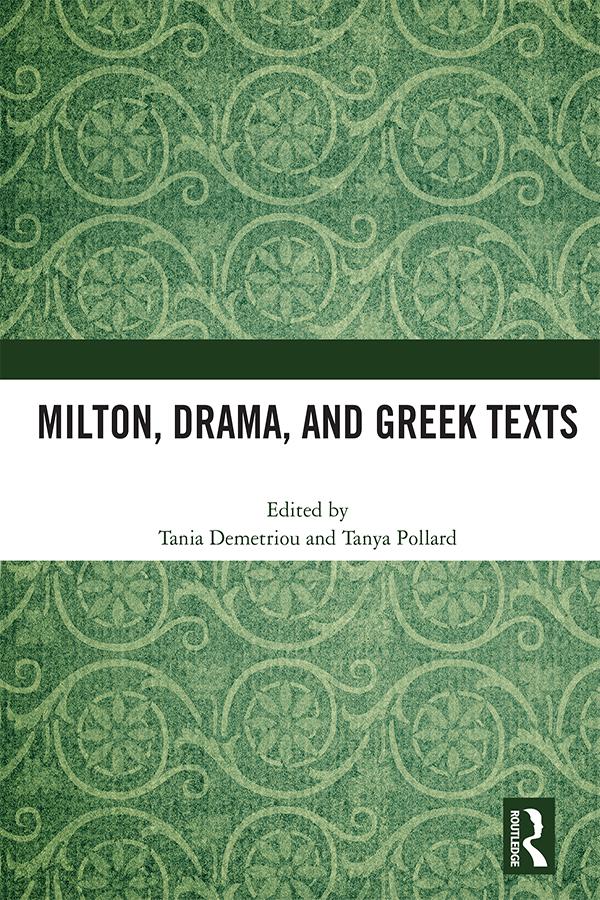
This collection reconsiders Milton’s engagement with Greek texts, with particular attention to the theological and theatrical meanings attached to Greek in the early modern period. Responding to new scholarship on early modern reactions to Greek authors – especially Euripides and Homer, Milton’s particular favourites – the collection emphasizes the associations of Greek with both Protestantism and the origins of tragedy, two arenas frequently in tension, but crucially linked in Milton’s literary imagination. The contributions explore a range of works spanning the whole of Milton’s career, from the early masque Comus, through the political and religious prose, to the 1671 closet drama, Samson Agonistes. They consider the ways in which the authority and controversy attached to Greek authors framed Milton’s approaches to their texts. Looking at both the texts and their interpretative traditions together, this book suggests that Greek authors shaped Milton’s attitudes to drama in ways even more extensive and surprising than we have yet recognized. This book was originally published as a special issue of The Seventeenth Century.
Pay easily by card, Klarna, Apple Pay or Google Pay. Not happy? You always have a 14-day money-back guarantee. Read more in our terms. If you have any questions, email us at hello@memmo.org.
Memmo makes studying easier – wherever you are in the world. We bring your course books and smart study tools together in one place: summaries, quizzes, podcasts and flashcards. Plus Ted, your study buddy who answers anything you wonder. Over 50,000 students already study here – built to help you learn faster and stress less.