
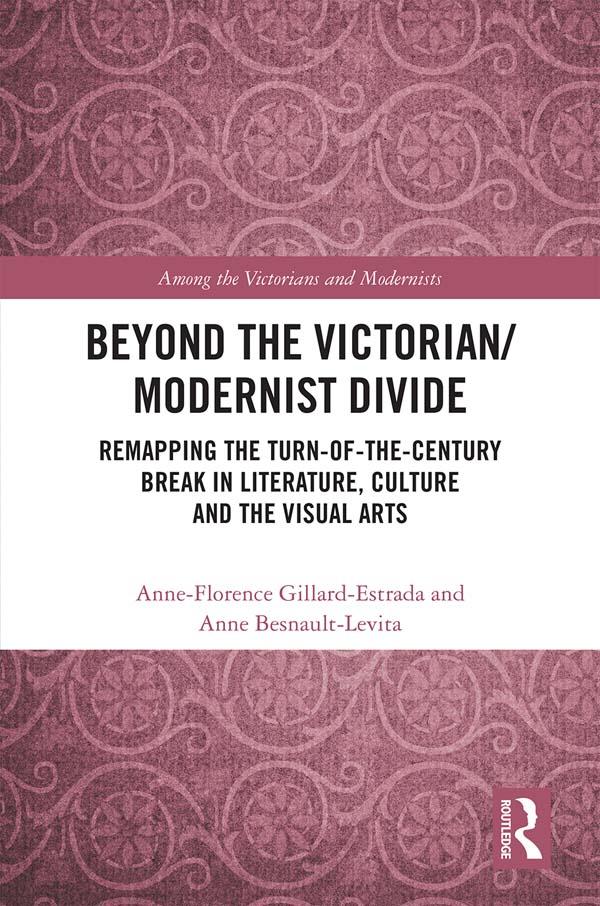
Beyond the Victorian/ Modernist Divide contributes to a new phase in the Victorian-modern debate of traditional periodization through the perspective lens of literature and the visual arts. Breaking away from conventionally fixed discourses and dichotomies, this book utilizes an interdisciplinary approach to examine the existence of overlaps and unexplored continuities between the Victorians, the post-Victorians and the modernists, including the fields of music, architecture, design, science, and social life. Furthermore, the book remaps the cultural history of two critical meta-narratives and their interdependence – the myth of "high modernism" and the myth of "Victorianism" – by building on recent scholarly work and addressing the question of the "turn of the century break theory" with a new set of arguments and contributions.
The essays presented within acknowledge the existence of a break-theory in modernism, but question this theory by re-contextualising it while uncovering long-masked continuities between artists, genres and forms across the divide. The collection offers a new approach to modernism, Edwardianism, and Victorianism; utilizing the cross-fertilisation of interdisciplinary approaches, and by combining contributions that look forward from the Victorians with other contributions that look backward from the modernists. While literary modernism and its vexed relationships with the nineteenth century is a central subject of the book, further analysis includes artistic discourses and theories stemming from history, the visual arts, science, music and design. Each chapter offers a fresh interpretation of individual artists, navigating away from characteristic classifications of works, authors and cultural phenomena. Ultimately, the volume argues that though periodization and genre categories play substantial roles in this divide, it is also essential to be critically aware of the way cultural history has been, and continues to be, constructed.
Pay easily by card, Klarna, Apple Pay or Google Pay. Not happy? You always have a 14-day money-back guarantee. Read more in our terms. If you have any questions, email us at hello@memmo.org.
Memmo makes studying easier – wherever you are in the world. We bring your course books and smart study tools together in one place: summaries, quizzes, podcasts and flashcards. Plus Ted, your study buddy who answers anything you wonder. Over 50,000 students already study here – built to help you learn faster and stress less.