
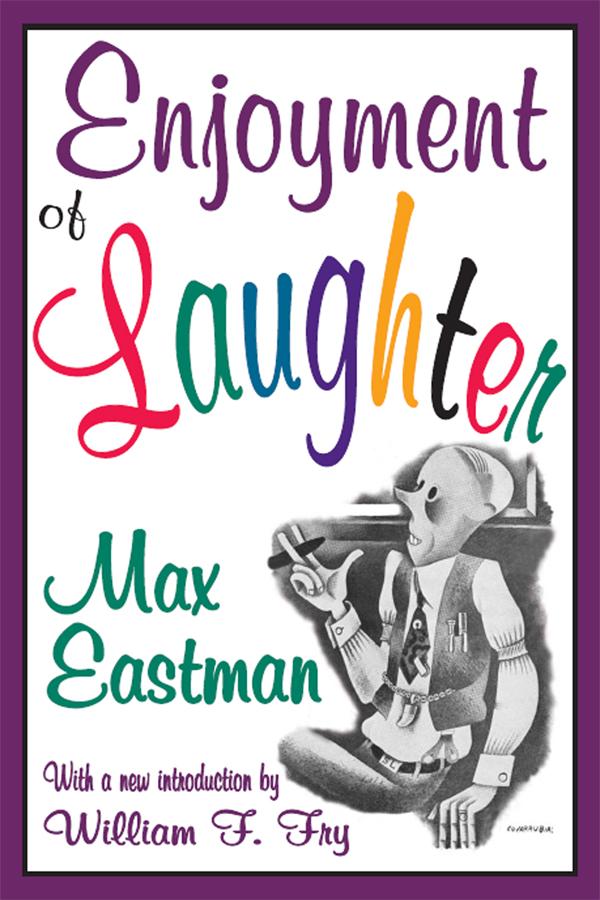
Humor at its best is a somewhat fluid and transitory element, but most books about it are illustrated with hardened old jokes from the comic papers, or classic witticisms jerked out of their context. Max Eastman, in this work, avoids this catastrophe by quoting mainly from contemporary American humor. This is not an anthology in that selections have been made with a view to making a point rather than covering the field.
The purpose of Eastman's fabled work is to make the reader laugh. Since his early school days, it has seemed to him that textbooks are wrongly written in that they are conducted in a way which ignores the natural operation of the mind. As a result, the opinion is universal, and under the circumstances a fact, that in order to learn anything you have to study. Since this introduction to humor is itself near to writing a textbook, Eastman uses the very text he constructs to illustrate the manner in which textbooks should be written.
Examination and classification of the kinds of humorous experience upon the basis of a theory is a science. As such, this work offers a fair chance to illustrate a method of instruction. However, the distinction between a good joke and a bad one will not prevent the reader from making bad jokes nor enable one to make good ones. There is an artistic and playful element that simply cannot be taught. Enjoyment of Laughter presents a total view of the science of laughter and draws upon some of the great American humorists to do so.
Pay easily by card, Klarna, Apple Pay or Google Pay. Not happy? You always have a 14-day money-back guarantee. Read more in our terms. If you have any questions, email us at hello@memmo.org.
Memmo makes studying easier – wherever you are in the world. We bring your course books and smart study tools together in one place: summaries, quizzes, podcasts and flashcards. Plus Ted, your study buddy who answers anything you wonder. Over 50,000 students already study here – built to help you learn faster and stress less.