
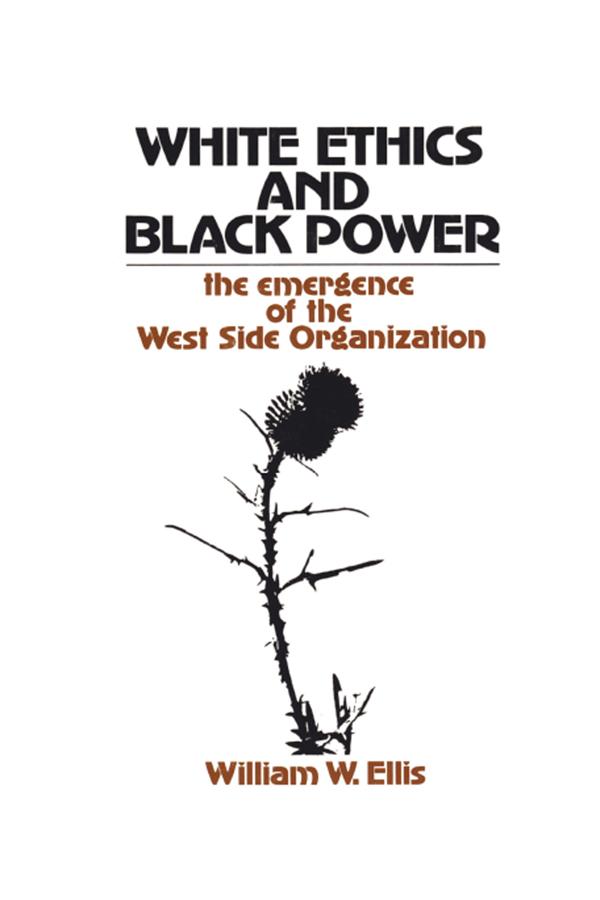
The disparity between the ideal, a democratic America, and the reality, racial oppression and poverty, is so great that serious voices among blacks, students, and others challenged the ethical foundations of the nation in the 1960s. Local political organizations emerging out of black ghettos led a black revolt, asserting a revolutionary black nationalism rather than social reform and integration. For those blacks, white America could no longer dictate right and wrong, and certainly could no longer tell blacks how best to pursue their goals. This feeling was so strong among the adherents of the new militant movements formed under the political symbolism of "black power" that they questioned all white ethical institutions. These new movements bargained and contended with whites, even worked closely with them for many purposes, but always with suspicion and caution.
White Ethics and Black Power describes racial relations during this period. It examines the careers and philosophies of the leadership of a community organization, illuminating the complex relationship between white America and the new black power movements, between America and its interpretation of itself on the one hand, and the experience of black and oppressed peoples in America on the other. Redefining social science as a means--through education and research--of improving the quality of American life, William Ellis derides non-participatory social science as a hoax and asks the social scientist to make clear his moral commitment: to the people he studies or to the establishment that funds him.
Controversial in its ideology, its passion, and its scorn of racist America, this volume remains the only openly partisan social scientific analysis into the nature of this American crisis. Readers may not agree with the views expressed by the author, but they cannot ignore this book's relevance to any understanding of black-white relationships. Unique in the literature, White Ethics and Black Power not only explains black power, but offers hope for meaningful change.
Pay easily by card, Klarna, Apple Pay or Google Pay. Not happy? You always have a 14-day money-back guarantee. Read more in our terms. If you have any questions, email us at hello@memmo.org.
Memmo makes studying easier – wherever you are in the world. We bring your course books and smart study tools together in one place: summaries, quizzes, podcasts and flashcards. Plus Ted, your study buddy who answers anything you wonder. Over 50,000 students already study here – built to help you learn faster and stress less.