
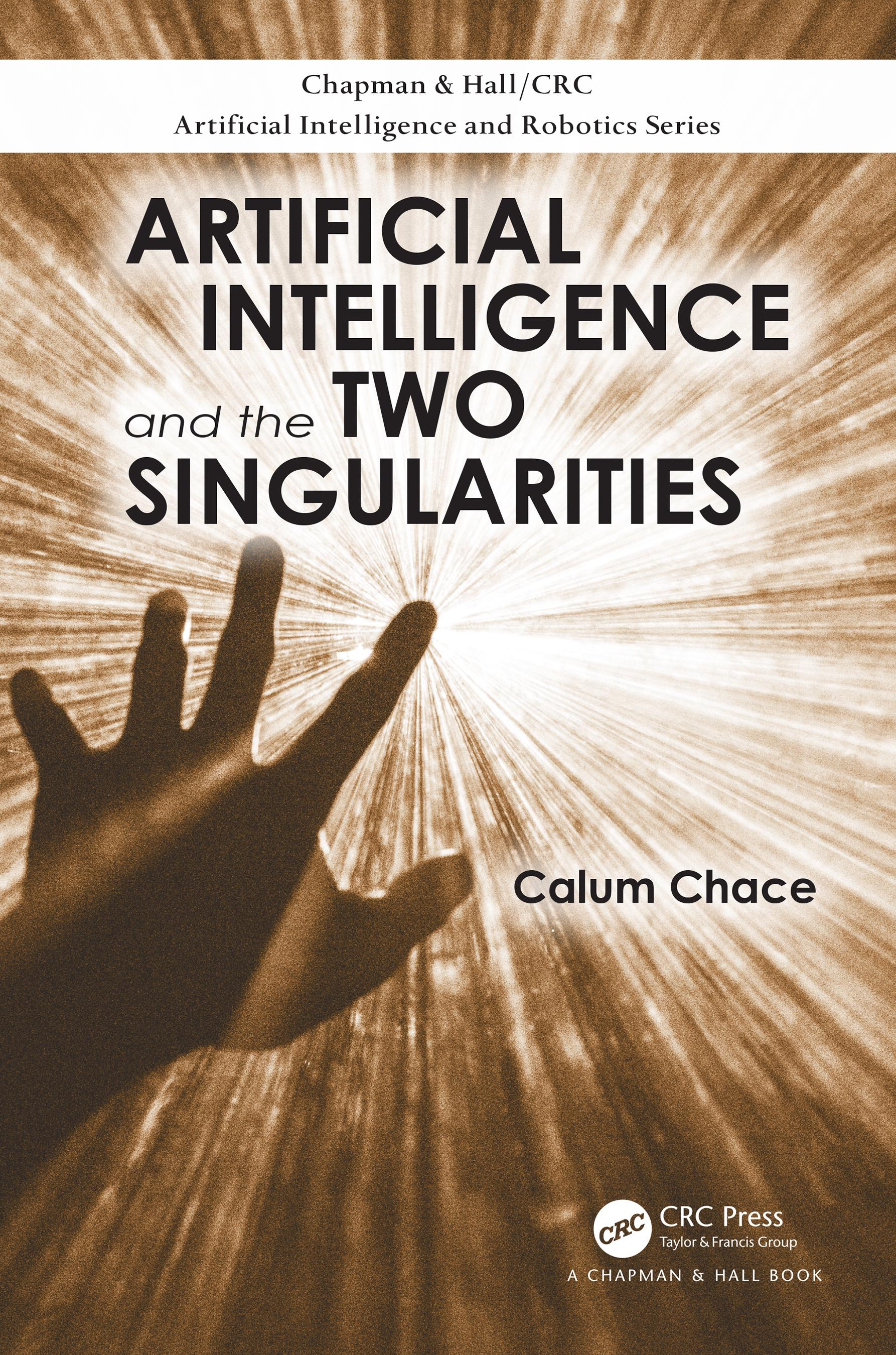
The science of AI was born a little over 60 years ago, but for most of that time its achievements were modest. In 2012 it experienced a big bang, when a branch of statistics called Machine Learning (and a sub-branch called Deep Learning) was applied to it. Now machines have surpassed humans in image recognition, and they are catching up with us at speech recognition and natural language processing. Every day, the media reports the launch of a new service, a new product, and a new demonstration powered by AI. When will it end? The surprising truth is, the AI revolution has only just begun.
Artificial Intelligence and the Two Singularities argues that in the course of this century, the exponential growth in the capability of AI is likely to bring about two "singularities" - points at which conditions are so extreme that the normal rules break down. The first is the economic singularity, when machine skill reaches a level that renders many of us unemployable and requires an overhaul of our current economic and social systems. The second is the technological singularity, when machine intelligence reaches and then surpasses the cognitive abilities of an adult human, relegating us to the second smartest species on the planet.
These singularities will present huge challenges, but this book argues that we can meet these challenges and overcome them. If we do, the rewards could be almost unimaginable.
This book covers:
• Recent developments in AI and its future potential
• The economic singularity and the technological singularity in depth
• The risks and opportunities presented by AI
• What actions we should take
Artificial intelligence can turn out to be the best thing ever to happen to humanity, making our future wonderful almost beyond imagination. But only if we address head-on the challenges that it will raise.
Calum Chace is a best-selling author of fiction and non-fiction books and articles, focusing on the subject of artificial intelligence. He is a regular speaker on artificial intelligence and related technologies, and runs a blog on the subject at www.pandoras-brain. com. Prior to becoming a full-time writer and speaker, he spent 30 years in business as a marketer, a strategy consultant, and a CEO. He studied philosophy at Oxford University, where he discovered that the science fiction he had been reading since boyhood was simply philosophy in fancy dress.
Pay easily by card, Klarna, Apple Pay or Google Pay. Not happy? You always have a 14-day money-back guarantee. Read more in our terms. If you have any questions, email us at hello@memmo.org.
Memmo makes studying easier – wherever you are in the world. We bring your course books and smart study tools together in one place: summaries, quizzes, podcasts and flashcards. Plus Ted, your study buddy who answers anything you wonder. Over 50,000 students already study here – built to help you learn faster and stress less.