
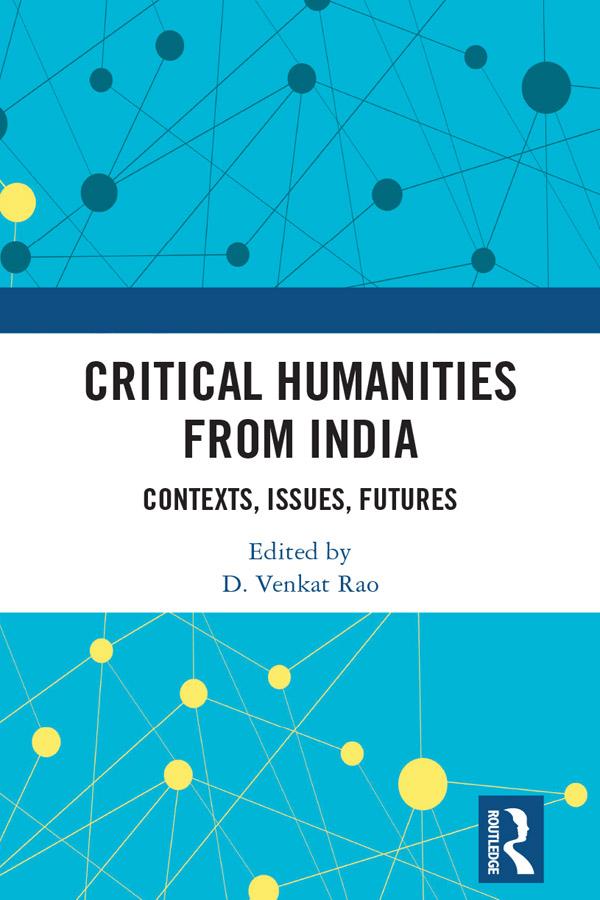
The field of humanities generates a discourse that traditionally addressed the questions of what is proper to man, rights of man, crimes against humanity, human creativity and action, human reflection and performance, human utterance and artefact. The university as a philosophical-political institution transmits this humanist account. This European humanistic legacy, which is little more than Christian anthropology, barely received any questioning from cultures that faced colonialism. In such a context, this volume attempts to unravel the ‘barely secularized heritage’ of Europe (Derrida’s phrase) and its fatal consequences in other cultures. The task of Critical Humanities is to explore the ways in which the question of being human (along with non-human others) today from heterogeneous cultural ‘backgrounds’ can be undertaken. The future of the humanities teaching and research is contingent upon the risky task of configuring cultural difference from non-European locations. Such a task is inescapable and urgently needed when tectonic cultural upheavals have begun to show devastating effect on planetary coexistence today. It is precisely in such a context that this collection of essays on critical humanities affirms, ‘without alibi’, the urgency of collective reflection and innovative research across the traditional disciplinary and institutional borders and communication systems on the one hand and Asian, African and European cultural formations on the other. Critical Humanities are at one level little more than communities on the verge (critical) but whose centuries long survival and resilient creations of cultural (and /as natural) habitats are of deeply enduring significance to affirm the biocultural diversities of living that compose the planet.
Topical and timely, this book will be useful to scholars, researchers and teachers of cultural theory, literary studies, philosophy, cultural geography, legal studies, sociology, history, performance studies, environmental studies, caste and communalism studies, postcolonial theory, India studies, and education.
Pay easily by card, Klarna, Apple Pay or Google Pay. Not happy? You always have a 14-day money-back guarantee. Read more in our terms. If you have any questions, email us at hello@memmo.org.
Memmo makes studying easier – wherever you are in the world. We bring your course books and smart study tools together in one place: summaries, quizzes, podcasts and flashcards. Plus Ted, your study buddy who answers anything you wonder. Over 50,000 students already study here – built to help you learn faster and stress less.