
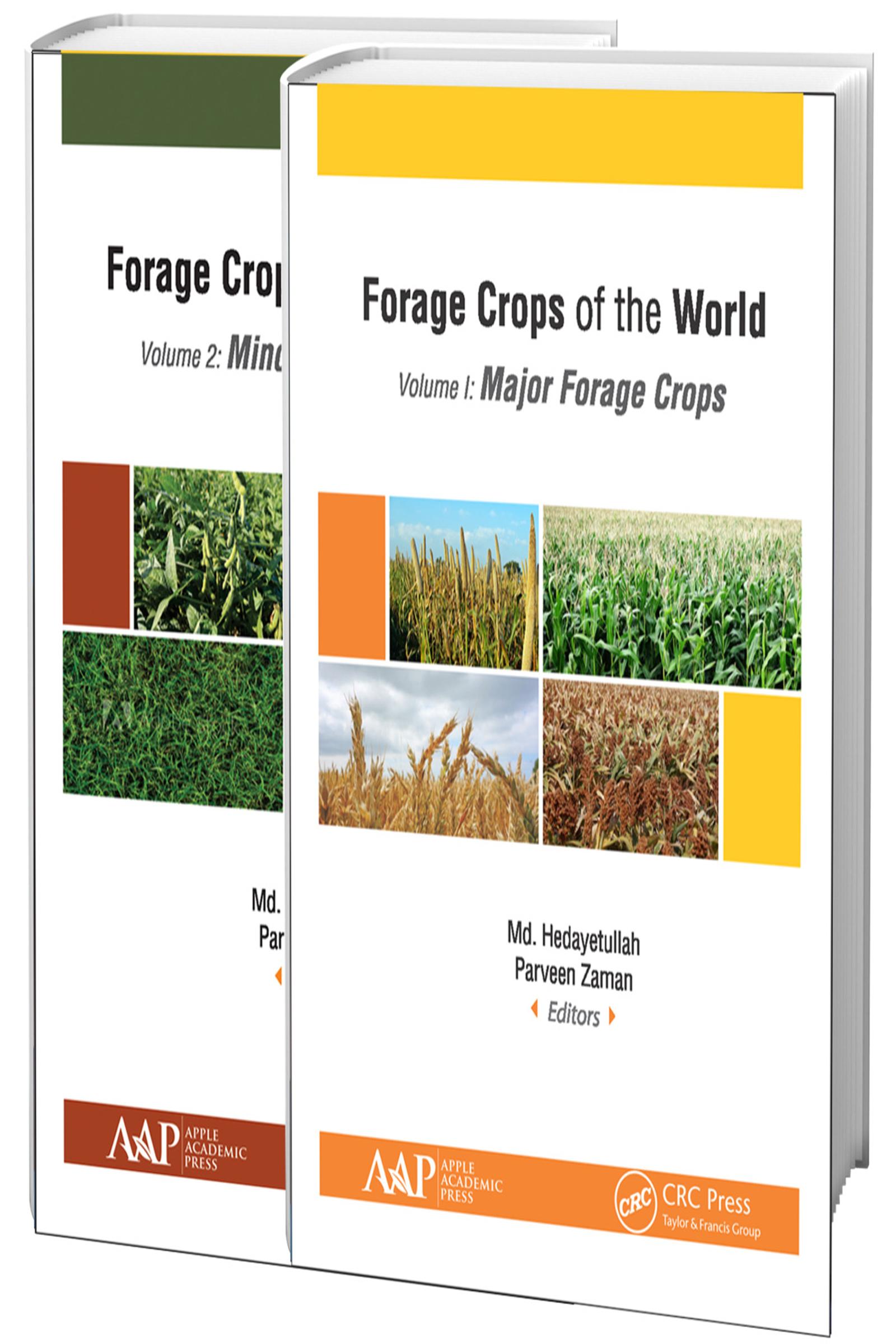
This new 2-volume set discusses the importance of fodder production of the minor fodder crops for animals. The volumes focuses on fodder production for forage crops, cover 17 major forage crops and 25 minor forage crops. The volumes discuss crop production methodology and agronomic management in a systemic way, providing an abundance of information on each type of forage crop discussed, including preferred soil type, land capability, cropping patterns, climate, and socioeconomic conditions. They also address pests of the various forage crops, disease management, agroforestry in fodder and forage crops, preservation of forage crops, and forage production and climate change.
Forage crops are very essential for quality milk and meat production. Farm animals are normally fed fodder available from cultivated areas, supplemented by a small extent with harvested grasses and top feeds. The three major sources of fodder are crop residues, cultivated fodder, and fodder from trees, pastures, and grazing lands. The patterns and types of fodder crops vary by geographical location.
Pay easily by card, Klarna, Apple Pay or Google Pay. Not happy? You always have a 14-day money-back guarantee. Read more in our terms. If you have any questions, email us at hello@memmo.org.
Memmo makes studying easier – wherever you are in the world. We bring your course books and smart study tools together in one place: summaries, quizzes, podcasts and flashcards. Plus Ted, your study buddy who answers anything you wonder. Over 75,000 students already study here – built to help you learn faster and stress less.