
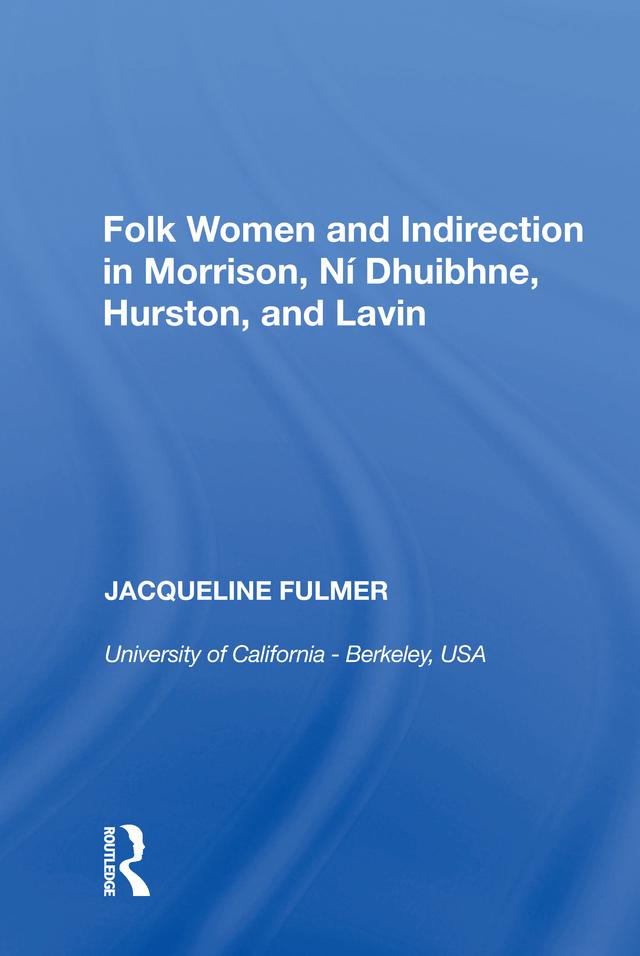
Focusing on the lineage of pivotal African American and Irish women writers, the author argues that these authors often employ strategies of indirection, via folkloric expression, when exploring unpopular topics. This strategy holds the attention of readers who would otherwise reject the subject matter. The author traces the line of descent from Mary Lavin to Éilís Ní Dhuibhne and from Zora Neale Hurston to Toni Morrison, showing how obstacles to free expression, though varying from those Lavin and Hurston faced, are still encountered by Morrison and Ní Dhuibhne. The basis for comparing these authors lies in the strategies of indirection they use, as influenced by folklore. The folkloric characters these authors depict-wild denizens of the Otherworld and wise women of various traditions-help their creators insert controversy into fiction in ways that charm rather than alienate readers. Forms of rhetorical indirection that appear in the context of folklore, such as signifying practices, masking, sly civility, and the grotesque or bizarre, come out of the mouths and actions of these writers' magical and magisterial characters. Old traditions can offer new ways of discussing issues such as sexual expression, religious beliefs, or issues of reproduction. As differences between times and cultures affect what "can" and "cannot" be said, folkloric indirection may open up a vista to discourses of which we as readers may not even be aware. Finally, the folk women of Morrison, Ní Dhuibhne, Hurston, and Lavin open up new points of entry to the discussion of fiction, rhetoric, censorship, and folklore.
Pages: 215
Category: Litteraturvetenskap & Teori
e-ISBN: 9781351158183
Shipping weight: 1.2 kg
Ships in: 1-2 days
Pay easily by card, Klarna, Apple Pay or Google Pay. Not happy? You always have a 14-day money-back guarantee. Read more in our terms. If you have any questions, email us at hello@memmo.org.
Memmo makes studying easier – wherever you are in the world. We bring your course books and smart study tools together in one place: summaries, quizzes, podcasts and flashcards. Plus Ted, your study buddy who answers anything you wonder. Over 50,000 students already study here – built to help you learn faster and stress less.
You might also like
Buy the book0