
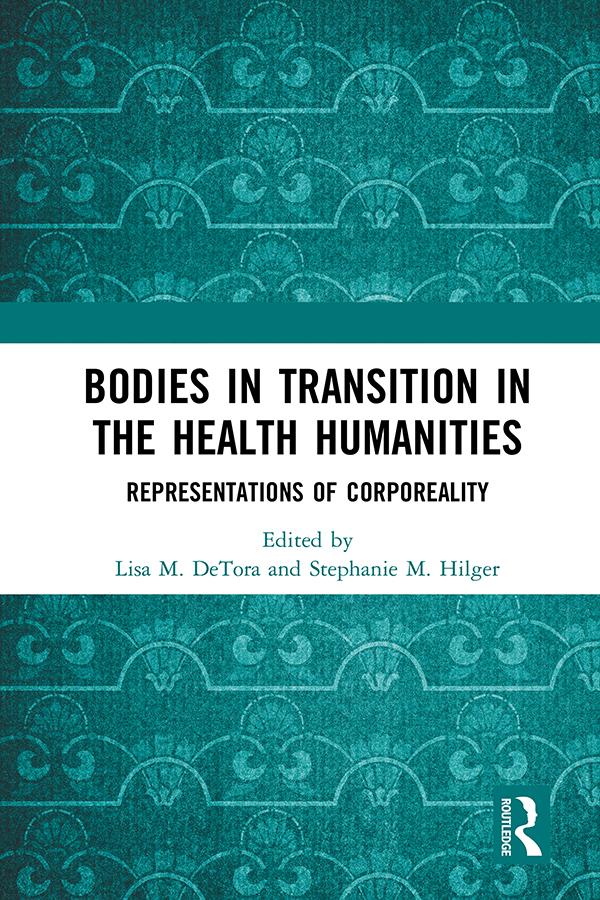
In recent years, the transitioning body has become the subject of increasing scholarly, medical, and political interest. This interdisciplinary collection seeks to enable productive dialogue about bodily transformation and its many potential meanings and possibilities.
Recent high-profile sex transitions, such as Bruce Jenner’s transformation into Caitlyn, have contributed to a proliferation of public and private debates about the boundaries of personal identity and the politics of gender. Sexual transition is only one possible type of bodily transformation, and bodies that change forms vex many binaries that underpin daily life such as male/female, gay/straight, well/unhealthy, able/disabled, beautiful/ugly, or adult/child. When transformations and transitions involve trauma, illness, injury, surgery or death, bodies can become culturally and socially illegible and enter the realm of abjection or even horror. Health humanities, a recent revision of medical humanities that includes patients and other nonphysicians, provides an interdisciplinary lens through which to read such bodily transformation and its representation in public culture. The authors of the essays in the present volume situate their work in this interdisciplinary space to enable productive dialogue about bodily transformation and its meanings in artistic, literary, visual, and health discourses. The essays in this volume discuss non-normative bodies from eighteenth-century France to present-day Iran and investigate narratives of cancer, aging, anorexia, AIDS, intersexuality, transsexuality, viruses, bacteria, and vaccinations.
This collection will be of key interest to faculty and students in women' studies/gender studies, cultural studies, studies of visual and material culture, medical/health humanities, disability studies, and rhetorics of science, health and medicine, and will be a useful resource for scholars across interdisciplinary fields of study.
Pay easily by card, Klarna, Apple Pay or Google Pay. Not happy? You always have a 14-day money-back guarantee. Read more in our terms. If you have any questions, email us at hello@memmo.org.
Memmo makes studying easier – wherever you are in the world. We bring your course books and smart study tools together in one place: summaries, quizzes, podcasts and flashcards. Plus Ted, your study buddy who answers anything you wonder. Over 50,000 students already study here – built to help you learn faster and stress less.