
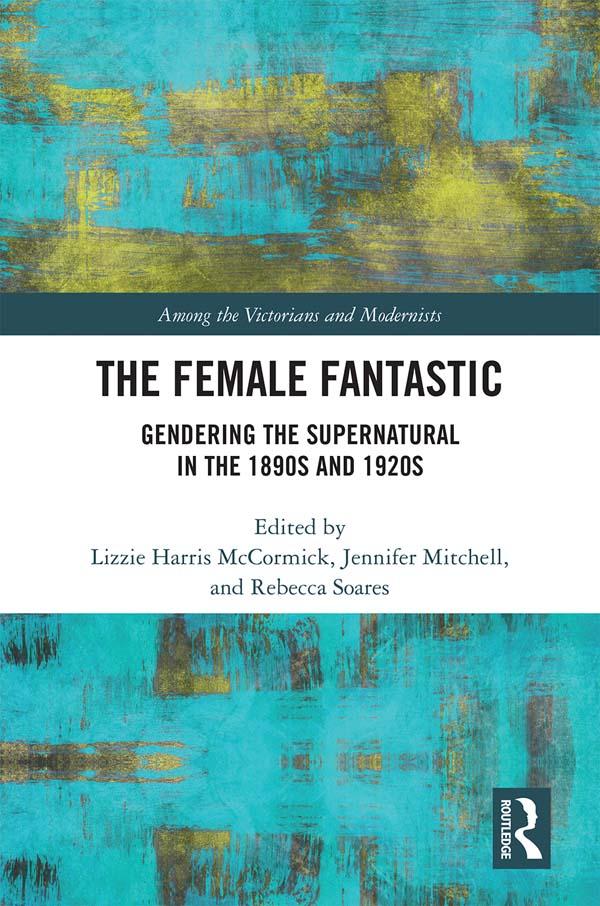
For women-identified writers of both eras, the fantastic offered double vision. Not only did the genre offer strategic cover for challenging the status quo, but also a heuristic mechanism for teasing out the gendered psyche’s links to creative, personal, and erotic agency. These dynamic presentations of female and gender-queer subjectivity, are linked in intriguing and complex matrices to key moments in gender(ed) history.
This volume contains essays from international scholars covering a wide range of topics, including werewolves, mummies, fairies, demons, time travel, ghosts, haunted spaces and objects, race, gender, queerness, monstrosity, madness, incest, empire, medicine, and science. By interrogating two non-consecutive decades, we seek to uncover the inter-relationships among fantastic literature, feminism, and modern identity and culture. Indeed, while this book considers the relationship between the 1890s and 1920s, it is more an examination of women’s modernism in light of gendered literary production during the fin-de-siècle than the reverse.
Pay easily by card, Klarna, Apple Pay or Google Pay. Not happy? You always have a 14-day money-back guarantee. Read more in our terms. If you have any questions, email us at hello@memmo.org.
Memmo makes studying easier – wherever you are in the world. We bring your course books and smart study tools together in one place: summaries, quizzes, podcasts and flashcards. Plus Ted, your study buddy who answers anything you wonder. Over 50,000 students already study here – built to help you learn faster and stress less.