
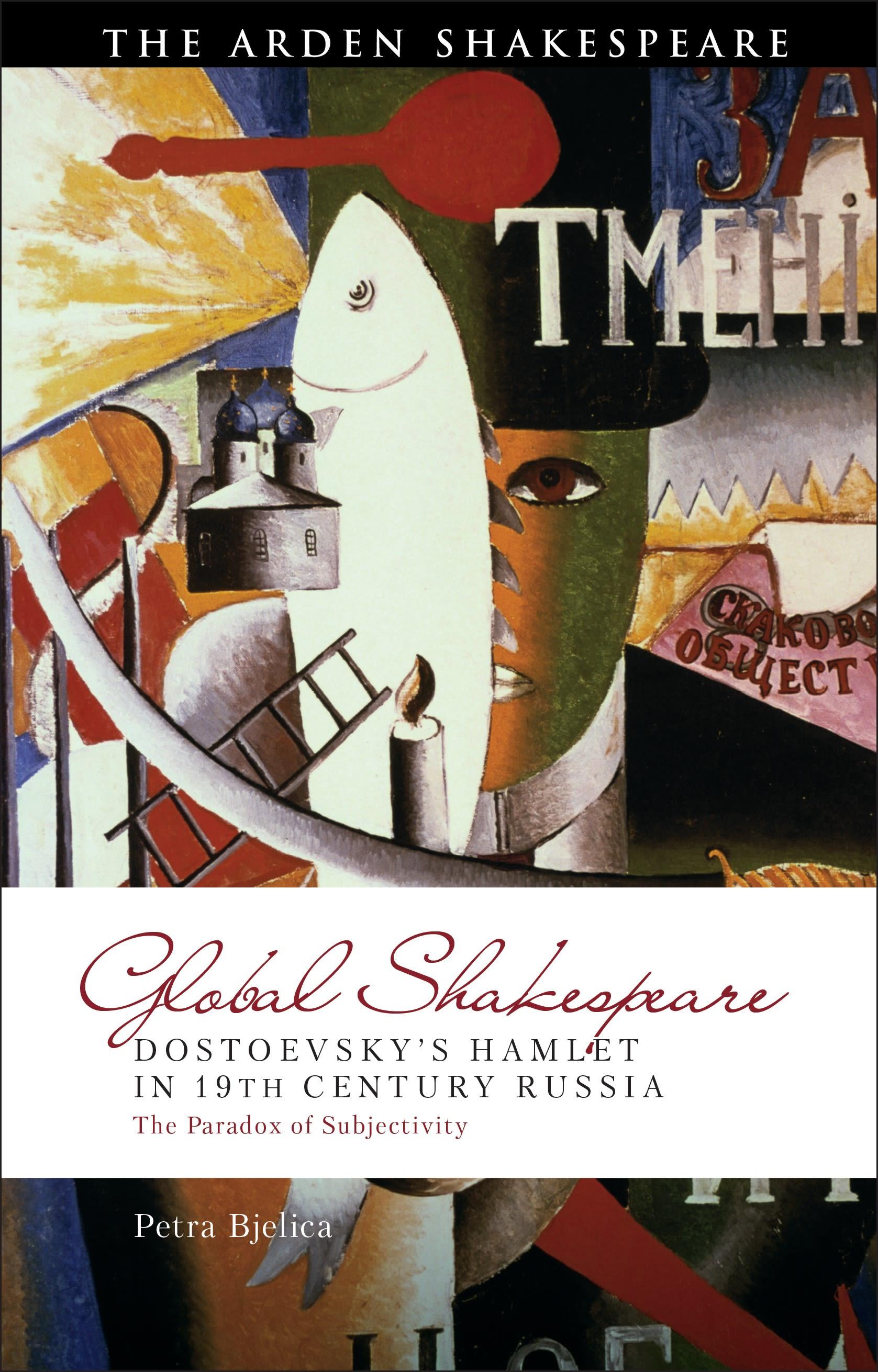
Dostoevsky uses Hamlet to address some of the most important problems in Russian culture in the second half of the 19th century. Approaching Dostoevsky's engagement with Shakespeare through a focus on his novel, Demons, Petra Bjelica considers the figure of Hamlet as it connects to Russian national identity, spirituality and cultural migration.
Bjelica argues that Russian Hamletism is a perfect example of how a literary phenomenon forms through a specific culture. She reads Dostoevsky's use of Hamlet through the Tsarist government, the wide gap between the aristocratic, working and peasant class, and the educated intelligentsia of the period. Russian Hamletism is shown to reflect the hegemony of power as well as the intricate debates that arise via political, ideological and philosophical differences between Slavophiles and Westerners. The book touches on the translatability and universality of Shakespeare, his cultural hegemony and the ethics of appropriating the 'other' by exploring Dostoevsky's highly original interpretation of Hamlet. Rather than just referencing the play, Dostoevsky's engagement with opposing and contradictory elements of Russian Hamletism dramatize the Hamletian dilemma anew. By re-thinking literary transmission and the concept of source, the intertextuality of Shakespeare and Russian Hamletism in Dostoevsky finds new ground.
Bjelica argues that Russian Hamletism is a perfect example of how a literary phenomenon forms through a specific culture. She reads Dostoevsky's use of Hamlet through the Tsarist government, the wide gap between the aristocratic, working and peasant class, and the educated intelligentsia of the period. Russian Hamletism is shown to reflect the hegemony of power as well as the intricate debates that arise via political, ideological and philosophical differences between Slavophiles and Westerners. The book touches on the translatability and universality of Shakespeare, his cultural hegemony and the ethics of appropriating the 'other' by exploring Dostoevsky's highly original interpretation of Hamlet. Rather than just referencing the play, Dostoevsky's engagement with opposing and contradictory elements of Russian Hamletism dramatize the Hamletian dilemma anew. By re-thinking literary transmission and the concept of source, the intertextuality of Shakespeare and Russian Hamletism in Dostoevsky finds new ground.
Pay easily by card, Klarna, Apple Pay or Google Pay. Not happy? You always have a 14-day money-back guarantee. Read more in our terms. If you have any questions, email us at hello@memmo.org.
Memmo makes studying easier – wherever you are in the world. We bring your course books and smart study tools together in one place: summaries, quizzes, podcasts and flashcards. Plus Ted, your study buddy who answers anything you wonder. Over 50,000 students already study here – built to help you learn faster and stress less.