
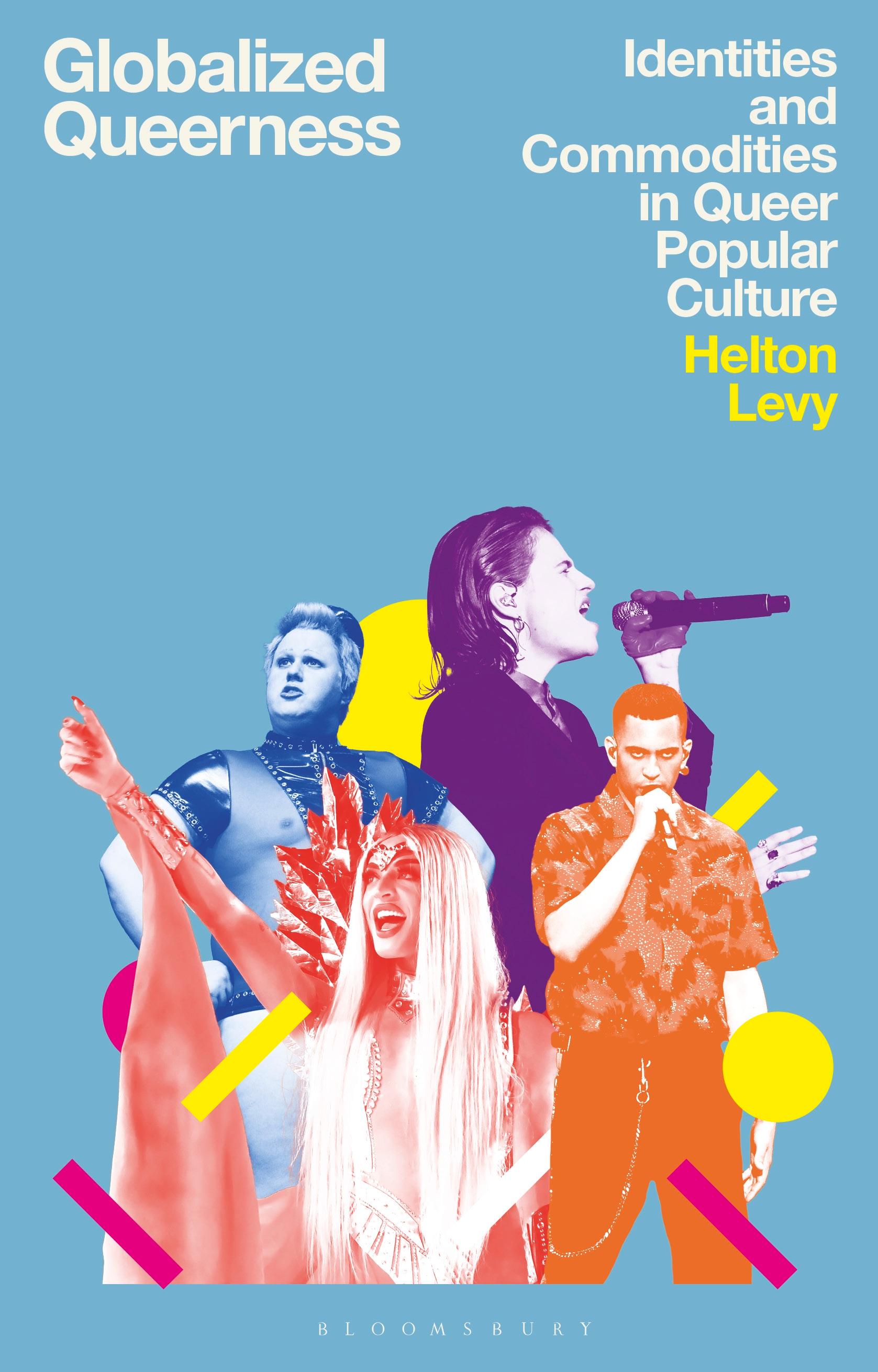
Has a global queer popular culture emerged at the expense of local queer artists? In this book, Helton Levy argues that global queer culture is indebted to specific, local references that artists carry from their early experiences in life, which then become homogenized by contemporary media markets. The assumption that queer publics live and consume only through a global set of references, including gay parades and rainbow flags, for example, erases many personal complexities.
Levy revisits media characters that have caught the attention of the broader public – such as Calamity Jane (1953), the Daffyd Thomas character from the BBC comedy Little Britain (2003-2007), Brazilian drag queen Pabblo Vittar, French singer Christine and the Queens, and the Italian-Egyptian rapper Mahmood – and argues that they have gradually blended in the public's perception. This has often obscured the individual struggles faced by these characters, such as immigration, homophobia, poverty and societal exclusion. Levy also questions what happens when global media flows take queer culture to regions wherein the notion of LGBTQ+ rights are not entirely acceptable.
Utilizing insights from media reports published across the world's ten biggest media markets, Levy argues that there are a series of conditions which artists and cultural actors negotiate once they achieve any kind of success in mainstream media, while local queer references remain unseen in the wider media world. For that reason, he argues for stronger incentives for communities to accept and acknowledge the work of queer people before and after commoditization.
Levy revisits media characters that have caught the attention of the broader public – such as Calamity Jane (1953), the Daffyd Thomas character from the BBC comedy Little Britain (2003-2007), Brazilian drag queen Pabblo Vittar, French singer Christine and the Queens, and the Italian-Egyptian rapper Mahmood – and argues that they have gradually blended in the public's perception. This has often obscured the individual struggles faced by these characters, such as immigration, homophobia, poverty and societal exclusion. Levy also questions what happens when global media flows take queer culture to regions wherein the notion of LGBTQ+ rights are not entirely acceptable.
Utilizing insights from media reports published across the world's ten biggest media markets, Levy argues that there are a series of conditions which artists and cultural actors negotiate once they achieve any kind of success in mainstream media, while local queer references remain unseen in the wider media world. For that reason, he argues for stronger incentives for communities to accept and acknowledge the work of queer people before and after commoditization.
Pages: 232
Category: Kultur-, Genus- & Postkoloniala studier
e-ISBN: 9781350292796
Shipping weight: 1.2 kg
Ships in: 1-2 days
Pay easily by card, Klarna, Apple Pay or Google Pay. Not happy? You always have a 14-day money-back guarantee. Read more in our terms. If you have any questions, email us at hello@memmo.org.
Memmo makes studying easier – wherever you are in the world. We bring your course books and smart study tools together in one place: summaries, quizzes, podcasts and flashcards. Plus Ted, your study buddy who answers anything you wonder. Over 50,000 students already study here – built to help you learn faster and stress less.