
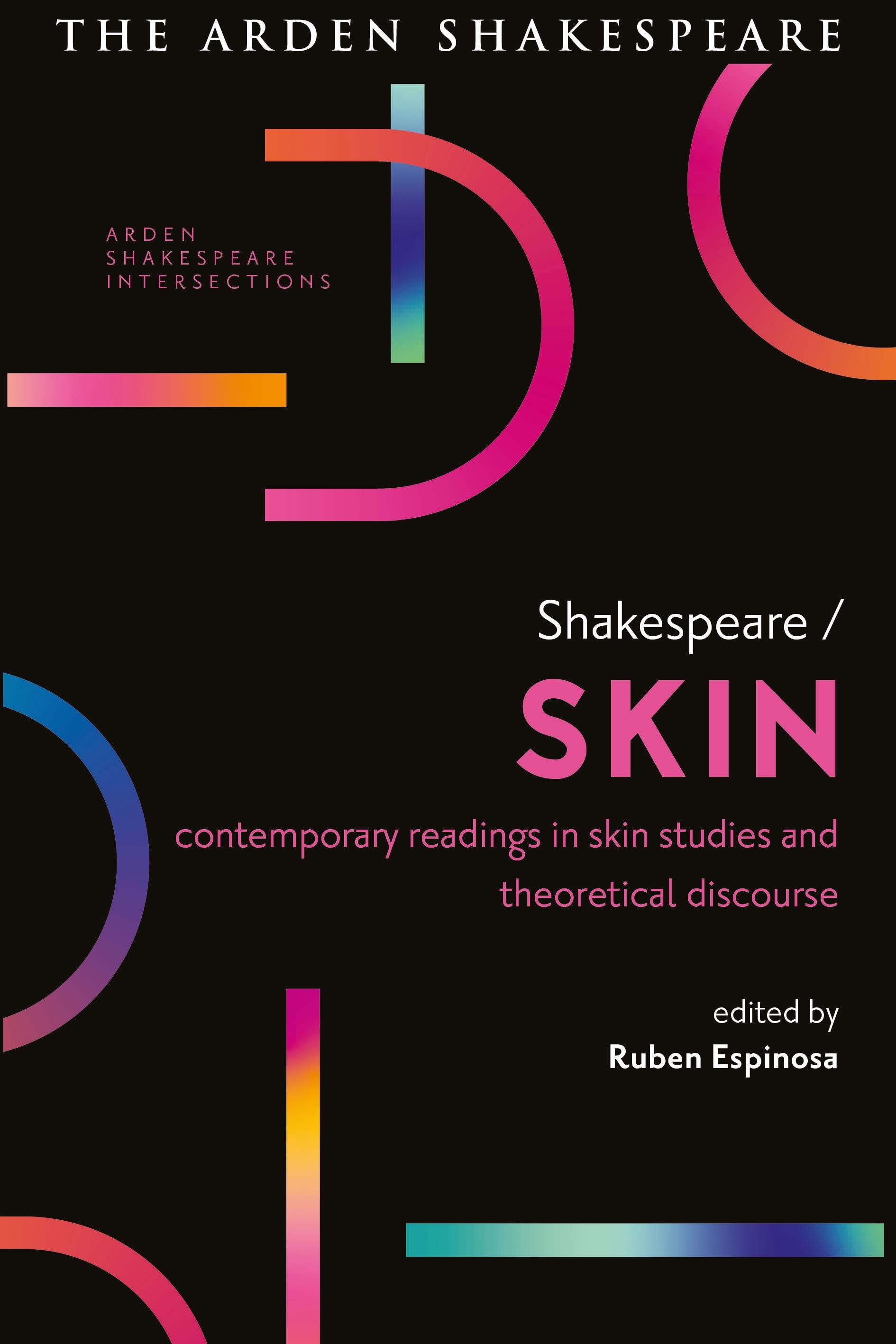
This volume offers a comprehensive array of readings of 'skin' in Shakespeare's works, a term that embraces the human and animal, noun and verb.
Shakespeare / Skin departs from previous studies as it deliberately and often explicitly engages with issues of social and racial justice. Each of the chapters interrogates and centres 'skin' in relation to areas of expertise that include performance studies, aesthetics, animal studies, religious studies, queer theory, Indigenous studies, history, food studies, border studies, postcolonial studies, Black feminism, disease studies and pedagogy. By considering contemporary understandings of skin, this volume examines how the literature of the early modern past creates paths to constructing racial hierarchies.
With contributors from the USA, UK, South Africa, India, Sri Lanka, Singapore and Australia, chapters are informed by an array of histories, shedding light on how skin was understood in Shakespeare's time and at key moments during the past 400 years in different media and cultures. Chapters include considerations of plays such as Titus Andronicus, The Tempest and A Midsummer Night's Dream, and work by Borderlands Theater, Los Colochos and Satyajit Ray, among many others.
For researchers and instructors, this book will help to shape teaching and inform research through its modelling of antiracist critical practice. Collectively, the chapters in this collection allow us to consider how sustained attention to skin via cross-historical and innovative approaches can reveal to us the various uses of Shakespeare that shed light on the fraught nature of our interrelatedness. They set a path for readers to consider how much skin they have in the game when it comes to challenging structures of racism.
Shakespeare / Skin departs from previous studies as it deliberately and often explicitly engages with issues of social and racial justice. Each of the chapters interrogates and centres 'skin' in relation to areas of expertise that include performance studies, aesthetics, animal studies, religious studies, queer theory, Indigenous studies, history, food studies, border studies, postcolonial studies, Black feminism, disease studies and pedagogy. By considering contemporary understandings of skin, this volume examines how the literature of the early modern past creates paths to constructing racial hierarchies.
With contributors from the USA, UK, South Africa, India, Sri Lanka, Singapore and Australia, chapters are informed by an array of histories, shedding light on how skin was understood in Shakespeare's time and at key moments during the past 400 years in different media and cultures. Chapters include considerations of plays such as Titus Andronicus, The Tempest and A Midsummer Night's Dream, and work by Borderlands Theater, Los Colochos and Satyajit Ray, among many others.
For researchers and instructors, this book will help to shape teaching and inform research through its modelling of antiracist critical practice. Collectively, the chapters in this collection allow us to consider how sustained attention to skin via cross-historical and innovative approaches can reveal to us the various uses of Shakespeare that shed light on the fraught nature of our interrelatedness. They set a path for readers to consider how much skin they have in the game when it comes to challenging structures of racism.
Pay easily by card, Klarna, Apple Pay or Google Pay. Not happy? You always have a 14-day money-back guarantee. Read more in our terms. If you have any questions, email us at hello@memmo.org.
Memmo makes studying easier – wherever you are in the world. We bring your course books and smart study tools together in one place: summaries, quizzes, podcasts and flashcards. Plus Ted, your study buddy who answers anything you wonder. Over 50,000 students already study here – built to help you learn faster and stress less.