
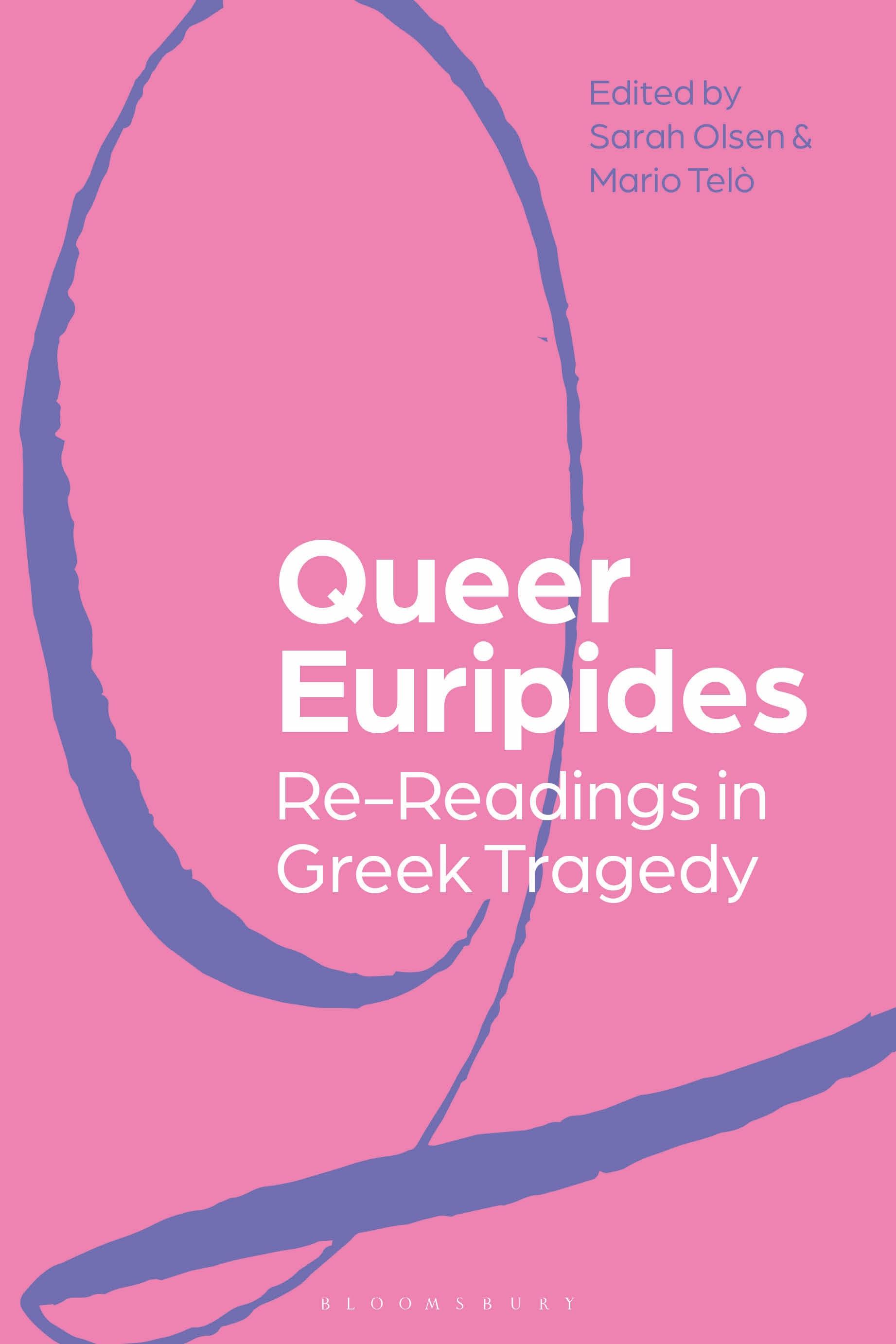
This volume is the first attempt to reconsider the entire corpus of an ancient canonical author through the lens of queerness broadly conceived, taking as its subject Euripides, the latest of the three great Athenian tragedians. Although Euripides' plays have long been seen as a valuable source for understanding the construction of gender and sexuality in ancient Greece, scholars of Greek tragedy have only recently begun to engage with queer theory and its ongoing developments. Queer Euripides represents a vital step in exploring the productive perspectives on classical literature afforded by the critical study of orientations, identities, affects and experiences that unsettle not only prescriptive understandings of gender and sexuality, but also normative social structures and relations more broadly.
Bringing together twenty-one chapters by experts in classical studies, English literature, performance and critical theory, this carefully curated collection of incisive and provocative readings of each surviving play draws upon queer models of temporality, subjectivity, feeling, relationality and poetic form to consider "queerness" both as and beyond sexuality. Rather than adhering to a single school of thought, these close readings showcase the multiple ways in which queer theory opens up new vantage points on the politics, aesthetics and performative force of Euripidean drama. They further demonstrate how the analytical frameworks developed by queer theorists in the last thirty years deeply resonate with the ways in which Euripides' plays twist poetic form in order to challenge well-established modes of the social. By establishing how Greek tragedy can itself be a resource for theorizing queerness, the book sets the stage for a new model of engaging with ancient literature, which challenges current interpretive methods, explores experimental paradigms, and reconceptualizes the practice of reading to place it firmly at the center of the interpretive act.
Bringing together twenty-one chapters by experts in classical studies, English literature, performance and critical theory, this carefully curated collection of incisive and provocative readings of each surviving play draws upon queer models of temporality, subjectivity, feeling, relationality and poetic form to consider "queerness" both as and beyond sexuality. Rather than adhering to a single school of thought, these close readings showcase the multiple ways in which queer theory opens up new vantage points on the politics, aesthetics and performative force of Euripidean drama. They further demonstrate how the analytical frameworks developed by queer theorists in the last thirty years deeply resonate with the ways in which Euripides' plays twist poetic form in order to challenge well-established modes of the social. By establishing how Greek tragedy can itself be a resource for theorizing queerness, the book sets the stage for a new model of engaging with ancient literature, which challenges current interpretive methods, explores experimental paradigms, and reconceptualizes the practice of reading to place it firmly at the center of the interpretive act.
Pages: 288
Category: Kultur-, Genus- & Postkoloniala studier
e-ISBN: 9781350249639
Shipping weight: 1.2 kg
Ships in: 1-2 days
Pay easily by card, Klarna, Apple Pay or Google Pay. Not happy? You always have a 14-day money-back guarantee. Read more in our terms. If you have any questions, email us at hello@memmo.org.
Memmo makes studying easier – wherever you are in the world. We bring your course books and smart study tools together in one place: summaries, quizzes, podcasts and flashcards. Plus Ted, your study buddy who answers anything you wonder. Over 50,000 students already study here – built to help you learn faster and stress less.