
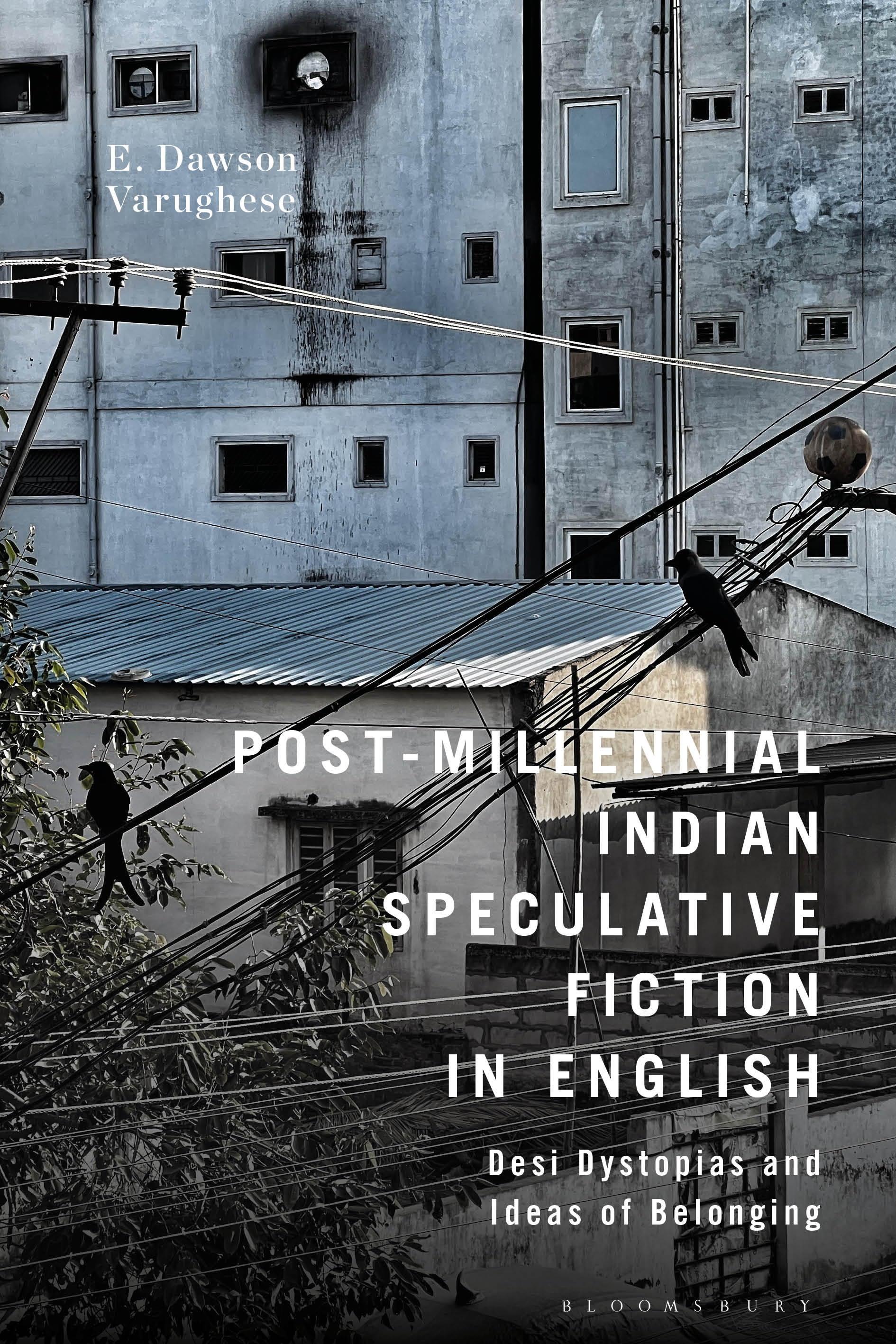
Exploring expressions of 'Indianness' buried within and scattered across post-millennial Indian speculative fiction in English, this book asks questions around what it means to 'belong' to an India of 'now' and what it might mean to belong to multiple Indias of the (near) future.
With dystopia, near-future, apocalyptic Indias and fantastical metropolises all imagined across this body of writing, Post-Millennial Indian Speculative Fiction in English traces economic, social and political transformations in post-2000 'New India' across these various narratives. Drawing on established notions of the speculative, Dawson Varughese argues for a recognized, post-millennial canon of Indian speculative writing in English which moves beyond Western-centric frames of reference, centring instead on Indian sensibilities, expressions of belonging to India and speculative 'Indian' futures.
Organized around key tropes and characteristics of post-millennial Indian speculative fiction in English to date - urban infrastructures, citizenship, bodies and biotech, future (Indian) histories and climate catastrophes – it takes stock of a range of science fiction, fantasy, near-future and dystopian novels and short stories and offers critical insights into the writings of Samit Basu, Varun Thomas Mathew, Gautam Bhatia, Rimi B. Chatterjee, Prayaag Akbar and Anil Menon, alongside many others.
Post-millennial Indian Speculative Fiction in English examines shifting ideas of what it means to belong to India and conceptions of India as a nation and pulls these ideas together, creating a workable framework of understanding for this nascent field as we move into the third decade of the millennium.
With dystopia, near-future, apocalyptic Indias and fantastical metropolises all imagined across this body of writing, Post-Millennial Indian Speculative Fiction in English traces economic, social and political transformations in post-2000 'New India' across these various narratives. Drawing on established notions of the speculative, Dawson Varughese argues for a recognized, post-millennial canon of Indian speculative writing in English which moves beyond Western-centric frames of reference, centring instead on Indian sensibilities, expressions of belonging to India and speculative 'Indian' futures.
Organized around key tropes and characteristics of post-millennial Indian speculative fiction in English to date - urban infrastructures, citizenship, bodies and biotech, future (Indian) histories and climate catastrophes – it takes stock of a range of science fiction, fantasy, near-future and dystopian novels and short stories and offers critical insights into the writings of Samit Basu, Varun Thomas Mathew, Gautam Bhatia, Rimi B. Chatterjee, Prayaag Akbar and Anil Menon, alongside many others.
Post-millennial Indian Speculative Fiction in English examines shifting ideas of what it means to belong to India and conceptions of India as a nation and pulls these ideas together, creating a workable framework of understanding for this nascent field as we move into the third decade of the millennium.
Pay easily by card, Klarna, Apple Pay or Google Pay. Not happy? You always have a 14-day money-back guarantee. Read more in our terms. If you have any questions, email us at hello@memmo.org.
Memmo makes studying easier – wherever you are in the world. We bring your course books and smart study tools together in one place: summaries, quizzes, podcasts and flashcards. Plus Ted, your study buddy who answers anything you wonder. Over 50,000 students already study here – built to help you learn faster and stress less.