
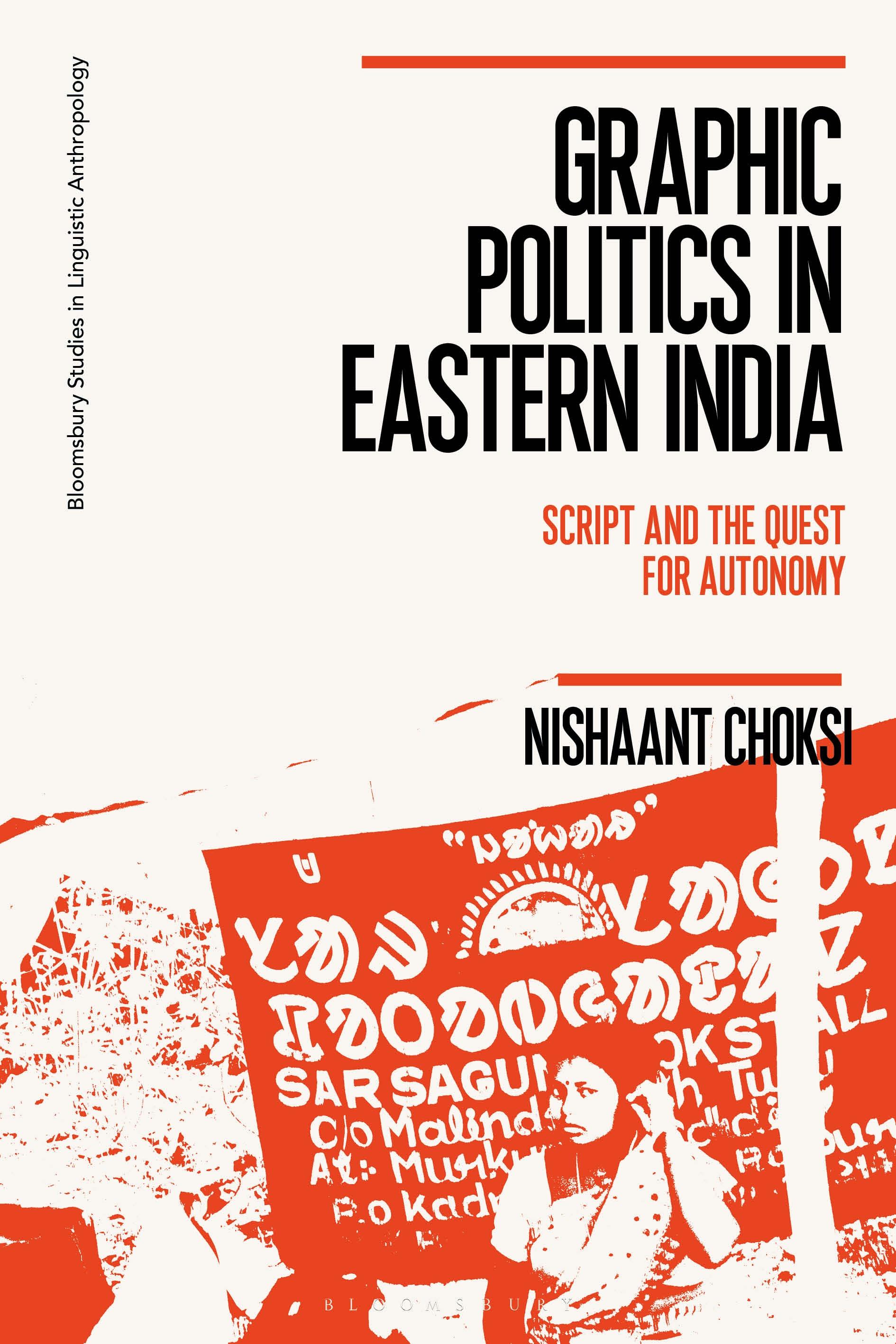
Investigating the communicative practices of indigenous Santali speakers in eastern India, Nishaant Choksi examines the overlooked role of script in regional movements for autonomy to provide one of the first comprehensive theoretical and ethnographical accounts of 'graphic politics'.
Based on extensive fieldwork in the villages of southwestern West Bengal, Choksi explores the deployment of Santali scripts, including a newly created script called Ol Chiki, in Bengali-dominated local markets, the education system and in the circulation of print media. He shows how manipulating the linguistic landscape and challenging the idea of a vernacular enables Santali speakers to delineate their own political domains and scale their language on local, regional and national levels. In doing so, they contest Bengali-speaking upper castes' hegemony over public spaces and institutions, as well as the administrative demarcations of the contemporary Indian nation-state.
Combining semiotic theory with ethnographically grounded investigation, Graphic Politics in Eastern India provides a new framework for understanding writing and literacy practices among ethnic minorities and points to future directions for interdisciplinary research on indigenous autonomy in South Asia.
Based on extensive fieldwork in the villages of southwestern West Bengal, Choksi explores the deployment of Santali scripts, including a newly created script called Ol Chiki, in Bengali-dominated local markets, the education system and in the circulation of print media. He shows how manipulating the linguistic landscape and challenging the idea of a vernacular enables Santali speakers to delineate their own political domains and scale their language on local, regional and national levels. In doing so, they contest Bengali-speaking upper castes' hegemony over public spaces and institutions, as well as the administrative demarcations of the contemporary Indian nation-state.
Combining semiotic theory with ethnographically grounded investigation, Graphic Politics in Eastern India provides a new framework for understanding writing and literacy practices among ethnic minorities and points to future directions for interdisciplinary research on indigenous autonomy in South Asia.
Pages: 224
Category: Kultur-, Genus- & Postkoloniala studier
e-ISBN: 9781350159600
Shipping weight: 1.2 kg
Ships in: 1-2 days
Pay easily by card, Klarna, Apple Pay or Google Pay. Not happy? You always have a 14-day money-back guarantee. Read more in our terms. If you have any questions, email us at hello@memmo.org.
Memmo makes studying easier – wherever you are in the world. We bring your course books and smart study tools together in one place: summaries, quizzes, podcasts and flashcards. Plus Ted, your study buddy who answers anything you wonder. Over 50,000 students already study here – built to help you learn faster and stress less.