
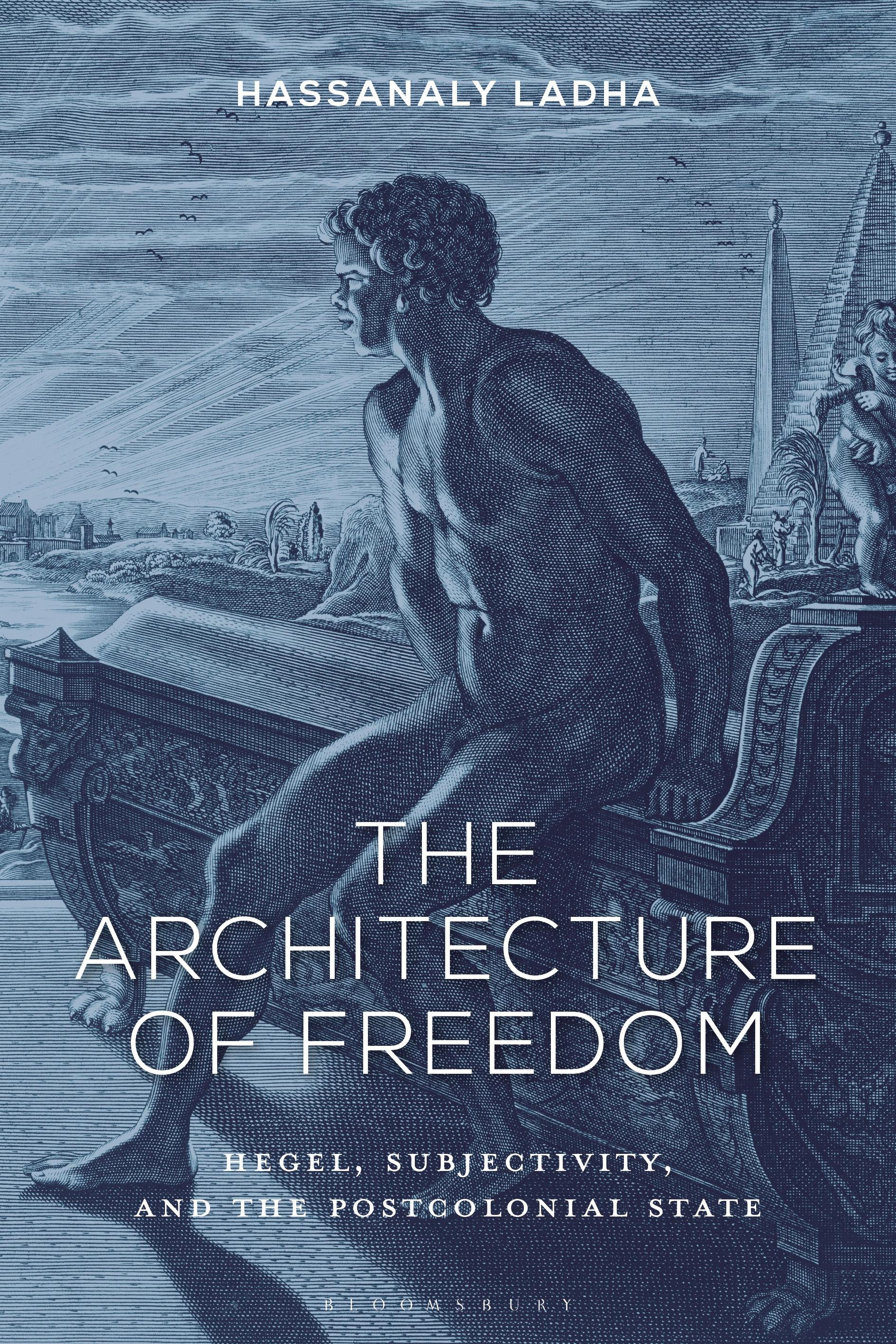
Through a radical reading of Hegel's oeuvre, The Architecture of Freedom sets forth a theory of open borders centered on a new interpretation of the German philosopher's related conceptions of language and the aesthetic, mastery and servitude, and subjectivity and the state.
The book's argument turns on Hegel's identification of “Africa” as a fluid, utopic space enabling the traversal of the East-West binary. As Hegel's figure for the non-historical, Africa emerges as the negativity that propels the movement of the dialectic in time.
Mirroring the “shrouded” continent's relation to history, Kantian “architectonics” step out of the realm of logic in Hegelian thought and drive the historical unfolding of the aesthetic. In a foundational move, Hegel hypostatizes the aesthetic entanglement of built and linguistic form as the colossus of Memnon, an African warrior memorialized in ancient architecture, myth, and art. Reaching for freedom, the Memnon marks the architectonic modality through which the African slave, at the telos of history, will fulfill the spiritual promise of the human and bring about the politically mature state.
The book examines the syncretic figure of the Memnon and slave across Hegel's lecture courses, the Phenomenology of Spirit, the Encyclopedia, and the Philosophy of Right. Ultimately the book calls for a reassessment of a range of Hegelian philosophemes across disciplines in the humanities. This book will be of particular interest to scholars in philosophy, postcolonial and African studies, political theory, architecture, and historiography.
The book's argument turns on Hegel's identification of “Africa” as a fluid, utopic space enabling the traversal of the East-West binary. As Hegel's figure for the non-historical, Africa emerges as the negativity that propels the movement of the dialectic in time.
Mirroring the “shrouded” continent's relation to history, Kantian “architectonics” step out of the realm of logic in Hegelian thought and drive the historical unfolding of the aesthetic. In a foundational move, Hegel hypostatizes the aesthetic entanglement of built and linguistic form as the colossus of Memnon, an African warrior memorialized in ancient architecture, myth, and art. Reaching for freedom, the Memnon marks the architectonic modality through which the African slave, at the telos of history, will fulfill the spiritual promise of the human and bring about the politically mature state.
The book examines the syncretic figure of the Memnon and slave across Hegel's lecture courses, the Phenomenology of Spirit, the Encyclopedia, and the Philosophy of Right. Ultimately the book calls for a reassessment of a range of Hegelian philosophemes across disciplines in the humanities. This book will be of particular interest to scholars in philosophy, postcolonial and African studies, political theory, architecture, and historiography.
Pages: 320
Category: Kultur-, Genus- & Postkoloniala studier
e-ISBN: 9781350105805
Shipping weight: 1.2 kg
Ships in: 1-2 days
Pay easily by card, Klarna, Apple Pay or Google Pay. Not happy? You always have a 14-day money-back guarantee. Read more in our terms. If you have any questions, email us at hello@memmo.org.
Memmo makes studying easier – wherever you are in the world. We bring your course books and smart study tools together in one place: summaries, quizzes, podcasts and flashcards. Plus Ted, your study buddy who answers anything you wonder. Over 50,000 students already study here – built to help you learn faster and stress less.